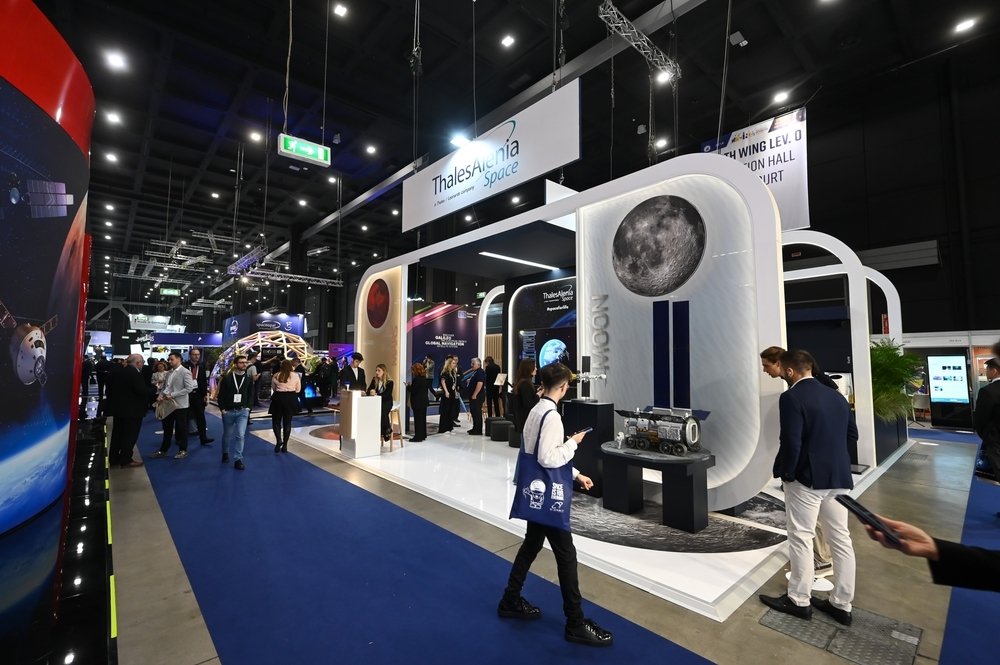
The co-hosts of a major space-themed congress due to take place in Türkiye's Mediterranean resort of Antalya next month aim for it to open a greater international integration, cooperation and new partnerships for the country and Turkish companies in the space domain.
Speaking to Daily Sabah ahead of the International Astronautical Congress (IAC) to be held between Oct. 5 and Oct. 9, Muttalip Tütüncü, the secretary-general of SAHA Istanbul, evaluated the expectations, priorities for the congress and space-defense overlap.
"One of the most important outcomes we expect from IAC 2026 is greater international integration. We want Turkish companies, universities, researchers and technology developers to establish direct relationships with global space agencies, major contractors, technology companies, investors and research institutions," Tütüncü said in a response to a query.
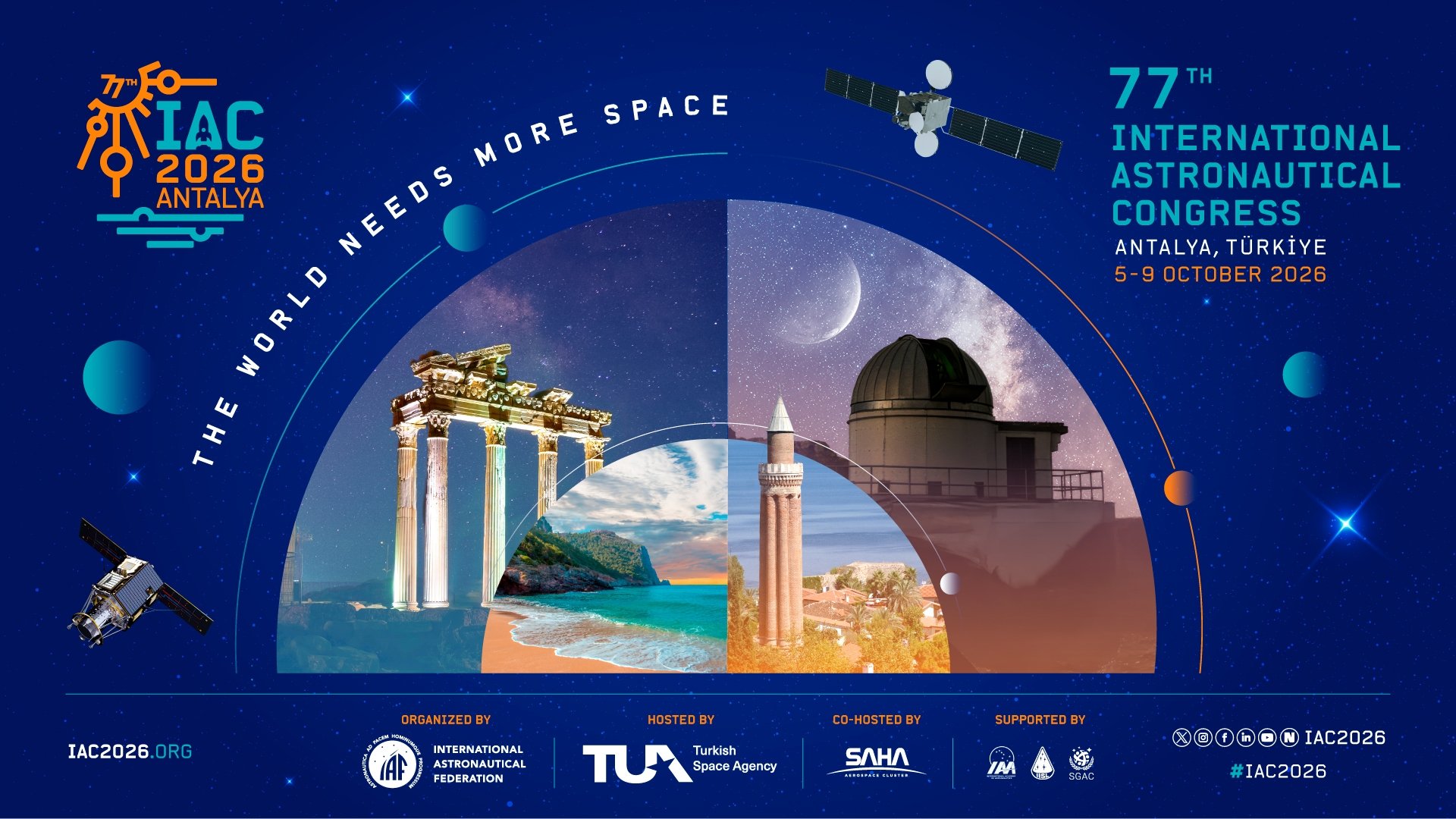
The 77th edition of the International Astronautical Congress will be held under the theme "The World Needs More Space." The prestigious event is being organized for the first time in Türkiye.
Tütüncü described the significance of hosting the event, not only in terms of visibility and the number of visitors, but also stressed that exposure to the space economy and industry is important in terms of supply chains.
"The exposure is important because entering the space economy is not only about developing a complete satellite or launch vehicle. The global space industry relies on extensive supply chains involving electronics, software, advanced materials, precision manufacturing, communications, sensors, testing technologies and many other specialized capabilities," he said.
He added that Türkiye already has companies operating in many of these fields, as well as "strong engineering, manufacturing, electronics, software and aerospace capabilities."
The congress is organized by the International Astronautical Federation (IAF) and hosted by the Turkish Space Agency (TUA) and co-hosted by the SAHA Istanbul aerospace cluster.
The SAHA Istanbul defense and aerospace cluster was established with a mission to enhance the technological and sectoral competencies of its members and to create a strong ecosystem by supporting cooperation, tech advancement and the acquirement of critical technologies.
Tütüncü also mentioned Türkiye's growing engagement in international space cooperation as another important dimension.
He recalled that Türkiye joined the Artemis Accords on Aug. 31, 2026, and said that the 5th Annual High-Level Meeting of the Artemis Accords will be held during IAC 2026.
In response to a question about space becoming increasingly important not only for exploration and communications, but also for national security and defense, the SAHA Istanbul executive said that defense and space "are increasingly becoming part of the same technological and strategic ecosystem."
"Today, many of the technologies required for advanced defense platforms are also fundamental to space systems. Secure communications, electro-optical and radar technologies, high-performance electronics, artificial intelligence, autonomous systems, cybersecurity, precision manufacturing and systems engineering are among the areas where the overlap is particularly strong," Tütüncü said.
He also went on to say that developing the ability to place national systems into orbit "with greater autonomy can reduce dependence on external infrastructure and strengthen Türkiye's ability to sustain critical space capabilities."
He also emphasized the accumulation of expertise in the defense ecosystem and its role in the development of space systems.
"Türkiye's defense industry has developed an ecosystem capable of designing, producing, integrating, testing and sustaining highly complex technological systems. This accumulated engineering capability provides a strong foundation for the development of space systems," he noted.
"A satellite, for example, brings together communications, electronics, software, power systems, sensors, structures and many other subsystems that must operate together successfully throughout the mission. Türkiye has been strengthening the capability to manage this type of complexity for many years through its defense and aerospace programs," he added.
Also elaborating on defense technologies that can potentially be used in the space area, Tütüncü pointed out at the advanced electro-optical and radar sensors, citing their support in observation and remote-sensing applications.
"Secure and high-bandwidth communication technologies can contribute to satellite communications and data transmission, while artificial intelligence and autonomous systems can increasingly support navigation, mission management, data processing and spacecraft operations," he also said.
Similarly, he also referred to Türkiye's National Space Program and plans for a lunar spacecraft launch.
"We are already seeing how technologies and experience accumulated through Türkiye's national space projects are beginning to reinforce one another," he said.
"Under the Lunar Research Program, which is part of Türkiye's National Space Program, TÜBITAK UZAY is developing a spacecraft with a domestic content rate of more than 80%, with launch targeted for the first half of 2027," he added, referring to the space unit of the Scientific and Technological Research Council of Türkiye (TÜBITAK).
Türkiye plans to launch its lunar spacecraft, equipped with a domestically developed hybrid propulsion system, in the first months of 2027, the country's industry and technology minister said last month.
At the same time, Tütüncü recalled that the national technologies developed through Türkiye's successfully completed satellite programs, particularly IMECE and Türksat 6A, "are also contributing directly to the Lunar Research Program."
He also mentioned that Türkiye's defense industry's success came from building an ecosystem, not from developing a single platform, and expressed belief that the same principle "applies to space."
Large national programs are extremely important because they create technological targets, demand and accumulated experience, but no sustainable technology ecosystem can depend only on a small number of flagship projects, according to Tütüncü.
In this regard, he emphasized the need for SMEs, technology startups, universities, researchers, specialized manufacturers, main contractors and international partners around these programs.
He also noted SAHA Istanbul's ambition of helping create a structured and interconnected industrial ecosystem, in which SMEs can enter major programs and Turkish companies can become competitive suppliers in international space markets.
"IAC 2026 can be an important accelerator in that process because it brings the international space ecosystem directly together with Türkiye's own industrial and technological capabilities," he concluded.