Daily Sabah logo

Politics
Diplomacy Legislation War On Terror EU Affairs Elections News Analysis
TÜRKİYE
Istanbul Education Investigations Minorities Expat Corner Diaspora
World
Mid-East Europe Americas Asia Pacific Africa Syrian Crisis Islamophobia
Business
Automotive Economy Energy Finance Tourism Tech Defense Transportation News Analysis
Lifestyle
Health Environment Travel Food Fashion Science Religion History Feature Expat Corner
Arts
Cinema Music Events Portrait Reviews Performing Arts
Sports
Football Basketball Motorsports Tennis
Opinion
Columns Op-Ed Reader's Corner Editorial
PHOTO GALLERY
JOBS ABOUT US RSS PRIVACY CONTACT US
© Turkuvaz Haberleşme ve Yayıncılık 2025

Daily Sabah - Latest & Breaking News from Turkey | Istanbul

  • Politics
    • Diplomacy
    • Legislation
    • War On Terror
    • EU Affairs
    • Elections
    • News Analysis
  • TÜRKİYE
    • Istanbul
    • Education
    • Investigations
    • Minorities
    • Expat Corner
    • Diaspora
  • World
    • Mid-East
    • Europe
    • Americas
    • Asia Pacific
    • Africa
    • Syrian Crisis
    • Islamophobia
  • Business
    • Automotive
    • Economy
    • Energy
    • Finance
    • Tourism
    • Tech
    • Defense
    • Transportation
    • News Analysis
  • Lifestyle
    • Health
    • Environment
    • Travel
    • Food
    • Fashion
    • Science
    • Religion
    • History
    • Feature
    • Expat Corner
  • Arts
    • Cinema
    • Music
    • Events
    • Portrait
    • Reviews
    • Performing Arts
  • Sports
    • Football
    • Basketball
    • Motorsports
    • Tennis
  • Gallery
  • Opinion
    • Columns
    • Op-Ed
    • Reader's Corner
    • Editorial
  • TV

The future of US-backed coups

by Hilal Kaplan

May 03, 2019 - 1:02 am GMT+3
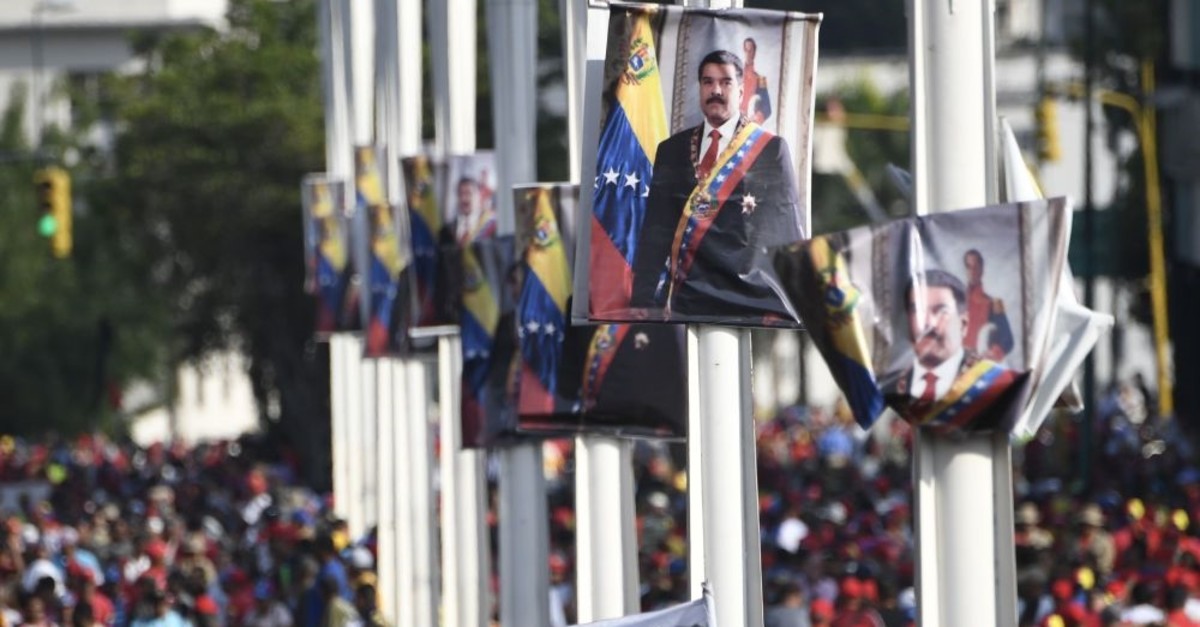
Posters depicting Venezuelan President Nicolas Maduro are seen during a May Day rally in Caracas, Venezuela, May 1, 2019.
by Hilal Kaplan May 03, 2019 1:02 am

The third failure of a U.S.-backed coup in Venezuela is an outcome of the multipolar world, in which intervention in foreign states is not as easy as it was in the past

Today in Venezuela, a U.S.-backed coup attempt is taking place.

Fifty countries, including the U.S., support interim president and opposition leader Juan Guaido, who is calling on the military to side with him. By doing so, he has also been calling for a coup against the legitimate government of President Nicolas Maduro. As time passed, however, it was clear that Guaido was only supported by weak, low-ranking military groups that do not have enough power to even control the La Carlota military base.

In response to this, Maduro took a tough stance and called on the people to protect the presidential palace. As his statements were aired live, Maduro affirmed that the situation is under control and emphasized that the coup plotters would be brought to justice. With demonstrators in the streets from both sides, they continue their protests across the capital.

As the coup attempt under Guaido's leadership was too weak, U.S. Secretary of State Mike Pompeo made the following statement, "If this is what is necessary, then a military operation to Venezuela might be possible; yet, we do prefer a peaceful transition." National Security Adviser John Bolton, known for his neoconservative inclinations referring to Elliot Abrams, the White House special envoy to Venezuela who has previously played a key role in American interventionism, argued that the U.S. is motivated to intervene based on "bringing democracy to Venezuela." I would argue that this is a statement that even Guiado wouldn't believe.

In the aftermath of World War II, the United States turned its attention to Latin America as a strategy to strengthen its hegemony around the world. Latin America was not viewed as a neighboring continent consisting of independent states but instead deemed as the "backyard of the U.S." In this context, this is where the U.S. flexes its muscles. This was evident in Brazil when we saw former Brazilian presidents Dilma Rousseff and Luiz Inacio Lula da Silva neutralized as the U.S. continued to gain an upper hand in the region.

The history of U.S. interventionism that dates back to 1954 in Guatemala resulted in the deaths of 200,000 people during a CIA-supported coup. This became a marker of an indefeasible U.S. foreign policy. What the U.S. is doing in Venezuela is not an exception considering that it has intervened in Latin American countries more than 50 times after they refused to become satellite states of the U.S. But the situation is more complex than it seems. Deep Russian and Chinese financial ties to Venezuela have developed since former President Hugo Chavez was in power require them to stand against U.S. intervention.

Although both Russia and China support the principle of noninterference, the latter has sent a small number of soldiers to Venezuela to show the U.S. that it can no longer freely walk into a country and tamper with its internal affairs.

In fact, after it was expressed by Pompeo that intervention was an option, his Russian counterpart Sergei Lavrov called to speak with him over the phone. In the conversation, Lavrov expressed that "continuing aggressive steps would lead to serious results."

In a multipolar world, it is not as easy for the CIA to intervene in countries and create a regime change as it has in the past. Looking at U.S. foreign policy dynamism today it seems far from initiating any distinctive solutions aside from a "sanctions-revolt-coup" formula.


About the author
Hilal Kaplan is a journalist and columnist.
  • shortlink copied
  • KEYWORDS
    opinion
    The Daily Sabah Newsletter
    Keep up to date with what’s happening in Turkey, it’s region and the world.
    You can unsubscribe at any time. By signing up you are agreeing to our Terms of Use and Privacy Policy. This site is protected by reCAPTCHA and the Google Privacy Policy and Terms of Service apply.
    No Image
    Ecuador's Pase del Nino festival celebrates Christmas
    PHOTOGALLERY
    • POLITICS
    • Diplomacy
    • Legislation
    • War On Terror
    • EU Affairs
    • News Analysis
    • TÜRKİYE
    • Istanbul
    • Education
    • Investigations
    • Minorities
    • Diaspora
    • World
    • Mid-East
    • Europe
    • Americas
    • Asia Pacific
    • Africa
    • Syrian Crisis
    • İslamophobia
    • Business
    • Automotive
    • Economy
    • Energy
    • Finance
    • Tourism
    • Tech
    • Defense
    • Transportation
    • News Analysis
    • Lifestyle
    • Health
    • Environment
    • Travel
    • Food
    • Fashion
    • Science
    • Religion
    • History
    • Feature
    • Expat Corner
    • Arts
    • Cinema
    • Music
    • Events
    • Portrait
    • Performing Arts
    • Reviews
    • Sports
    • Football
    • Basketball
    • Motorsports
    • Tennis
    • Opinion
    • Columns
    • Op-Ed
    • Reader's Corner
    • Editorial
    • Photo gallery
    • DS TV
    • Jobs
    • privacy
    • about us
    • contact us
    • RSS
    © Turkuvaz Haberleşme ve Yayıncılık 2021