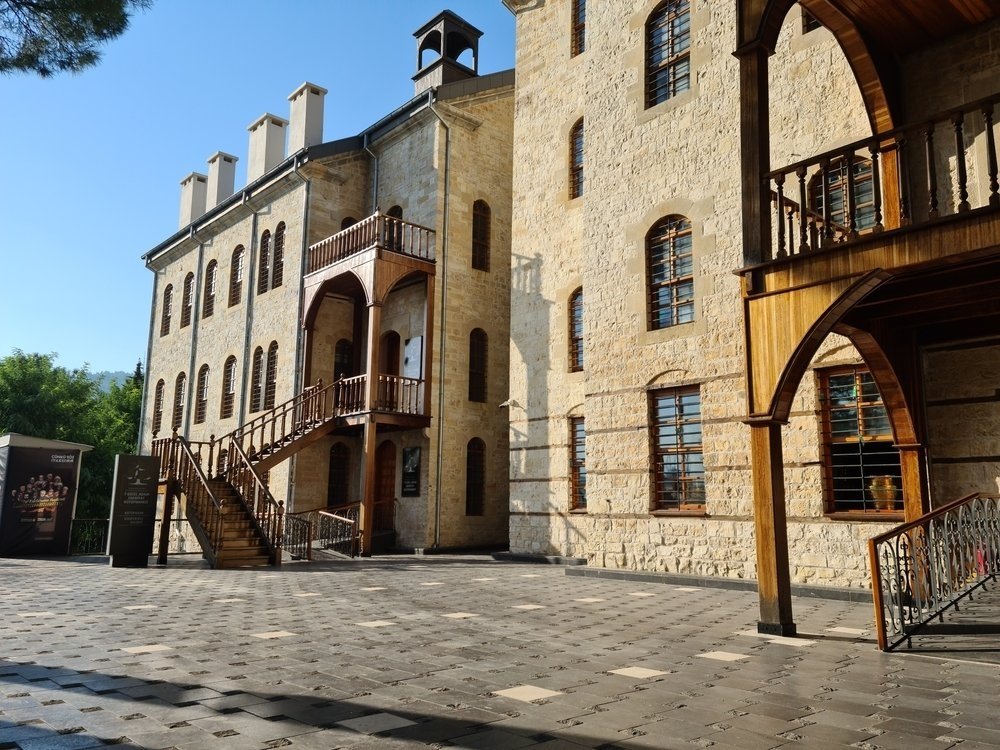
Kahramanmaraş, a southern Turkish city renowned for its rich cultural tapestry, has officially achieved a groundbreaking milestone by becoming Türkiye’s first and only UNESCO Creative City of Literature. The historic milestone was celebrated at a high-profile international promotional event held at Istanbul’s prestigious Atatürk Cultural Center (AKM) on June 19, 2026, drawing prominent figures from the worlds of culture, art, academia and the media.
The event illuminated Kahramanmaraş’s profound literary journey, showcasing its strategic vision for cultural development, potential for literary tourism and burgeoning international collaborations. For a city whose identity is deeply intertwined with the written and spoken word, the UNESCO designation is not merely a title but a global validation of a five-century-old living heritage.
While many ancient cities are remembered for their monumental stone architecture, Kahramanmaraş stands out as a unique urban ecosystem where collective memory is preserved through poetry and storytelling. As the city’s literary chroniclers often note, concrete structures may crumble, but words etched into human hearts endure across generations.
The cultural landscape of Kahramanmaraş is built upon four robust, interconnected pillars: the deep spiritual wisdom of Sufism, the vibrant oral traditions of wandering minstrels (aşıks), a profound intellectual and political memory and the trailblazing spirit of modern Turkish literature. This intricate, multilayered structure has transformed the city into an uninterrupted fountain of creative expression since the 16th century.
In world literary history, oral folklore and written literature frequently flow as separate rivers. However, in Kahramanmaraş, these two traditions converge seamlessly. The city represents a rare geography where the traditional stringed instrument, the saz and the writer's pen share the exact same soil and spirit.
The historical trajectory of the region spans from the mesmerizing 16th-century folk verses of Karacaoğlan, who frequently traversed the paths of Maraş, to the classical sophistication of Sünbülzade Vehbi, a master of classical Divan poetry. This dual heritage laid the groundwork for an extraordinary cultural explosion in the 20th century.
The power of this tradition is best felt in lines that have traveled from mouth to mouth for centuries. For instance, Karacaoğlan’s vibrant vernacular comes alive in English as: "You call me dark, my love / But are your eyebrows not dark too?" Similarly, Aşık Yener’s legendary poem, later immortalized in Turkish music, speaks directly to the geographical isolation of the region: "Make Way, Mountains, Make Way for Me." These are not just lyrics; they are the auditory archives of a community."
The city became the cradle for the "Seven Beautiful Men" (Yedi Güzel Adam) – a legendary group of intellectuals and poets including Necip Fazıl Kısakürek, Cahit Zarifoğlu, Erdem Bayazıt, Rasim Özdenören, Nuri Pakdil, Akif Inan and Alaeddin Özdenören. These literary giants reshaped contemporary Turkish literature, blending modern identity with deep-seated traditional values. Whether through the politically charged folk songs of Mahzuni Şerif or the philosophical prose of Rasim Özdenören, the overarching ethos remained unchanged: a refusal to remain silent in the face of human suffering and a relentless search for existential meaning.
The recurring question among literary historians is how a single Anatolian province could consistently produce such an overwhelming volume of diverse and influential writers. The secret lies not in geographical coincidence, but in an established community infrastructure that takes language with absolute seriousness.
For centuries, the local madrassas and Sufi lodges taught language as a sacred, disciplined craft, guiding individuals on how to give precise form to their inner spiritual lives. Simultaneously, the minstrel tradition brought poetry out of elite libraries and directly into the public squares and marketplaces. Passed down diligently from families to schools and neighborhoods, literature became a natural societal responsibility. In Kahramanmaraş, it is often said that "every home produces a poet," reflecting an environment where language is actively produced, consumed and revered.
This reverence for language becomes a shield during periods of hardship. Whether it is Sezai Karakoç's spiritual masterpiece “Prayer for Rain” ("Yağmur Duası") reflecting life beneath unyielding skies, or Abdurrahim Karakoç’s “Mihriban,” which became an unwritten anthem of love across Türkiye, literature serves as a tool for making sense of suffering. As local writers beautifully echo during testing times: 'Difficult times can silence individuals, but they compel this city to speak.
Kahramanmaraş’s inclusion in the UNESCO Creative Cities Network serves as a powerful catalyst for the city’s future urban and economic development. The promotional event at the AKM highlighted the city's ambitious road map to integrate its literary wealth into the global cultural economy.
Key initiatives include the expansion of international literary festivals, cross-border cultural collaborations with other UNESCO cities and the development of specialized literary tourism routes. These routes will allow domestic and international visitors to retrace the steps of legendary poets, explore historic intellectual hubs and experience the living oral traditions firsthand in the city's historic marketplaces.
Furthermore, local authorities emphasized that the true transmission of this memory does not rely on international certificates alone but on keeping the words alive within daily community life. By bridging its historic roots with modern creative industries, Kahramanmaraş is positioning itself as a global beacon of cultural resilience.
As long as the folk songs of Karacaoğlan are sung in its squares, the revolutionary essays of Nuri Pakdil are read by the youth, and the poetic birds of Cahit Zarifoğlu fly through collective memory, Kahramanmaraş will continue to proudly bear its crown as Türkiye’s ultimate "City of Words." The world now officially recognizes what locals have known for half a millennium: This is a city where civilization speaks through every line.