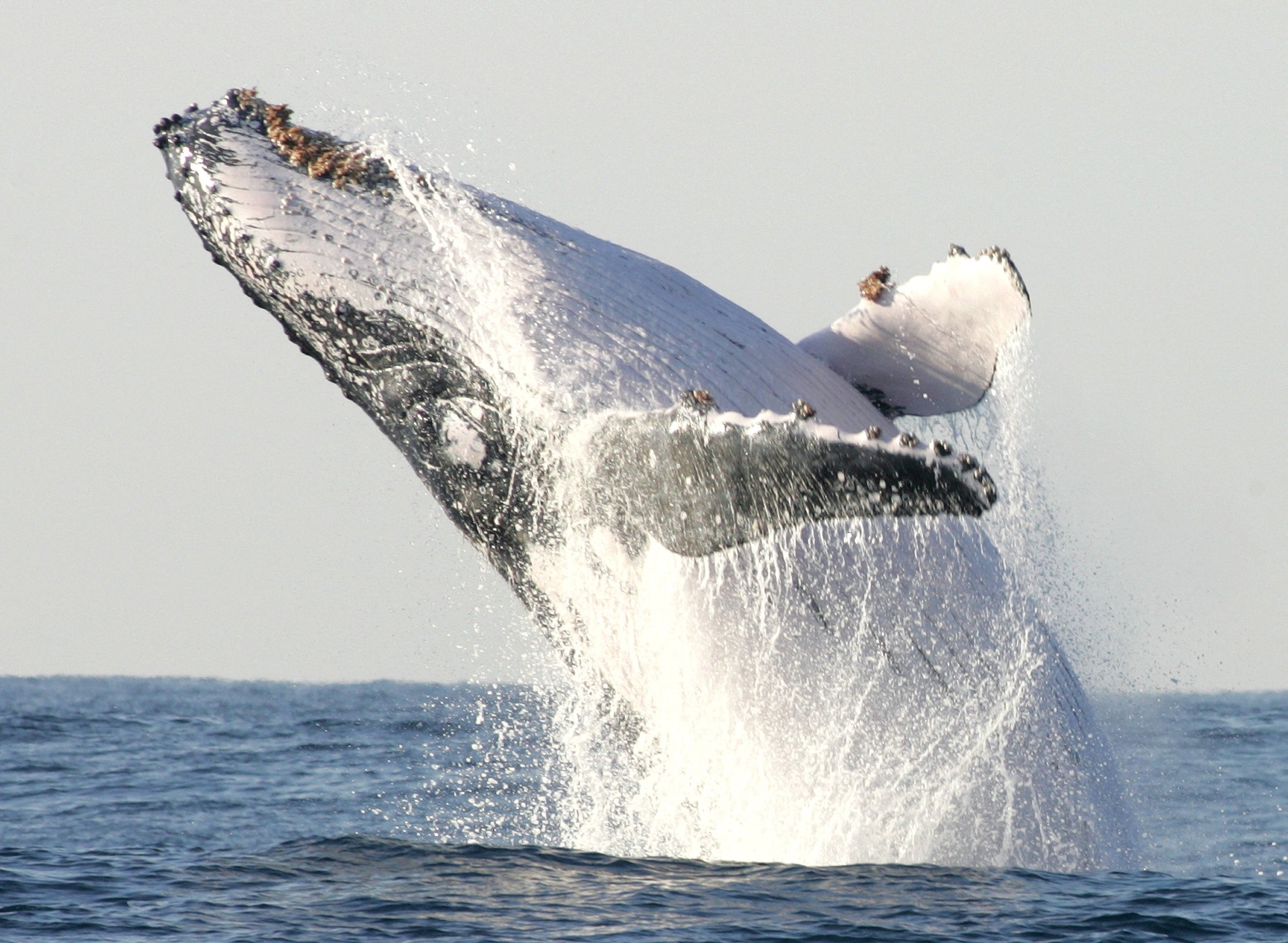
Whales are the largest animals roaming – or swimming – the Earth today, with a wide range of species all majestic to look at, from blue, fin, bowhead, gray, humpback, right to sperm whales. The blue whale is the largest-known creature ever on Earth, topping even the biggest of the dinosaurs. How, though, did these magnificent marine mammals get so big? It may come down to genetics, it turns out.
A new study explored the genetic underpinnings of gigantism in whales, identifying four genes that appear to have played crucial roles. The researchers said these genes helped foster great size and mitigate related disadvantageous consequences, including higher cancer risk and lower reproductive output.
Cetaceans, the marine mammal group encompassing whales, dolphins, and porpoises, evolved around 50 million years ago from vaguely wolf-like land-based ancestors that belonged to a mammalian assemblage called artiodactyls that includes today's cows, pigs, sheep, and many others.
"Body size is a complex result of many genes, pathways, and physical and ecological processes," said geneticist Mariana Nery of Universidade Estadual de Campinas (UNICAMP) in Brazil, co-author of the study published on Thursday in the journal Scientific Reports. "Our results are among the first to study gigantism in cetaceans from a molecular perspective."
The study focused on seven whale species exceeding 10 meters (33 feet) long. Six are baleen whales, which consume tiny prey using a mouth filter-feeding system involving baleen plates made of the same substance found in people's fingernails. The sperm whale is a toothed whale that hunts large prey like a giant squid.
Blue whales can reach about 30 meters long; fin whales back 24 meters; sperm and bowhead whales about 18 meters; humpback and right whales about 15 meters; and gray whales about 13.5 meters.
After assessing nine genes, including some associated with increased body size in other mammals, the researchers found that four – named GHSR, IGFBP7, NCAPG and PLAG1 – appear to have gained prominence during the evolution of large whales.
GHSR is a gene that releases growth hormones through the pituitary gland, body weight, energy metabolism, appetite, and fat accumulation. It also is associated with controlling cell proliferation and programmed cell death. Tumors are essentially formed by runaway cell growth.
IGFBP7 is a gene involved in promoting cell growth and division. There is evidence it acts as a cancer suppressor in prostate, breast, lung, and colorectal tumors.
NCAPG, a gene associated with growth in people, horses, donkeys, cattle, pigs and chickens, is linked to increased body size, weight gain, cell proliferation, and cell life cycles.
PLAG1, a gene associated with body growth in cattle, pigs, and sheep, is involved in embryo growth and cell survival.
"Gigantism in the current cetacean lineage is recent, estimated at approximately 5 million years ago. Before that, there were animals with large sizes, like Basilosaurus, but these were exceptions, and most cetaceans did not exceed 10 meters in length," said study lead author Felipe Andre Silva, who worked on the research while earning his master's degree in genetics and molecular biology at UNICAMP.
"Gigantism may bring some advantages, such as a lower chance of being preyed upon and a greater chance of obtaining food," Silva added.
Basilosaurus, a toothed apex predator from about 40 million years ago, was the largest-known early whale. The baleen whale lineage dates to roughly 36 million years ago, starting modestly in size.
"The evolution of cetaceans is a fantastic story, as these huge and charismatic animals attract the attention of many people," Nery said. "But beyond the curiosity it arouses, these animals can teach us a lot about the evolutionary process. And whales have proven to be an exciting model for understanding how biodiversity is generated and help answer fundamental questions in evolutionary biology."