Daily Sabah logo

Politics
Diplomacy Legislation War On Terror EU Affairs Elections News Analysis
TÜRKİYE
Istanbul Education Investigations Minorities Expat Corner Diaspora
World
Mid-East Europe Americas Asia Pacific Africa Syrian Crisis Islamophobia
Business
Automotive Economy Energy Finance Tourism Tech Defense Transportation News Analysis
Lifestyle
Health Environment Travel Food Fashion Science Religion History Feature Expat Corner
Arts
Cinema Music Events Portrait Reviews Performing Arts
Sports
Football Basketball Motorsports Tennis
Opinion
Columns Op-Ed Reader's Corner Editorial
PHOTO GALLERY
JOBS ABOUT US RSS PRIVACY CONTACT US
© Turkuvaz Haberleşme ve Yayıncılık 2025

Daily Sabah - Latest & Breaking News from Turkey | Istanbul

  • Politics
    • Diplomacy
    • Legislation
    • War On Terror
    • EU Affairs
    • Elections
    • News Analysis
  • TÜRKİYE
    • Istanbul
    • Education
    • Investigations
    • Minorities
    • Expat Corner
    • Diaspora
  • World
    • Mid-East
    • Europe
    • Americas
    • Asia Pacific
    • Africa
    • Syrian Crisis
    • Islamophobia
  • Business
    • Automotive
    • Economy
    • Energy
    • Finance
    • Tourism
    • Tech
    • Defense
    • Transportation
    • News Analysis
  • Lifestyle
    • Health
    • Environment
    • Travel
    • Food
    • Fashion
    • Science
    • Religion
    • History
    • Feature
    • Expat Corner
  • Arts
    • Cinema
    • Music
    • Events
    • Portrait
    • Reviews
    • Performing Arts
  • Sports
    • Football
    • Basketball
    • Motorsports
    • Tennis
  • Gallery
  • Opinion
    • Columns
    • Op-Ed
    • Reader's Corner
    • Editorial
  • TV
  • Life
  • Health
  • Environment
  • Travel
  • Food
  • Fashion
  • Science
  • Religion
  • History
  • Feature
  • Expat Corner

Climate change to blame for 'catastrophic' French frost: Analysis

by French Press Agency - AFP

PARIS Jun 15, 2021 - 6:32 pm GMT+3
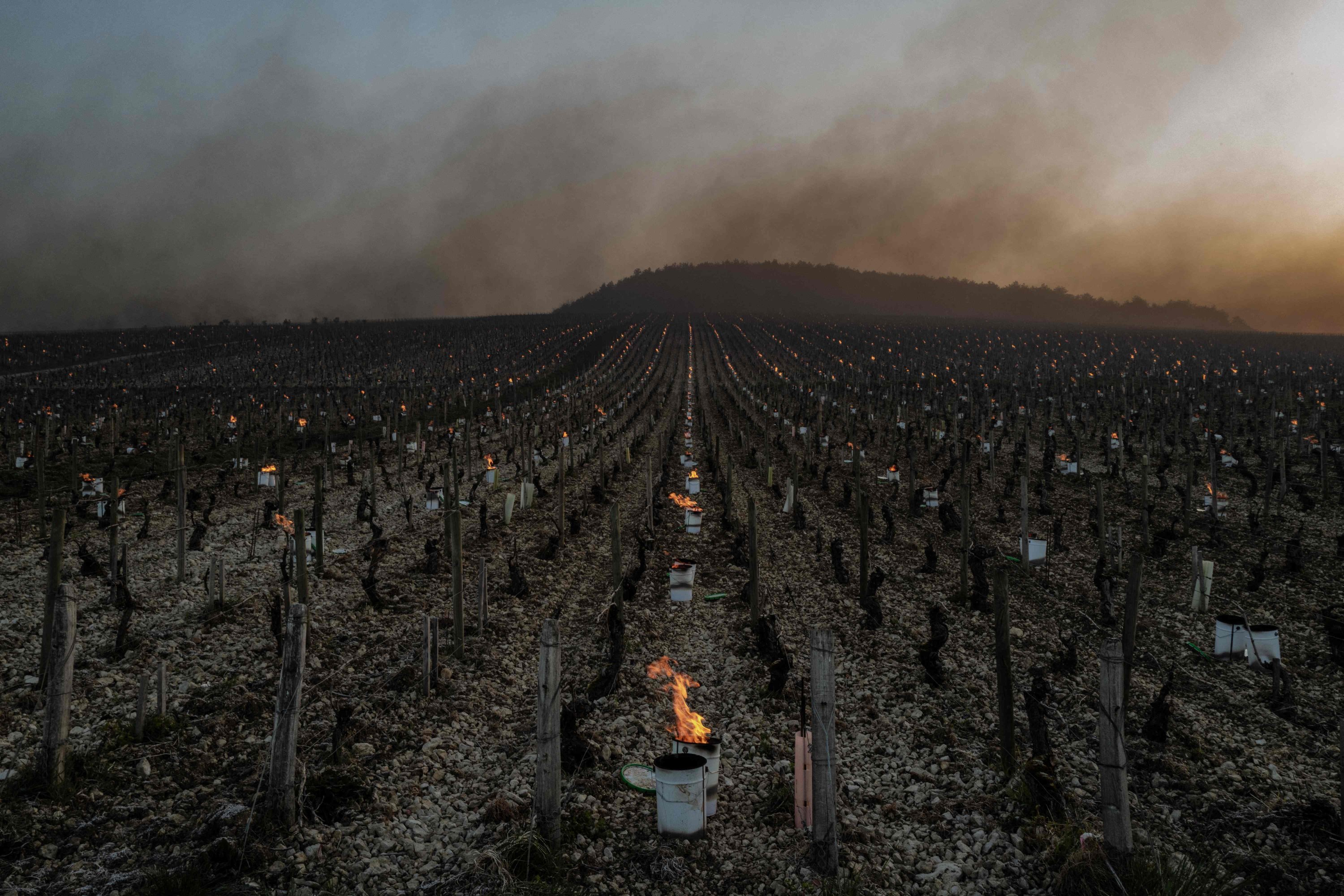
As temperatures fall below zero degrees Celsius during the night, anti-frost candles burn through sunrise in the Chablis vineyards near Chablis, Burgundy, France, April 7, 2021. (AFP Photo)
by French Press Agency - AFP Jun 15, 2021 6:32 pm

Scientists said Tuesday that climate change had sharply increased the odds of devastating events such as the frost that wiped out a third of French wine production at a cost of around 2 billion euros ($2.42 billion) in the space of a few nights in April. The frost blanketed the country's most well-known and prestigious wine-producing regions in what minister Julien Denormandie called "probably the greatest agricultural catastrophe of the beginning of the 21st century."

Scientists warned that climate change would raise the risk of such events even further in the future.

The findings are from World Weather Attribution, an international organization that analyzes the link between extreme weather events and global warming.

They looked at data from a zone covering vineyards in Burgundy, Champagne and the Loire valley and ran 132 climate model simulations.
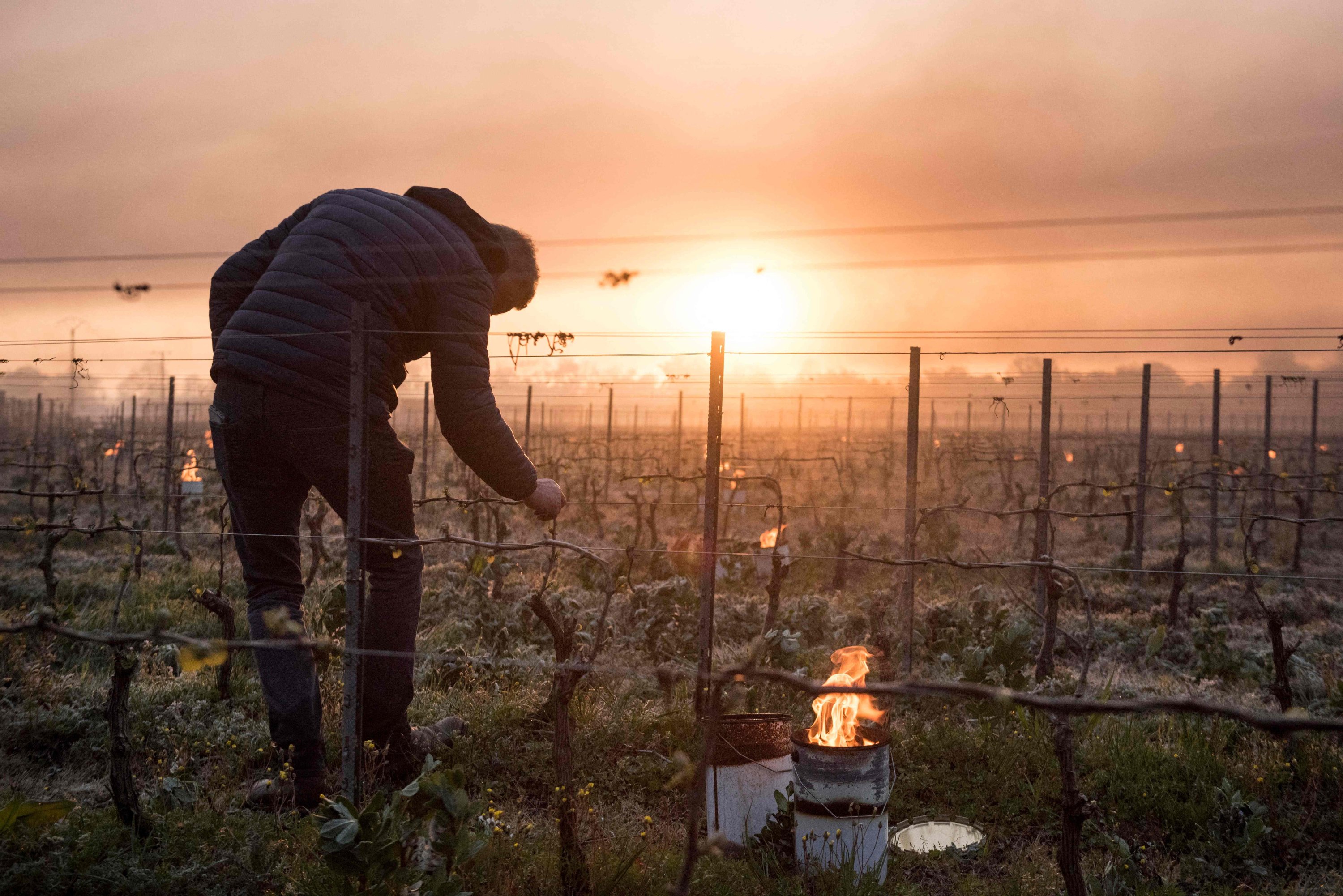
A man checks vine buds during the burning of anti-frost candles in the Luneau-Papin wine vineyard in Le Landreau, near Nantes, western France, April 12, 2021. (AFP Photo)

The study concluded that a warmer climate has increased the probability of an extreme frost coinciding with a growing period by 60%.

And study co-author Robert Vautard of the Pierre-Simon Laplace Institute for climate and environmental science put the chances even higher than that.

With the goal of capping global warming at 2 degrees Celsius (3.6 degrees Fahrenheit) above preindustrial levels likely out of reach, he said during an online press conference he expects "the likelihood of such an event to increase by an additional 40%."

April's plunging temperatures were particularly lethal because they followed a period of exceptionally mild weather in March that encouraged trees and vines to bud.

"Bud-break," when young leaves begin to unfurl to prepare for photosynthesis, makes vines vulnerable to deadly freezing temperatures.
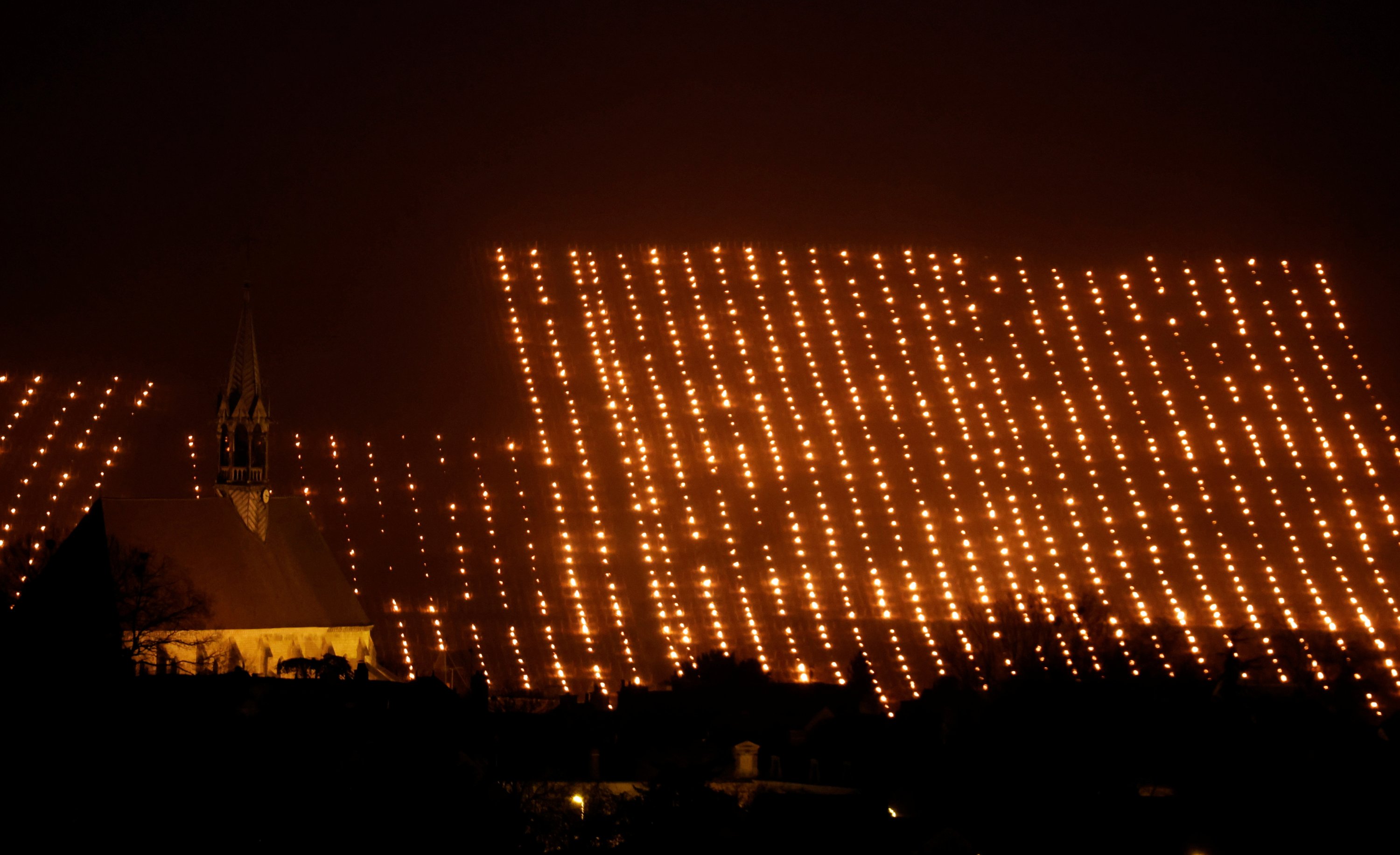
Heaters are lit early in the morning to protect vineyards from frost damage outside Chablis, France, April 7, 2021. (Reuters Photo)

Wine growers have always been wary of a late frost, but now they are being forced to redefine what they consider "late."

Budding is "happening earlier and earlier," said climate researcher and study co-author Nicolas Viovy, "it has moved up almost 15 days since 1980."

To analyze the likelihood of future devastating frosts, researchers had to take into account two consequences of warming: a decrease in freezing temps on the one hand and an earlier start to the growing period on the other.

"It is a real scientific step forward to be able to analyze composite events" like this one, said Samuel Morin who heads up a combined unit of the French National Research Institute (CNRS) and Meteo France, which contributed data and researchers to the report.
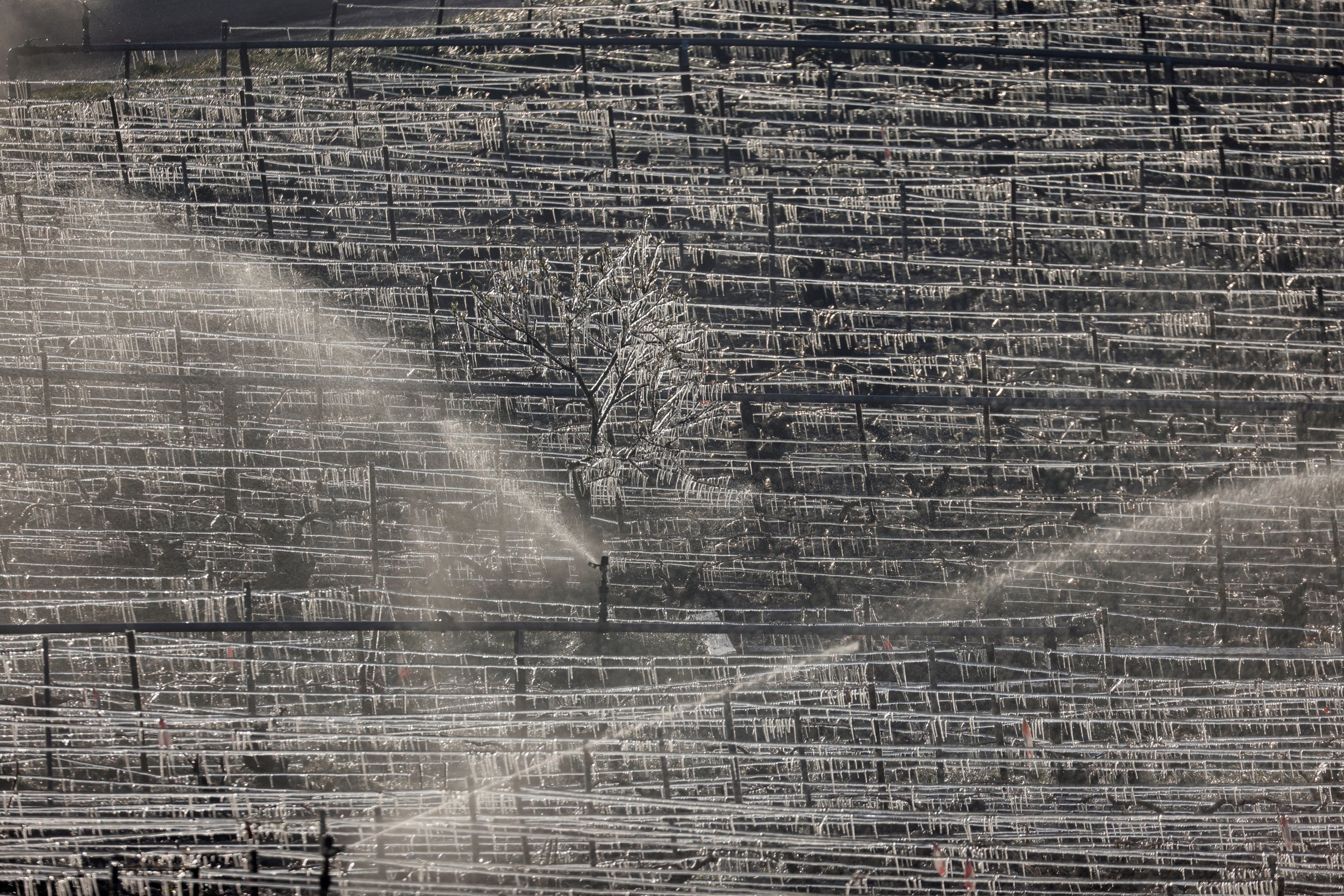
Water is sprayed in the morning to protect vineyards from frost damage outside Chablis, France, April 7, 2021. (Reuters Photo)

"You can't say of an isolated weather event 'it's because of climate change.' But you can measure the extent to which climate change affected the probability that such an event could occur," he told Agence France-Presse (AFP).

The fallout from April's frost was widespread with hundreds of thousands of hectares of crops and vines in 10 of France's 13 regions hit, affecting kiwis, apricots, apples, beets and rapeseed.

Markus Reichstein of the Max Planck Institute, another study co-author, pointed to the urgency of being able to anticipate the likelihood of such events.

"Economically it can be quite critical," he said during the press conference, adding that for wine growers "it could be an existential question."


  • shortlink copied
  • Last Update: Jun 18, 2021 11:27 am
    KEYWORDS
    climate change agriculture catastrophe climate crisis france frost extreme cold
    The Daily Sabah Newsletter
    Keep up to date with what’s happening in Turkey, it’s region and the world.
    You can unsubscribe at any time. By signing up you are agreeing to our Terms of Use and Privacy Policy. This site is protected by reCAPTCHA and the Google Privacy Policy and Terms of Service apply.
    No Image
    A picture and its story
    PHOTOGALLERY
    • POLITICS
    • Diplomacy
    • Legislation
    • War On Terror
    • EU Affairs
    • News Analysis
    • TÜRKİYE
    • Istanbul
    • Education
    • Investigations
    • Minorities
    • Diaspora
    • World
    • Mid-East
    • Europe
    • Americas
    • Asia Pacific
    • Africa
    • Syrian Crisis
    • İslamophobia
    • Business
    • Automotive
    • Economy
    • Energy
    • Finance
    • Tourism
    • Tech
    • Defense
    • Transportation
    • News Analysis
    • Lifestyle
    • Health
    • Environment
    • Travel
    • Food
    • Fashion
    • Science
    • Religion
    • History
    • Feature
    • Expat Corner
    • Arts
    • Cinema
    • Music
    • Events
    • Portrait
    • Performing Arts
    • Reviews
    • Sports
    • Football
    • Basketball
    • Motorsports
    • Tennis
    • Opinion
    • Columns
    • Op-Ed
    • Reader's Corner
    • Editorial
    • Photo gallery
    • DS TV
    • Jobs
    • privacy
    • about us
    • contact us
    • RSS
    © Turkuvaz Haberleşme ve Yayıncılık 2021