Daily Sabah logo

Politics
Diplomacy Legislation War On Terror EU Affairs Elections News Analysis
TÜRKİYE
Istanbul Education Investigations Minorities Expat Corner Diaspora
World
Mid-East Europe Americas Asia Pacific Africa Syrian Crisis Islamophobia
Business
Automotive Economy Energy Finance Tourism Tech Defense Transportation News Analysis
Lifestyle
Health Environment Travel Food Fashion Science Religion History Feature Expat Corner
Arts
Cinema Music Events Portrait Reviews Performing Arts
Sports
Football Basketball Motorsports Tennis
Opinion
Columns Op-Ed Reader's Corner Editorial
PHOTO GALLERY
JOBS ABOUT US RSS PRIVACY CONTACT US
© Turkuvaz Haberleşme ve Yayıncılık 2025

Daily Sabah - Latest & Breaking News from Turkey | Istanbul

  • Politics
    • Diplomacy
    • Legislation
    • War On Terror
    • EU Affairs
    • Elections
    • News Analysis
  • TÜRKİYE
    • Istanbul
    • Education
    • Investigations
    • Minorities
    • Expat Corner
    • Diaspora
  • World
    • Mid-East
    • Europe
    • Americas
    • Asia Pacific
    • Africa
    • Syrian Crisis
    • Islamophobia
  • Business
    • Automotive
    • Economy
    • Energy
    • Finance
    • Tourism
    • Tech
    • Defense
    • Transportation
    • News Analysis
  • Lifestyle
    • Health
    • Environment
    • Travel
    • Food
    • Fashion
    • Science
    • Religion
    • History
    • Feature
    • Expat Corner
  • Arts
    • Cinema
    • Music
    • Events
    • Portrait
    • Reviews
    • Performing Arts
  • Sports
    • Football
    • Basketball
    • Motorsports
    • Tennis
  • Gallery
  • Opinion
    • Columns
    • Op-Ed
    • Reader's Corner
    • Editorial
  • TV
  • Life
  • Health
  • Environment
  • Travel
  • Food
  • Fashion
  • Science
  • Religion
  • History
  • Feature
  • Expat Corner

Even scientists shocked as 'Last Ice Area' shows early melting signs

by ASSOCIATED PRESS

Jul 01, 2021 - 7:14 pm GMT+3
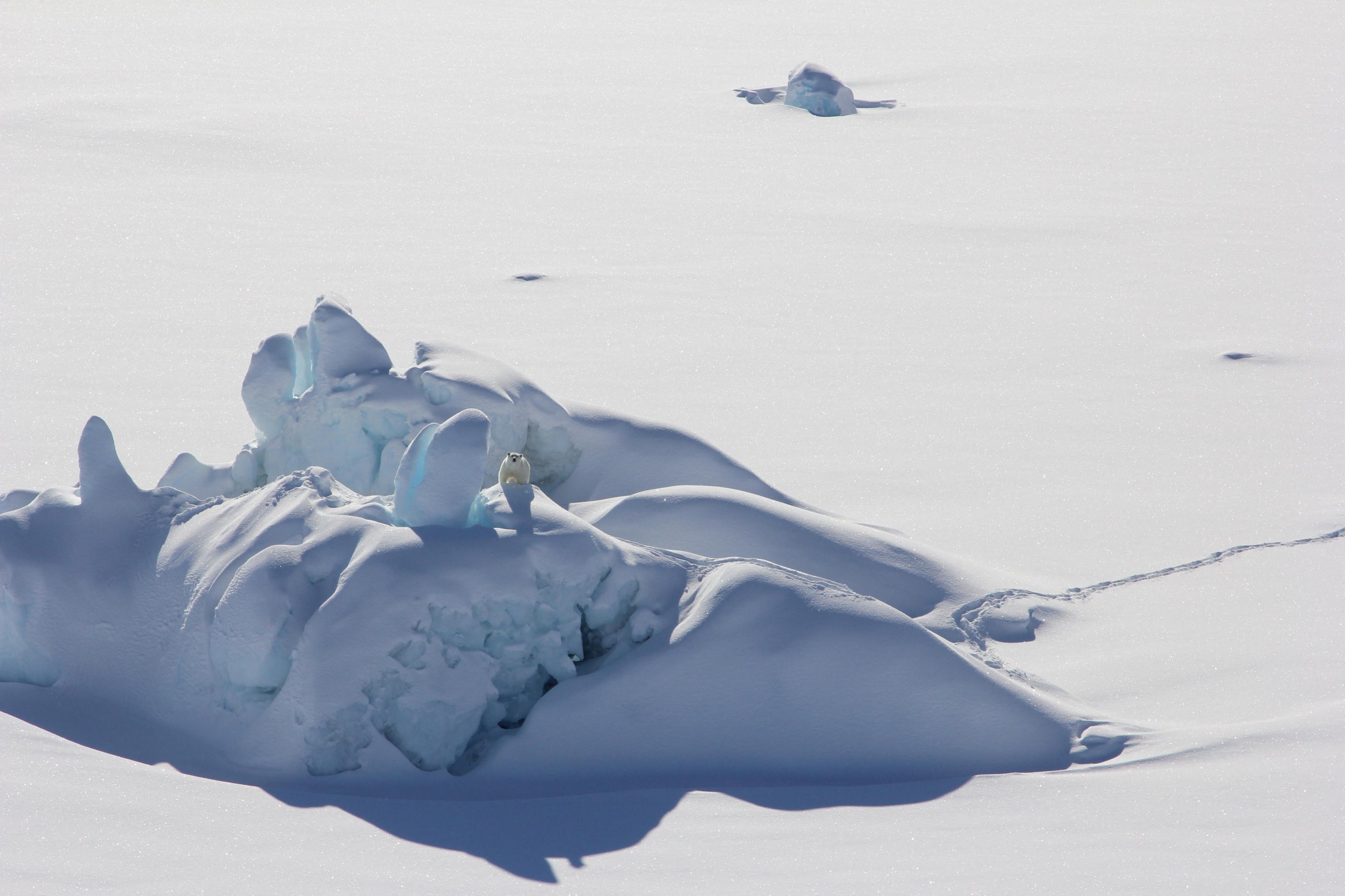
A lone polar bear atop a snow-covered iceberg in the Wandel Sea, Greenland, July 1, 2021. (AFP Photo)
by ASSOCIATED PRESS Jul 01, 2021 7:14 pm

The “Last Ice Area,” a part of the Arctic named for its floating sea ice thought to be thick enough to withstand global warming for decades, melted enough for a ship to pass through last summer, shocking scientists.

The opening, documented by scientists aboard a German icebreaker, appeared in late July and August in the Wandel Sea north of Greenland. Mostly it was due to a freak weather event, but thinning sea ice from decades of climate change was a significant factor, according to a study Thursday in the journal Communications Earth and Environment.

While scientists have said most of the Arctic could be free of summer sea ice by mid-century, the Last Ice Area was not part of that equation. They figure the 380,000-square-mile (1-million-square-kilometer) area won’t be ice-free in the summer until around 2100, said study co-author Kent Moore, a University of Toronto atmospheric physicist.

“It’s called the Last Ice Area for a reason. We thought it was kind of stable,” said co-author Mike Steele, a University of Washington oceanographer. “It’s just pretty shocking. ... In 2020, this area melted out like crazy.”

Scientists believe the area – located north of Greenland and Canada – could become the last refuge for animals like polar bears that depend on ice, said Kristin Laidre, a co-author and biologist at the University of Washington.

The main cause for the sudden ice loss was extraordinary strong winds that pushed the ice out of the region and down the coast of Greenland, Moore said.

That had happened in smaller, infrequent episodes, but this time was different, Moore said. The researchers used computer simulations and 40 years of Arctic sea data to calculate that “there was a significant climate change signal" – about 20%, they estimate – in the event, Moore said.

In the past, thicker Wandel Sea ice would have resisted the strong winds, but in 2020 it was thinner and “more easily broken up and pushed out,” said National Snow and Ice Data Center scientist Walt Meier, who wasn’t part of the study.

Another part of the Last Ice Area, off Canada’s Ellesmere Island, had open waters after the July 2020 collapse of part of the Milne ice shelf, but scientists are still studying it to determine if there is a climate change connection, Moore said.


  • shortlink copied
  • KEYWORDS
    arctic melt last ice area shipping global warming
    The Daily Sabah Newsletter
    Keep up to date with what’s happening in Turkey, it’s region and the world.
    You can unsubscribe at any time. By signing up you are agreeing to our Terms of Use and Privacy Policy. This site is protected by reCAPTCHA and the Google Privacy Policy and Terms of Service apply.
    No Image
    Water lilies dot Beyşehir Lake in Turkey's Konya
    PHOTOGALLERY
    • POLITICS
    • Diplomacy
    • Legislation
    • War On Terror
    • EU Affairs
    • News Analysis
    • TÜRKİYE
    • Istanbul
    • Education
    • Investigations
    • Minorities
    • Diaspora
    • World
    • Mid-East
    • Europe
    • Americas
    • Asia Pacific
    • Africa
    • Syrian Crisis
    • İslamophobia
    • Business
    • Automotive
    • Economy
    • Energy
    • Finance
    • Tourism
    • Tech
    • Defense
    • Transportation
    • News Analysis
    • Lifestyle
    • Health
    • Environment
    • Travel
    • Food
    • Fashion
    • Science
    • Religion
    • History
    • Feature
    • Expat Corner
    • Arts
    • Cinema
    • Music
    • Events
    • Portrait
    • Performing Arts
    • Reviews
    • Sports
    • Football
    • Basketball
    • Motorsports
    • Tennis
    • Opinion
    • Columns
    • Op-Ed
    • Reader's Corner
    • Editorial
    • Photo gallery
    • DS TV
    • Jobs
    • privacy
    • about us
    • contact us
    • RSS
    © Turkuvaz Haberleşme ve Yayıncılık 2021