Daily Sabah logo

Politics
Diplomacy Legislation War On Terror EU Affairs Elections News Analysis
TÜRKİYE
Istanbul Education Investigations Minorities Expat Corner Diaspora
World
Mid-East Europe Americas Asia Pacific Africa Syrian Crisis Islamophobia
Business
Automotive Economy Energy Finance Tourism Tech Defense Transportation News Analysis
Lifestyle
Health Environment Travel Food Fashion Science Religion History Feature Expat Corner
Arts
Cinema Music Events Portrait Reviews Performing Arts
Sports
Football Basketball Motorsports Tennis
Opinion
Columns Op-Ed Reader's Corner Editorial
PHOTO GALLERY
JOBS ABOUT US RSS PRIVACY CONTACT US
© Turkuvaz Haberleşme ve Yayıncılık 2025

Daily Sabah - Latest & Breaking News from Turkey | Istanbul

  • Politics
    • Diplomacy
    • Legislation
    • War On Terror
    • EU Affairs
    • Elections
    • News Analysis
  • TÜRKİYE
    • Istanbul
    • Education
    • Investigations
    • Minorities
    • Expat Corner
    • Diaspora
  • World
    • Mid-East
    • Europe
    • Americas
    • Asia Pacific
    • Africa
    • Syrian Crisis
    • Islamophobia
  • Business
    • Automotive
    • Economy
    • Energy
    • Finance
    • Tourism
    • Tech
    • Defense
    • Transportation
    • News Analysis
  • Lifestyle
    • Health
    • Environment
    • Travel
    • Food
    • Fashion
    • Science
    • Religion
    • History
    • Feature
    • Expat Corner
  • Arts
    • Cinema
    • Music
    • Events
    • Portrait
    • Reviews
    • Performing Arts
  • Sports
    • Football
    • Basketball
    • Motorsports
    • Tennis
  • Gallery
  • Opinion
    • Columns
    • Op-Ed
    • Reader's Corner
    • Editorial
  • TV
  • Life
  • Health
  • Environment
  • Travel
  • Food
  • Fashion
  • Science
  • Religion
  • History
  • Feature
  • Expat Corner

Iraq struggles to save ancient monuments from climate change

by Reuters

UR, Iraq Oct 30, 2025 - 11:20 am GMT+3
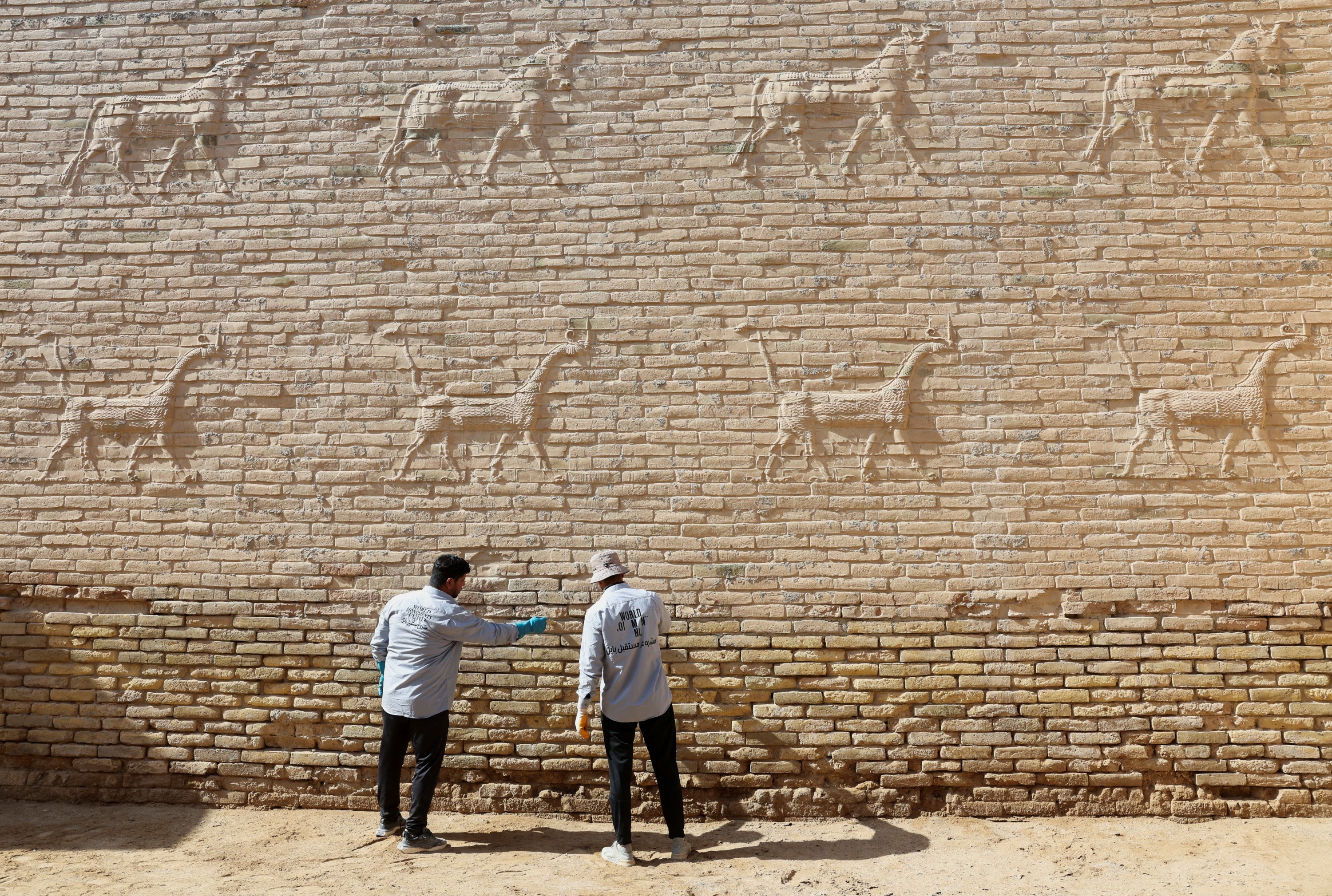
Workers clean salt deposits from a wall decorated with animal reliefs at Babylon, a UNESCO World Heritage site, Babylon, Iraq, Oct. 22, 2025. (Reuters Photo)
by Reuters Oct 30, 2025 11:20 am

Iraqi officials are sounding the alarm to save monuments of the cradle of civilization, with thousands of years of history at risk of disappearing as Iraq's ancient southern cities face erosion because of climate change.

Harsh, dry weather is increasing salinity in the soil and damaging the historical monuments in the ruins of cities such as Ur, the birthplace of the biblical patriarch Abraham and Babylon, once a magnificent capital of empires.

Sand dunes are causing the deterioration of the northern side of the majestic Ziggurat of Ur, a massive stepped pyramid temple that was dedicated more than 4,000 years ago to the moon god, Nanna.

"The combination of wind and sand dunes leads to the erosion of the northern sections of the structure," said Abdullah Nasrallah, an archaeologist at the antiquities department in Dhi Qar province, where the city of Ur is located.

Salt erodes mud bricks

The shrine, a UNESCO World Heritage Site, remains one of the best-preserved examples of ancient Mesopotamian architecture that offers an insight into the religious practices and sacred rituals of the Sumerian empire, where one of the world's first civilizations flourished.
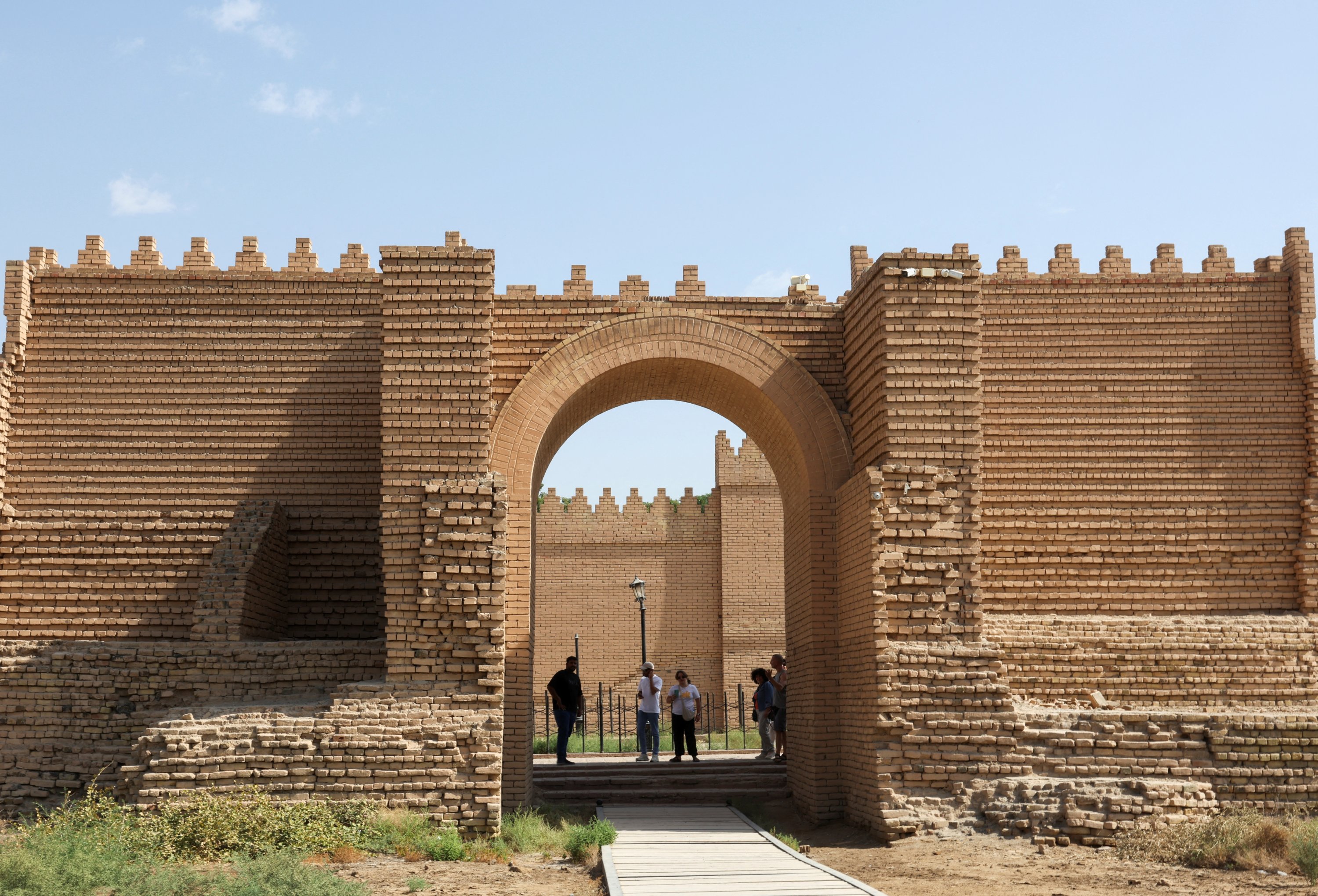
Tourists visit Babylon, a UNESCO World Heritage site, Babylon, Iraq, Oct. 22, 2025. (Reuters Photo)

"While the third layer (of the Ziggurat) had already deteriorated due to weathering and climate change, erosion has now begun to affect the second layer," Nasrallah said.

Nearby, salt deposits have been eating away at the mud bricks of the Royal Cemetery of Ur, discovered by British archaeologist Sir Leonard Woolley in the 1920s and now at risk of collapsing.

"These salt deposits appeared due to global warming and climate change, which led to the destruction of important parts of the cemetery," said Dr. Kazem Hassoun, an inspector at the antiquities department in Dhi Qar.

"Eventually, the deposits will cause the complete collapse of the mud bricks that make up this cemetery," Hassoun said.

Iraq is battling rising temperatures and heavy droughts that have increased the salinity levels in its south, where the mighty Tigris and Euphrates rivers converge as they approach the Gulf.

Further up the Euphrates, the archaeological sites of ancient Babylon are in danger as well. They urgently require attention and restoration, but the lack of funding remains a challenge, Dr. Montaser al-Hasnawi, the director general of Iraq's Ministry of Culture and Tourism, told Reuters.
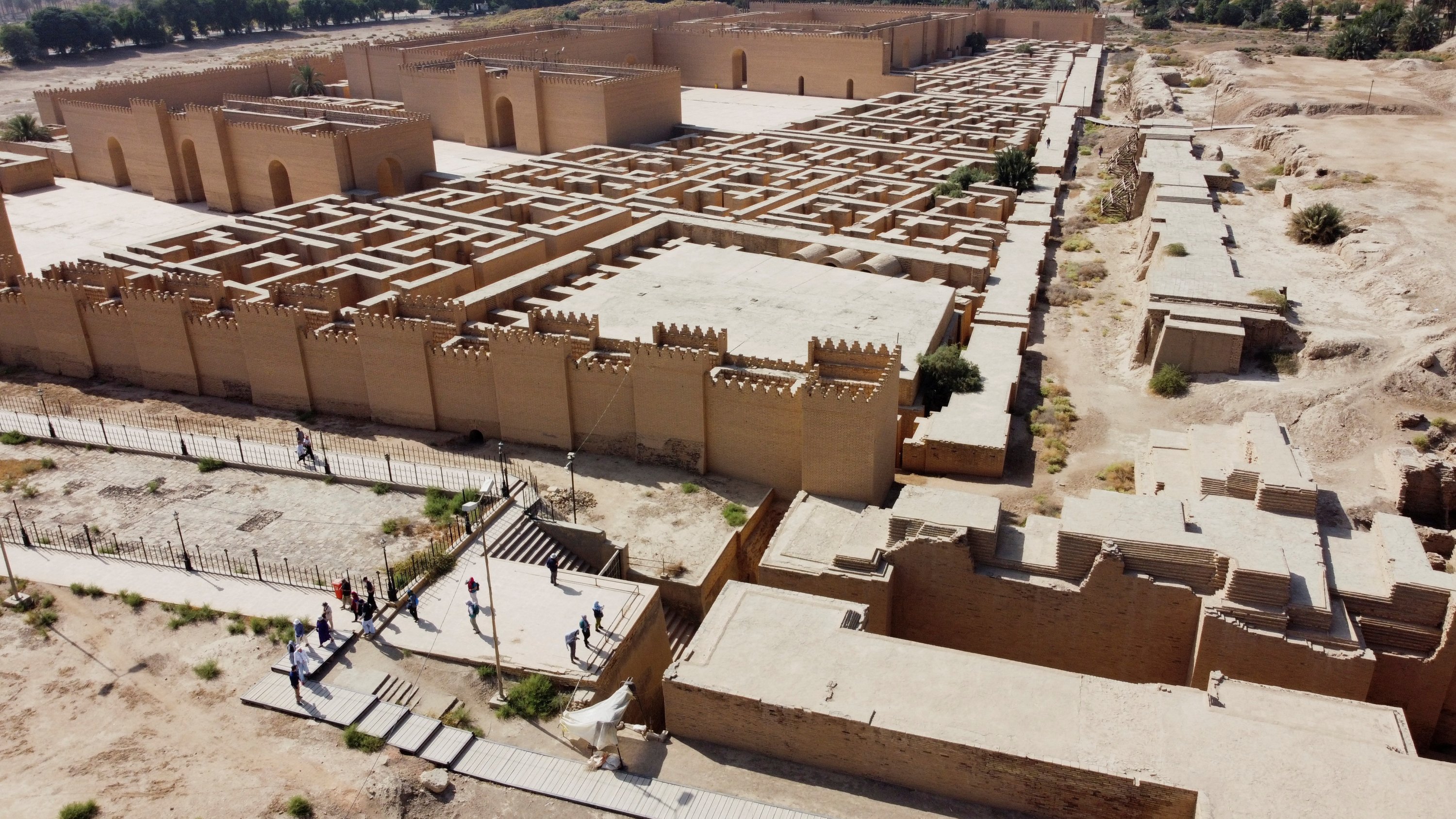
A drone view shows the ancient city of Babylon, a UNESCO World Heritage site, Babylon, Iraq, Oct. 22, 2025. (Reuters Photo)

The country has already endured decades of warfare that threatened its historical structures – from war with Iran in the 1980s, to the Gulf War of the early 1990s, the 2003 U.S.-led invasion, followed by insurgent violence and the rise and fall of the Islamic State group.

Its latest challenge is climate change, altering the country's whole ecosystem, not only putting its agricultural future at risk, but also endangering its historical footprint.

In Babylon, high salinity levels are endangering the clay-based materials of ancient structures, on which elaborate Sumerian drawings are still visible.

The materials were sourced directly from the land, which had lower salinity at the time. That could have made them less vulnerable to climate change, but improper restoration practices in previous decades made the old structures more susceptible, Hasnawi said. Rising salinity makes the need to redo the flawed restoration more pressing.

"The salinity problem is increasing in both surface and groundwater. This will lead to the destruction of many cities that are beneath the earth," Hasnawi said.


  • shortlink copied
  • Last Update: Oct 30, 2025 1:41 pm
    KEYWORDS
    civilization iraq babylon ziggurat unesco world heritage mesopotamian civilization architecture global warming climate change erosion drought
    The Daily Sabah Newsletter
    Keep up to date with what’s happening in Turkey, it’s region and the world.
    You can unsubscribe at any time. By signing up you are agreeing to our Terms of Use and Privacy Policy. This site is protected by reCAPTCHA and the Google Privacy Policy and Terms of Service apply.
    No Image
    May Day 2023 from around the world
    PHOTOGALLERY
    • POLITICS
    • Diplomacy
    • Legislation
    • War On Terror
    • EU Affairs
    • News Analysis
    • TÜRKİYE
    • Istanbul
    • Education
    • Investigations
    • Minorities
    • Diaspora
    • World
    • Mid-East
    • Europe
    • Americas
    • Asia Pacific
    • Africa
    • Syrian Crisis
    • İslamophobia
    • Business
    • Automotive
    • Economy
    • Energy
    • Finance
    • Tourism
    • Tech
    • Defense
    • Transportation
    • News Analysis
    • Lifestyle
    • Health
    • Environment
    • Travel
    • Food
    • Fashion
    • Science
    • Religion
    • History
    • Feature
    • Expat Corner
    • Arts
    • Cinema
    • Music
    • Events
    • Portrait
    • Performing Arts
    • Reviews
    • Sports
    • Football
    • Basketball
    • Motorsports
    • Tennis
    • Opinion
    • Columns
    • Op-Ed
    • Reader's Corner
    • Editorial
    • Photo gallery
    • DS TV
    • Jobs
    • privacy
    • about us
    • contact us
    • RSS
    © Turkuvaz Haberleşme ve Yayıncılık 2021