For the past month, I’ve found myself thinking about utopias and dystopias. It all began with Ursula K. Le Guin’s "The Ones Who Walk Away from Omelas," which I mentioned in my last column. What stayed with me was how easily I could see myself among Omelas’ happy citizens, and how quickly my perception of the city shifted once I learned the price of their happiness. Around the same time, I started watching "Fallout," a series adapted from the video game of the same name. Set more than two centuries after a nuclear war, it follows Americans living in underground vaults and those trying to survive on the surface. As I watched, I kept wondering which side of that world I would call home if I had been born beyond the vault door.
I’ve been asking people to describe their own utopias. Most of those I spoke to imagined a change in their place in the world. I understand the impulse. My own vision begins with financial freedom and the comfort of having someone else take care of things. But who would that someone be and what would their utopia look like? I realized that even my ideal world was built around the economic order I already knew. I hadn't imagined a different system; I had only imagined a better place for myself within the existing one.
It is harder to imagine a better world without considering the conditions that make life possible in the first place. Climate change makes it difficult to keep the question of a better future at a personal level, reminding us that the world we imagine for ourselves is inseparable from the conditions we all share. Türkiye will host COP31, the United Nations climate summit, in Antalya Nov. 9-20. I believe climate should be the defining issue of 2027 and the years ahead. Yet even as I follow the summit, I find that I can repeat the figure 1.5 degrees Celsius (2.7 degrees Fahrenheit) more easily than I can picture what it means.
That figure represents the long-term increase in the global average temperature compared with preindustrial levels. But what does half a degree actually mean beneath the surface? At 1.5 degrees Celsius of warming, the IPCC projects that warm-water coral reefs could decline by a further 70% to 90%. At 2 degrees Celsius, the projected loss rises to more than 99%. Closer to Antalya, the Mediterranean has already been warming faster than the global average. Rising temperatures are bringing longer, more intense heat waves and putting further pressure on the region's water resources. These are the stakes behind the figures that will be discussed in Antalya. When the places that sustain us become increasingly difficult to live in, what remains of our pursuit of wealth and power?
When I think of a technological dystopia, my mind immediately turns to artificial intelligence, cyberattacks and the possibility of machines being used to target people. I was still preoccupied with these ideas when I came across "Wetland," an exhibition by Jakob Kudsk Steensen at the Museum of Modern Art in New York. But what caught my attention was something far smaller: a worm.
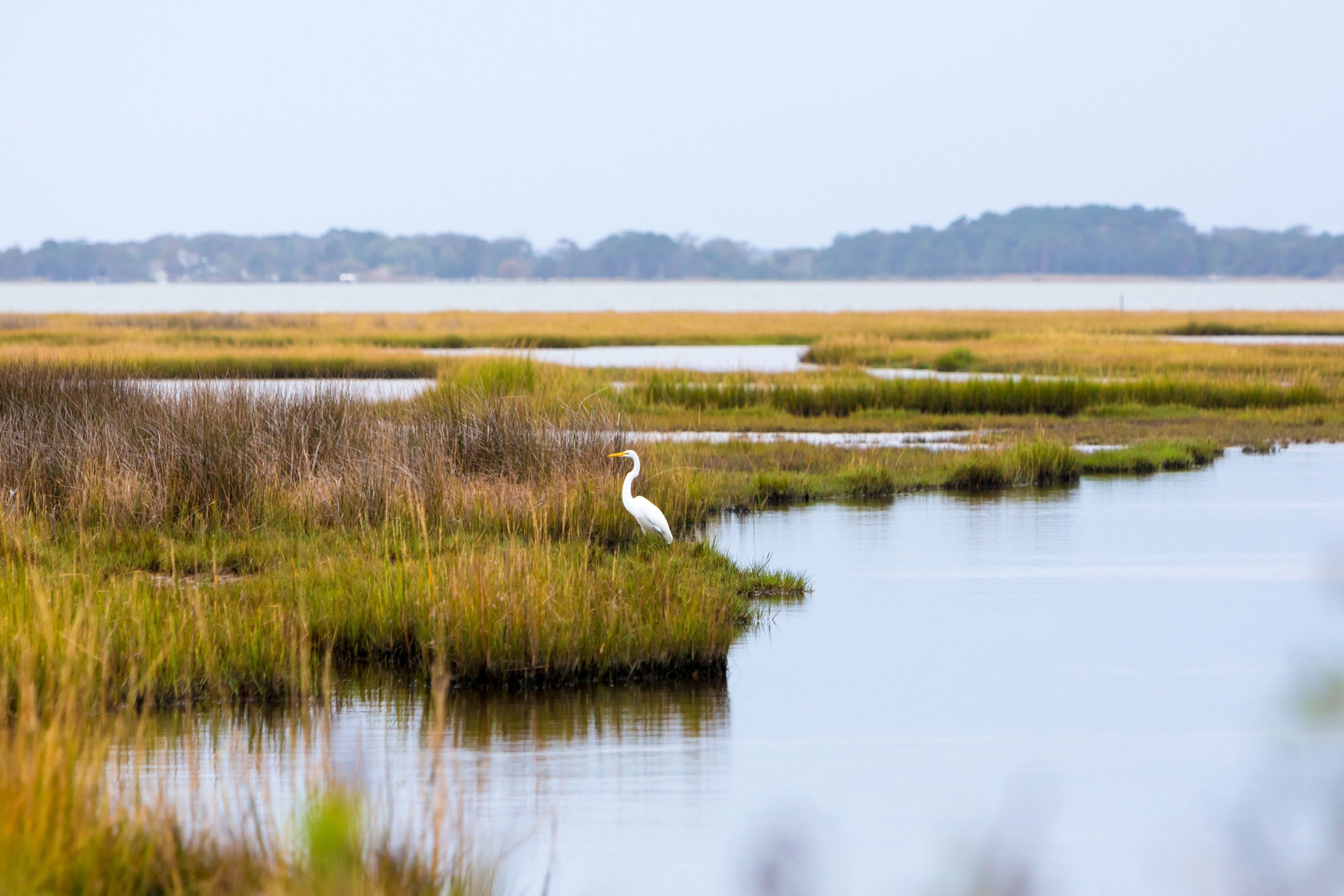
To create Berl-Berl, the work currently on view at MoMA, Steensen spent weeks exploring the wetlands around Berlin. In an interview with the museum, he recalls turning over a stone and discovering a tiny worm. A biologist who was with him noticed something he would otherwise have overlooked: the worm had just laid eggs. Steensen photographed and scanned them, then incorporated them into the virtual wetland he created in a video game engine. There, the tiny eggs appear as enormous spheres drifting through the landscape.
I keep returning to the moment before Steensen took the photograph. He explains that one of the pleasures of fieldwork is discovering something he would never have thought to ask for in an AI prompt. He had to turn over the stone in the first place, and even then, it took someone else's trained eye to notice what was there. It made me rethink the question I had been asking about utopia. I had spent a month imagining where I would fit into an ideal world, but had barely considered what might be living beneath my feet.