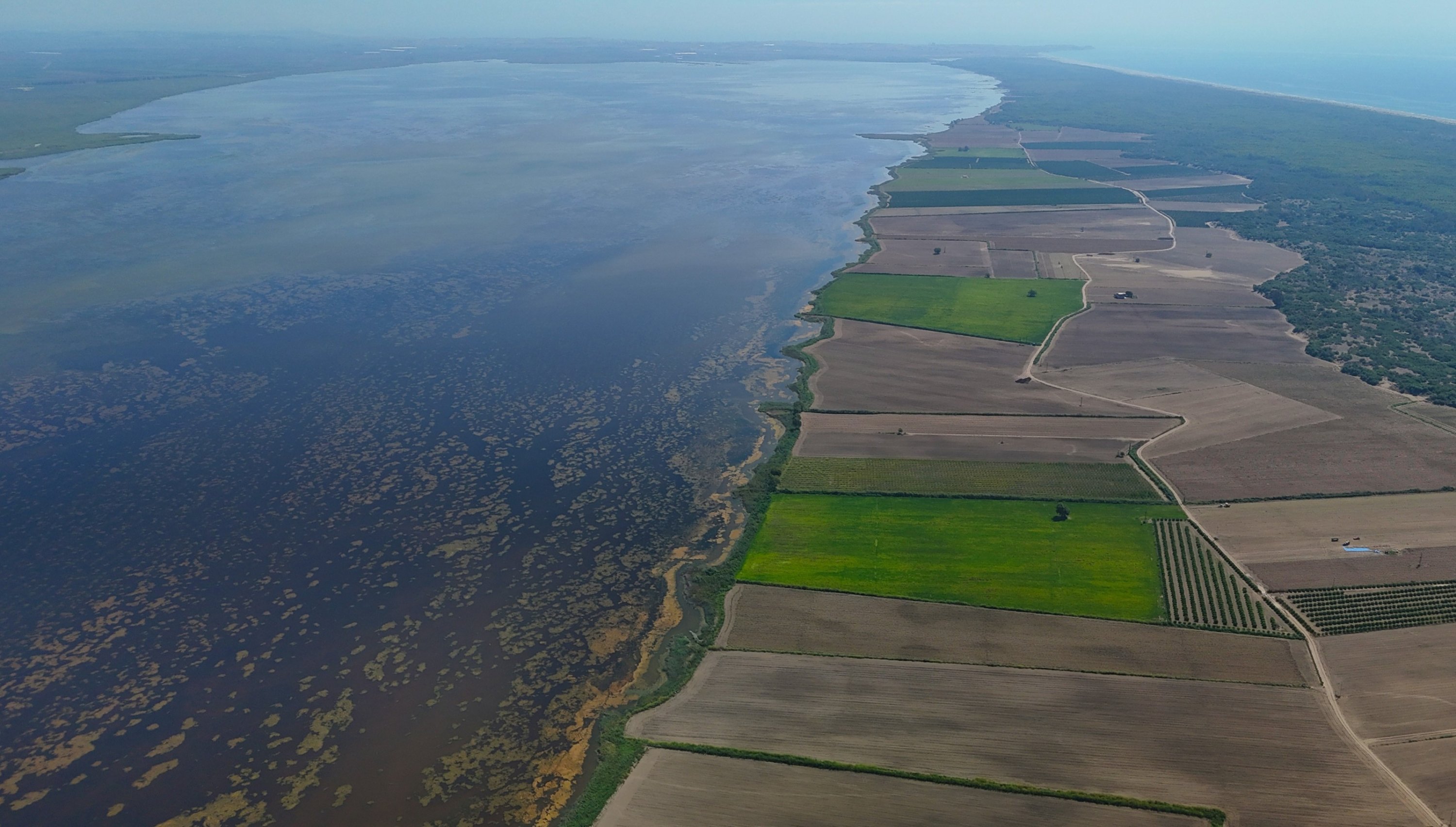
Akyatan Lagoon, Türkiye’s largest lagoon, is facing an ecological crisis driven by agricultural pollution and excessive organic matter.
Oxygen levels, which are high during the day, drop to zero at night, while young fish die and algae proliferate. “Akyatan Lagoon is struggling to survive. Nature-based solutions must be developed urgently,” said Fatma Çevik, a professor at Çukurova University’s Faculty of Fisheries.
Located in southern Türkiye’s Çukurova region, Akyatan Lagoon is known for its rich biodiversity. However, mounting pressure from human activities is increasingly threatening the ecosystem. Chemicals, nitrogen and phosphorus carried into the lagoon through drainage channels from intensive agricultural areas are posing a serious risk to aquatic life. Researchers are examining the lagoon’s pollution levels, including its physical, chemical and microbiological characteristics.
Çevik said the lagoon's current condition was alarming, stressing its importance for both wildlife and the ecosystem services it provides.
Intensive farming and pollutants carried by drainage channels have increased the pressure on the lagoon, she said.
“Akyatan Lagoon is Türkiye's largest lagoon, and it provides a wide range of ecosystem services,” she said. “Yet, it is under pressure from human activities.”
Çevik said intensive farming around the lagoon was contributing to pollution, with drainage channels carrying agricultural contaminants and high levels of nitrogen and phosphorus into the water.
The lagoon's shallow waters have allowed excess nutrients to fuel the overgrowth of aquatic plants. Once the plants complete their life cycles, they sink to the bottom and decompose, releasing organic matter back into the water.
“The lagoon has now entered a self-sustaining cycle of pollution, even if no new pollutants enter from outside,” Çevik said.
Çevik warned that chemical processes in the lagoon pose serious risks to aquatic life. Excessive organic matter and the proliferation of aquatic plants are disrupting the ecosystem's balance.
“Akyatan Lagoon is struggling to survive. Excessive organic matter and plant growth trigger chemical reactions and the release of harmful gases,” Çevik said. “While photosynthesis produces high oxygen levels during the day, oxygen levels unfortunately drop to zero at night.”
She added that young fish were dying among the aquatic plants and warned that sediment buildup was making the lagoon increasingly shallow.
Çevik said research was also underway to investigate microplastics in lagoon systems. While relevant institutions are taking steps to protect Akyatan, she stressed the importance of enforcing environmental regulations and raising public awareness.
Çevik said the General Directorate of Nature Conservation and National Parks and the Ministry of Agriculture and Forestry had taken steps to protect the lagoon and were developing management plans for the area.
Çevik stressed the need for stricter enforcement of environmental regulations and greater public awareness, noting that nature-based solutions were also a key topic on the COP31 agenda.
She said a project led by Sadık Dinçer, a professor in Çukurova University's Biology Department, was examining pollution levels in the lagoon and identifying nature-based ways to prevent further contamination.
“Climate is inseparable from water, and we must protect and monitor our aquatic ecosystems with the utmost care,” she said.