As world leaders, environmental experts and innovators gather in Antalya for COP31, conversations about climate change are once again taking center stage. While discussions often focus on energy, transportation and industrial emissions, another industry deserves a prominent place in the conversation: fashion.
Fashion has long been a reflection of the world around us, expressing our identities, cultures and changing times. Today, it also has to reflect our growing responsibility toward the planet.
As a fashion designer, I believe sustainability should not be treated as a passing trend or simply another marketing strategy. It should become part of the creative process itself, influencing how we design, produce, consume and ultimately value clothing.
The real question is no longer whether fashion needs to change, but how we can make that change meaningful and lasting.
For decades, fashion has revolved around the constant pursuit of what is new. With collections changing from season to season and production cycles growing ever shorter, consumers have been encouraged to buy more and hold on to their clothes for less time.
But to me, luxury has always meant something else.
Luxury is not necessarily about owning more. It is about appreciating quality, craftsmanship and pieces that remain meaningful over time.
A beautifully constructed garment should not lose its value simply because a new season has arrived. It should be something we cherish, wear repeatedly and perhaps even pass on to another generation.
Eveningwear and couture embody this philosophy particularly well. Through meticulous craftsmanship, intricate details and carefully selected fabrics, a garment can become something to treasure for years rather than just another seasonal statement.
For me, luxury is ultimately about creating less, but creating better.
One of the most inspiring aspects of sustainable fashion is the opportunity to combine traditional craftsmanship with modern technology.
Türkiye has an extraordinary textile heritage. From Anatolian weaving traditions to intricate embroidery and handcrafted embellishments, our cultural history offers an invaluable source of knowledge and creativity.
These traditions remind us of a time when clothing required patience, skill and attention to detail. Garments were made to be appreciated, repaired and preserved rather than quickly discarded when they were no longer in fashion.
At Barrus, Anatolian culture has always been an important source of inspiration.
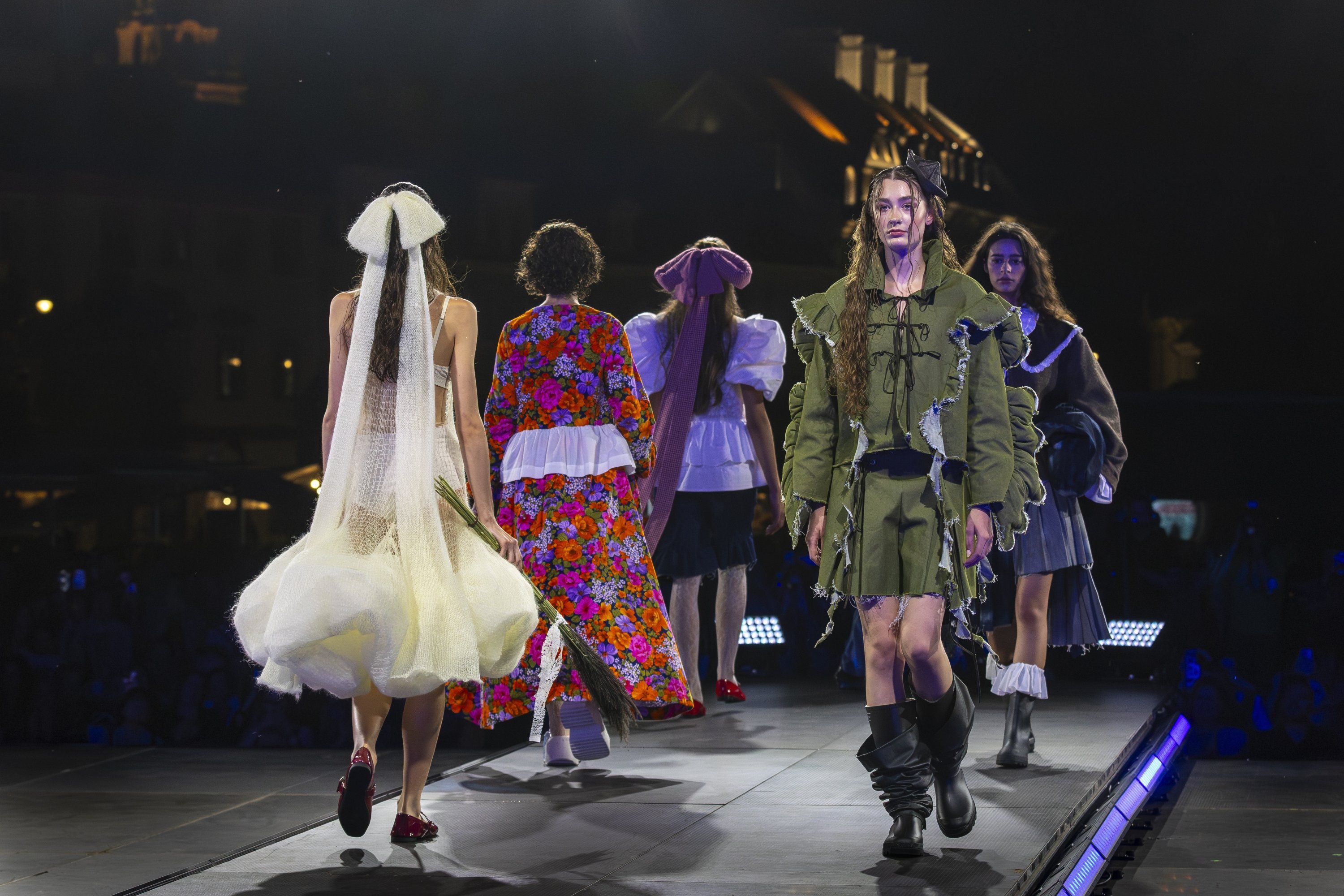
Our latest collection, The Anatolian Garden, presented during London Fashion Week, drew inspiration from the flowers and natural beauty of Anatolia. Through delicate textures, floral details and traditional craftsmanship, we wanted to bring elements of our cultural heritage into a contemporary international fashion setting.
I believe preserving these techniques is also part of sustainability. When we support craftsmanship, we help preserve cultural knowledge while encouraging a deeper appreciation of the work behind each garment.
Sustainability is not only about protecting natural resources. It is also about protecting the human skills and cultural stories that make fashion meaningful.
Innovation also has an important role to play in shaping the future of fashion.
Since 2020, we have increasingly incorporated recycled fabrics into our collections at Barrus, including textiles produced from recycled plastic bottles. On average, approximately half of the fabrics used in our collections since then have been recycled materials.
We have also been exploring what nanotechnology and functional textiles can bring to fashion.
One of our projects involves aromatherapy scarves developed using microcapsule technology, designed to release fragrance through movement and friction.
For me, the purpose of such innovation is to explore how fashion can offer additional functionality and create a more meaningful relationship between people and the products they own.
Of course, technology alone does not make a product sustainable. New materials and textile treatments must also be evaluated for their environmental impact, durability and end-of-life implications.
Innovation becomes truly valuable when it is supported by responsible production, thoughtful design and measurable environmental benefits.
Sustainability cannot depend on designers alone.
Brands must take responsibility for their material choices, production processes, waste and supply chains. At the same time, consumers have an important role in changing the culture of consumption.
We need to move away from the idea that wearing the same outfit more than once is somehow undesirable.
In fact, I believe wearing a beautifully designed piece repeatedly should be seen as a sign of confidence and personal style.
Fashion should encourage individuality rather than endless consumption.
Designers can support this shift by creating timeless silhouettes, choosing durable materials and considering how garments will be used long after they leave the runway.
Consumers, meanwhile, can make more thoughtful choices by investing in quality, caring for their clothes and appreciating the craftsmanship behind them.
Small changes in behavior, multiplied across millions of people, can contribute to a much larger cultural transformation.
Hosting COP31 in Antalya gives Türkiye an important opportunity to contribute to the international conversation about climate action. It also provides an opportunity to demonstrate that sustainability is not limited to environmental policy or technological development.
Creative industries, including fashion, architecture, design and the arts, have the ability to influence how people think, feel and behave. Fashion, in particular, has a unique power to communicate complex ideas through something deeply personal: the clothes we wear.
A collection can celebrate biodiversity. A textile innovation can encourage new conversations about responsible materials. A traditional craft can remind us why preserving cultural heritage matters.
However, creative storytelling must be accompanied by genuine action. If the fashion industry wants to contribute meaningfully to climate goals, it must move beyond attractive sustainability campaigns and focus on transparent, measurable improvements. This includes reducing unnecessary production, extending product lifespans, improving material choices and investing in responsible manufacturing.
I often think about how my relationship with fashion began.
As a child, I loved drawing clothes and creating outfits for my dolls. What fascinated me was the possibility of transforming an idea into something beautiful.
That sense of creativity remains with me today, but my understanding of design has evolved.
I now believe that creating something beautiful also comes with a responsibility to consider its impact.
As COP31 brings the world’s attention to Antalya, I hope we can broaden the conversation around sustainability to include not only what we produce, but why we produce it and how long it remains valuable.
The future of fashion should not be defined by how quickly we can create the next trend. It should be defined by how intelligently we use our resources, how carefully we preserve our heritage and how successfully we combine creativity with responsibility.
Because ultimately, the most sustainable form of luxury may be something surprisingly simple: creating beautiful things that people want to keep.