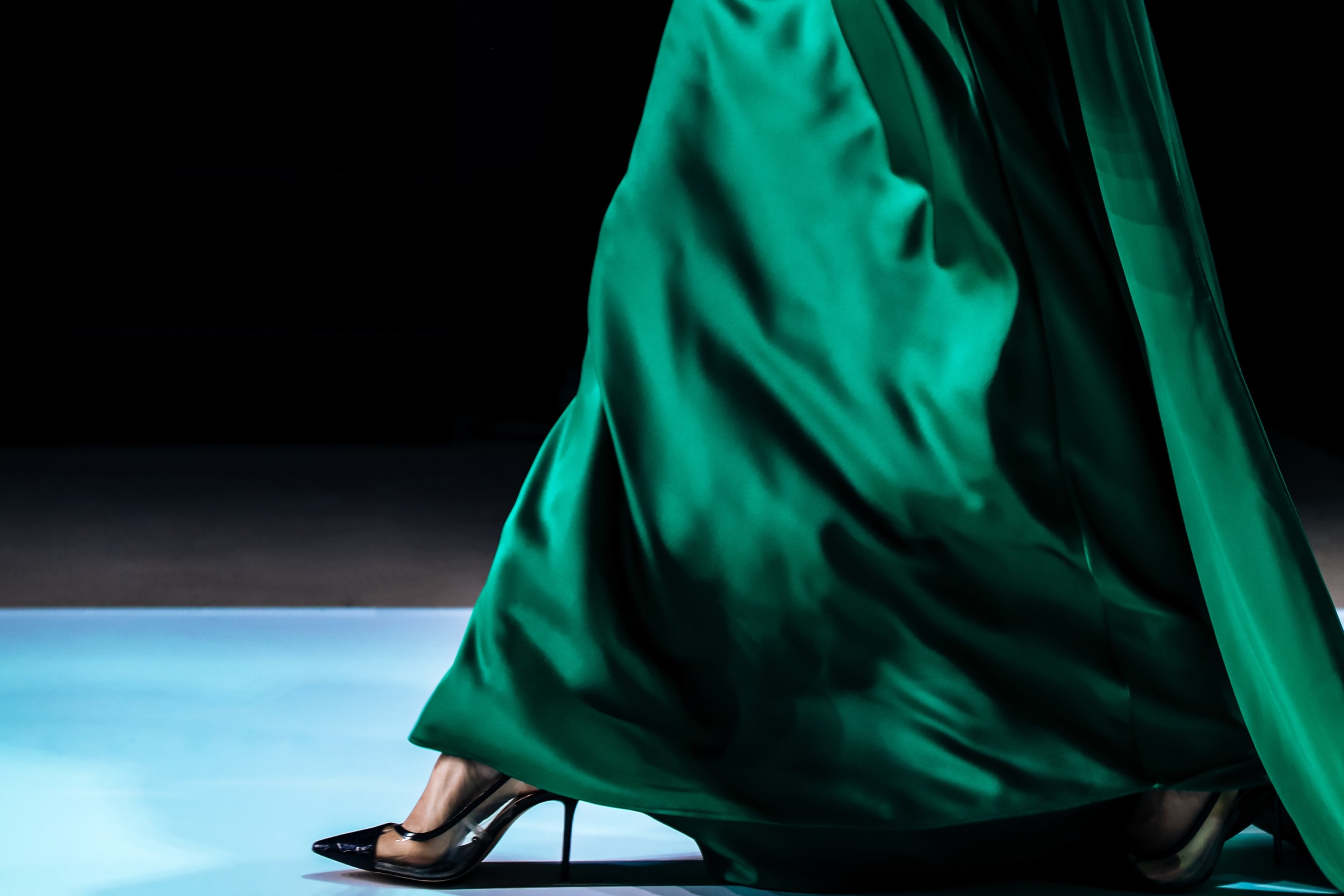
There was a time when a fashion show had a relatively simple purpose: designers presented their new collections, buyers took notes, editors identified the season’s key pieces and photographers documented the looks. Today, that definition feels almost nostalgic.
As another fashion month approaches, with the industry preparing to move between New York, London, Milan and Paris, one thing is increasingly clear: the modern fashion show is no longer simply about clothes. It has become an experience.
Of course, the collection remains at the center. A beautiful dress, an exceptional cut or an unexpected fabric can still create the moment everyone remembers. But audiences now expect something beyond a sequence of looks walking down a runway. The location, music, lighting, casting, choreography and atmosphere have all become part of the language of a collection.
In many ways, fashion is becoming increasingly theatrical.
The choice of venue can now communicate almost as much as the clothes themselves. Designers take us into historic buildings, industrial spaces, gardens, museums and unexpected corners of cities. A runway may last only 15 minutes, yet the world surrounding it can take months to construct.
This is particularly interesting during fashion month because each city already has its own character.
New York brings its energy and commercial confidence. Milan carries the weight of Italian craftsmanship and glamor. Paris continues to embrace spectacle and fantasy. London, meanwhile, has always had a particularly interesting relationship with experimentation.
Perhaps that is why London Fashion Week continues to feel like a place where designers are encouraged not only to present clothes, but also to present ideas.
British fashion has historically celebrated individuality, subculture and designers willing to challenge conventional definitions of beauty. That spirit remains important today, especially at a time when fashion is competing for attention far beyond the traditional industry audience.
The front row is no longer the only audience that matters.
A show may have a few hundred guests inside the venue, but within minutes, images and videos can reach millions of people around the world. Someone watching a runway through their phone in Istanbul, Tokyo or Los Angeles can experience the collection almost simultaneously with an editor sitting in the first row.
Social media has inevitably changed the way shows are created.
Designers now understand that certain moments will travel beyond the room: an extraordinary entrance, a dramatic finale, an unexpected soundtrack or one unforgettable dress. These moments become part of the digital life of the collection.
This does not necessarily mean fashion has become superficial. In fact, it creates an interesting challenge. How do you create something visually powerful enough for the digital world without allowing spectacle to overshadow design?
The strongest shows manage to achieve both.
Another development I find particularly fascinating is the move towards more sensory presentations.
We naturally think of fashion as visual and tactile, but why should the experience stop there?
Music has always played an important role in runway shows, but designers and creative teams are increasingly thinking about atmosphere in a much broader way. Light can completely change the perception of a fabric. Movement can transform a silhouette. Technology can alter color or surface. Even scent can become part of the memory associated with a collection.
These elements open fascinating possibilities for designers.
I have always been interested in the relationship between fashion, technology and the senses, particularly how textiles can carry experiences beyond their visual appearance. For me, the future of fashion is not simply about what a garment looks like, but also about how it makes us feel and what kind of memory it leaves behind.
There is something very powerful about entering a space and immediately understanding the universe of a collection before the first model even appears.
Every season, the same question appears: Do we still need fashion weeks?
In an era of instant digital communication, livestreams and social media, it is a reasonable question. A designer can reveal a collection to the entire world without staging a physical show.
Yet perhaps this is exactly why fashion week still matters.
We spend so much of our lives looking at images through screens that physical experiences have become valuable again. Sitting in a room, hearing the music begin, watching the lights change and seeing a garment move only meters away creates something a photograph cannot completely reproduce.
Fashion week also brings together people who normally experience the industry from very different perspectives: designers, craftsmen, journalists, buyers, photographers, stylists, models and clients. For a few days, a city becomes a meeting point for all of them.
London, Milan and Paris are therefore not simply presenting new clothes. For several weeks each year, they become stages on which fashion discusses where it wants to go next.
As we enter another fashion month, there will inevitably be conversations about colors, hemlines, fabrics and the silhouettes that may define the coming season.
But I suspect the shows we will remember will not necessarily be those with the most elaborate sets or the biggest budgets.
They will be the ones that make us feel something.
Because ultimately, a successful fashion show creates a world – even if we are allowed to enter that world for only fifteen minutes.
The clothes may be what we see first.
The experience is what we take home.