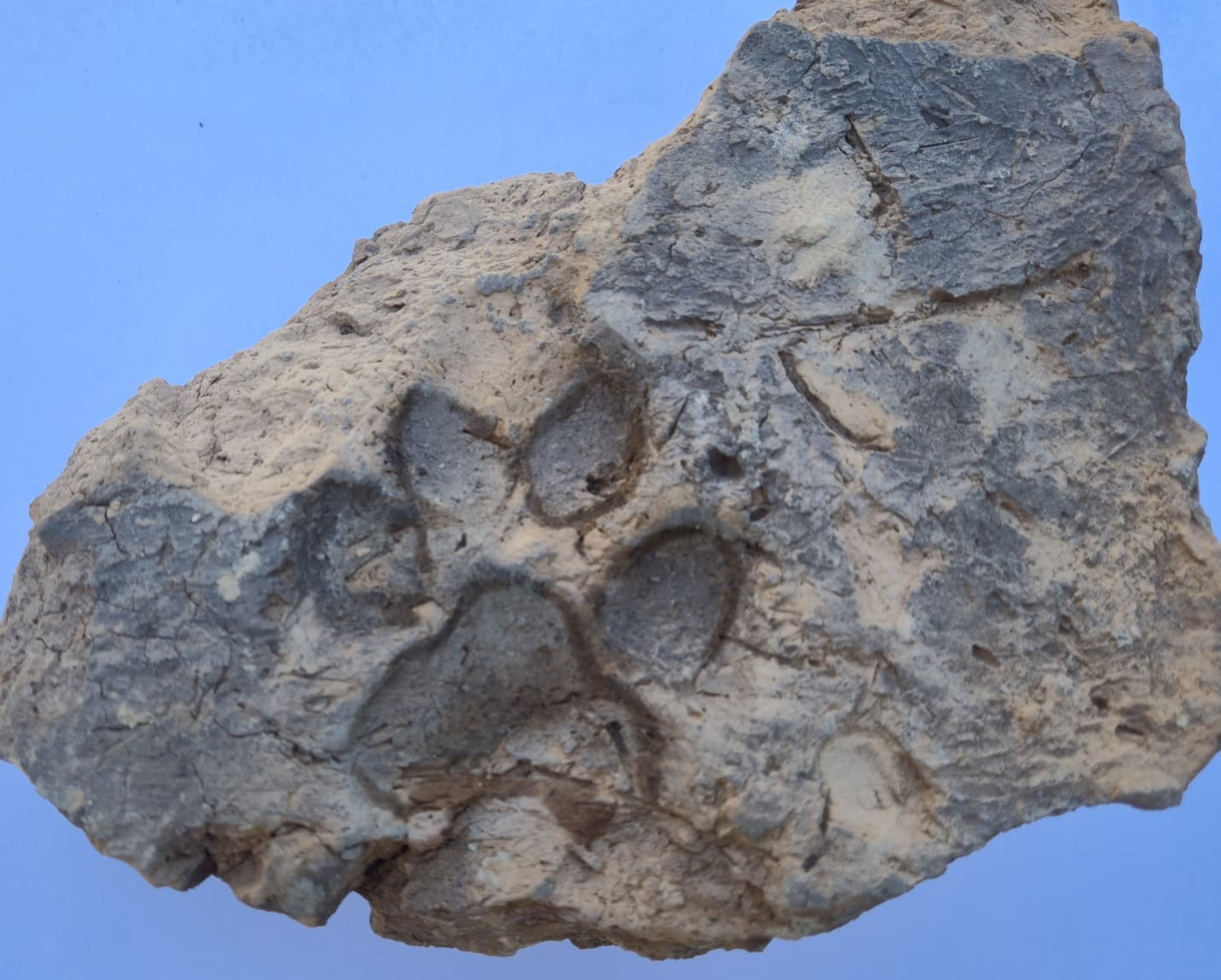
Paw prints left by an animal on a mudbrick around 4,000 years ago have been discovered at Tavşanlı Höyük (Tavşanlı Mound), an archaeological site in western Türkiye’s Kütahya province, Culture and Tourism Minister Mehmet Nuri Ersoy announced.
In a post on his social media account, Ersoy said archaeologists working at the site had uncovered traces left by a four-legged animal on a mudbrick before it had dried.
The brick was found among the rubble of a structure destroyed by fire during the Bronze Age and was once part of the building's wall, Ersoy explained.
“The paw prints preserve a small moment from everyday life 4,000 years ago,” he said. “At Tavşanlı Höyük, one of the largest Bronze Age settlements in western Anatolia, we are uncovering not only structures and artifacts but also these small and unexpected traces of life.”
Ersoy also thanked excavation director professor Erkan Fidan and his team, who have been leading work at the site since 2021.
According to a statement from the Ministry of Culture and Tourism, mudbricks were made by mixing soil, water and straw, pouring the mixture into molds and leaving the bricks to dry in the sun. The paw prints were left by a dog that walked across the brick while it was still wet, becoming permanently preserved as the material hardened.
The brick was later used in a house wall before the Bronze Age structure was destroyed by fire, leaving it buried in the rubble.
Excavations led by Fidan since 2021 have been shedding light on the architecture and archaeological remains of Tavşanlı Höyük, one of the largest Bronze Age settlements in western Anatolia. The paw prints highlight how the work is revealing not only buildings and artifacts but also small, unexpected details of daily life in the city around 4,000 years ago.