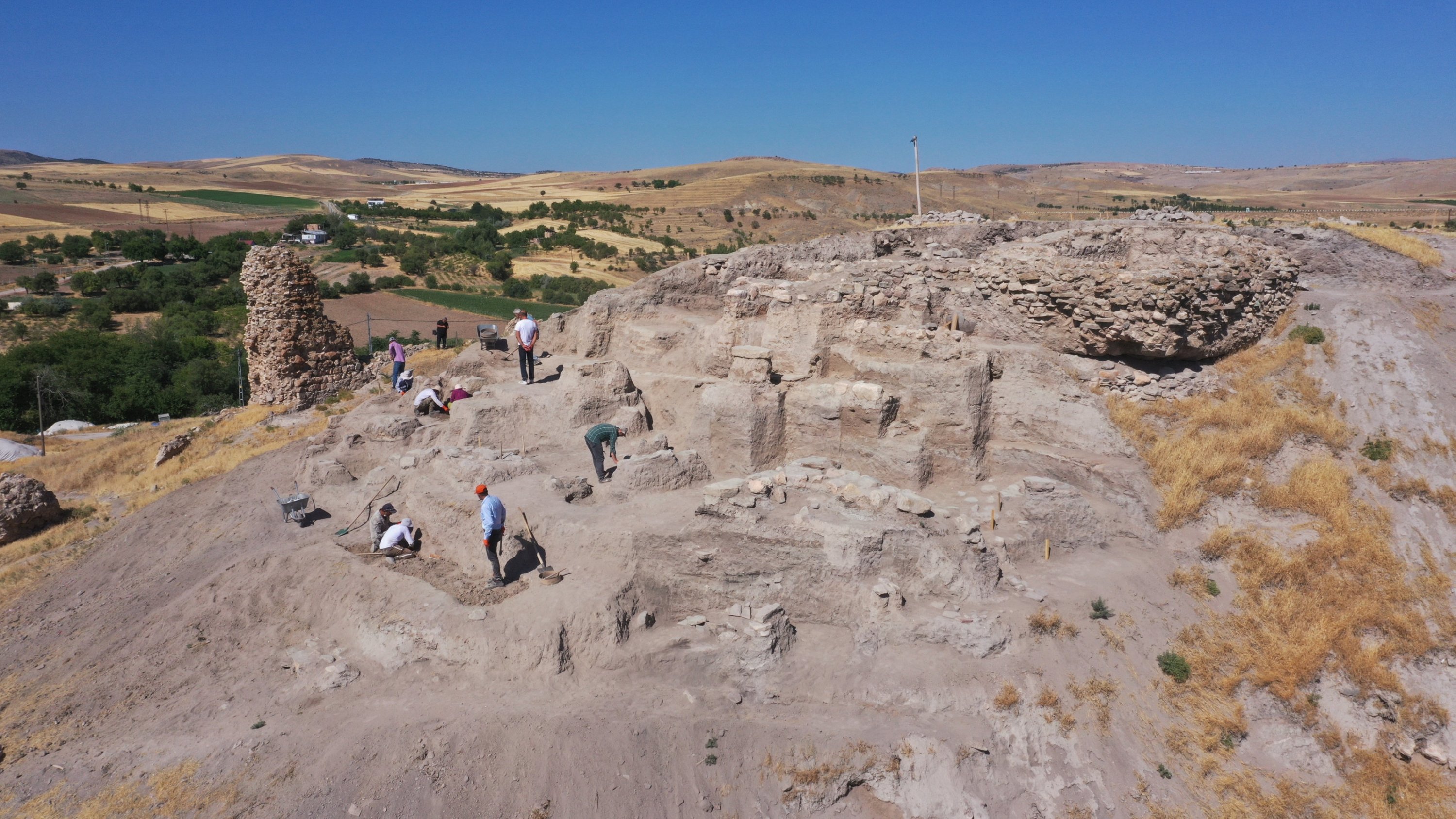
Archaeological excavations at Tadım Castle and Mound in Elazığ, eastern Türkiye, have uncovered a 6,000-year-old temple complex.
These excavations, led by the Ministry of Culture and Tourism in coordination with the Provincial Directorate of Culture and Tourism and the Elazığ Museum Directorate, began last year at the castle and mound located in the center of Tadım village. The discovered structures, artifacts and findings shed light on the 6,000-year history of the area, offering significant insights into the lifestyles, socio-economic and socio-cultural structures of the civilizations that once inhabited the region.
This year, excavations were conducted in the 80-81 grid areas of the 35-meter-high castle and mound, which cover an area of 210 meters (690 feet) by 160 meters. Here, a temple dating back to the Late Chalcolithic and Early Bronze Ages was uncovered.
Among the most significant finds in the temple complex was a "blood channel," which contained both human and animal bones, along with an altar stone marked with knife cuts. These discoveries are interpreted as evidence that both humans and animals were sacrificed to the gods in accordance with the religious practices of that period.
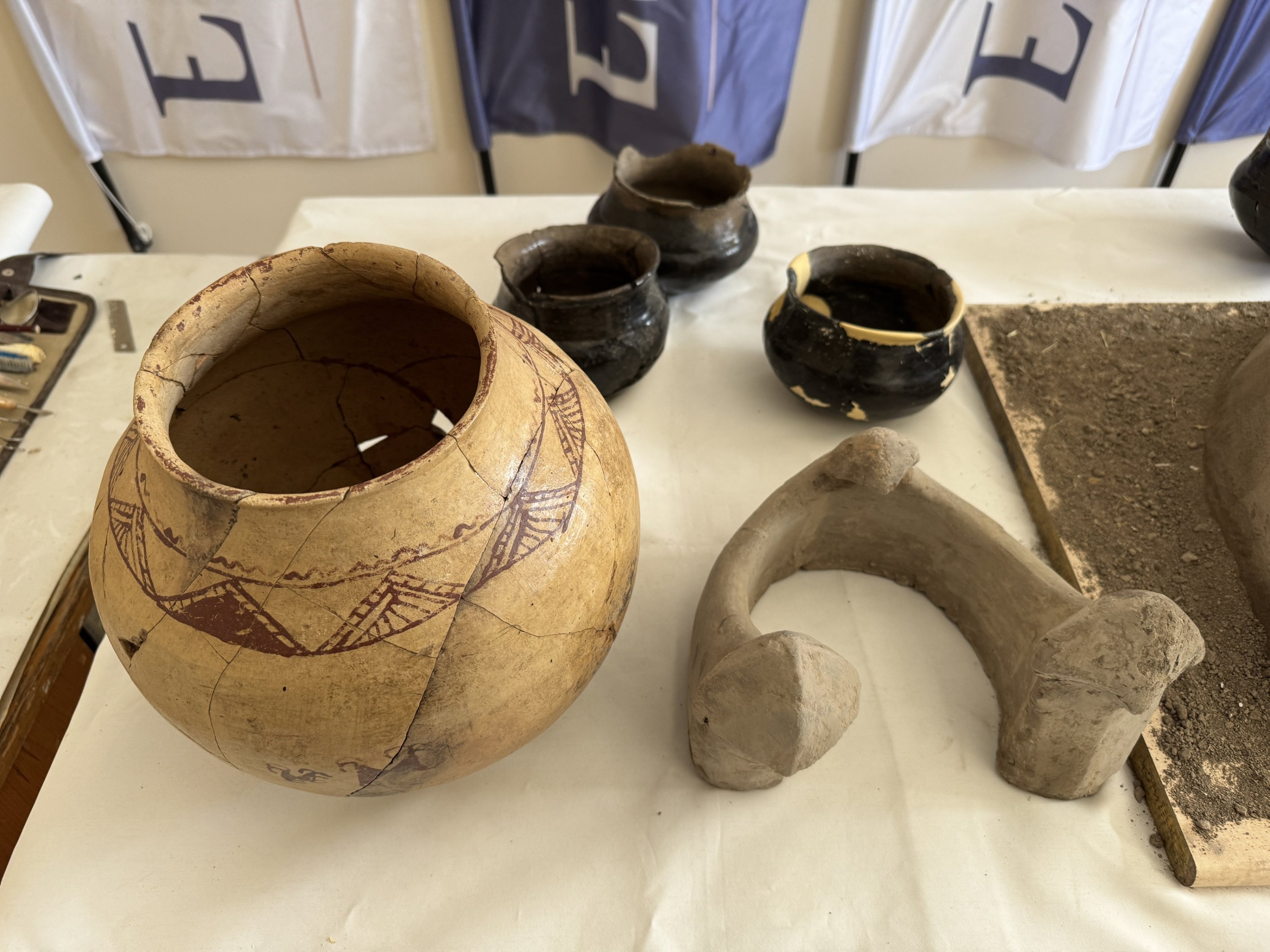
Additionally, several remnants of walls were found, along with four podiums, a sacred hearth, an agricultural stamp seal, pots and ceramics in the Nakhchivan style, arrowheads, a spindle (a tool used for spinning wool and yarn) and ceramic fragments. These findings are believed to have been used for religious offerings to the gods.
Ahmet Demirdağ, director of the Provincial Directorate of Culture and Tourism, told Anadolu Agency (AA) that, with the contributions of Fırat University, archaeological excavations are being conducted at four locations in Elazığ, including Harput Castle, Tadım Castle and Mound, Palu Castle and Salkaya village.
Demirdağ explained that last year’s excavations at Tadım Castle and Mound uncovered significant findings, and this year, even more important discoveries have been made.
"This year, we discovered a temple area, which we can say is the first temple in our city and region. A significant discovery has been made that will shed light on the 6,000-year history of the region. In the temple area, we observe altars and sacrificial areas dedicated to the gods. We can tell that these sacrifices involved both humans and animals from the signs in the area. Additionally, there is a channel through which the blood of the sacrifices was drained, leading to a deep pit," he said.
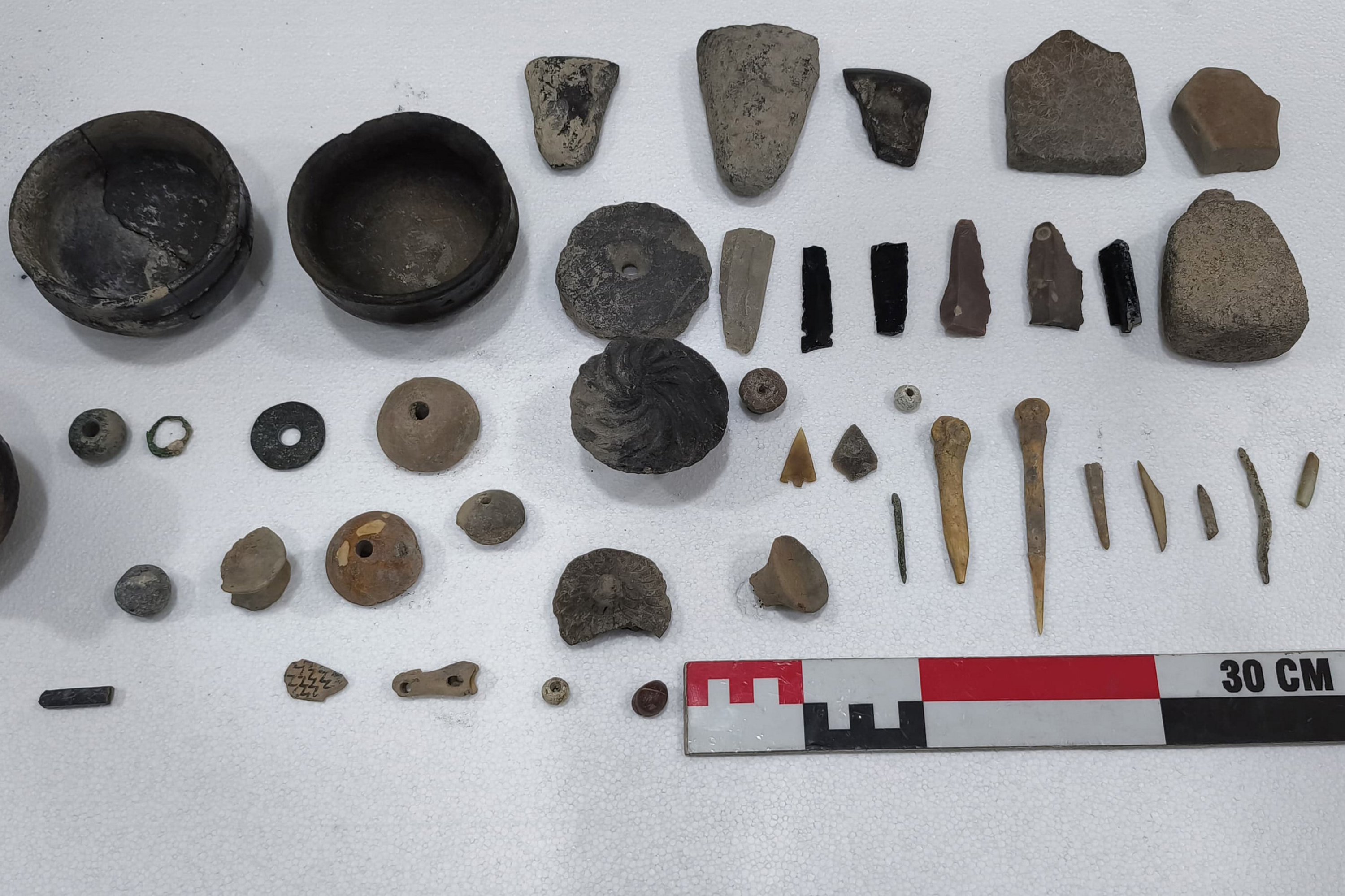
Demirdağ further added that the excavation site is vast, and they believe that further digging will uncover even more ancient findings that will push the history of the region back even further. "We think that this region was an important living space. We have obtained significant findings related to the lifestyle of the past. These include tools used in daily life, arrowheads and idols (stylized figurines made from materials such as stone, baked clay, bone and wood used as cultural objects) that represent the art of that period. Additionally, we found a stamp seal used in agricultural activities, particularly in the exchange of grains. We also uncovered sacred hearths and ancient pottery, especially of the Nakhchivan style. We will continue excavating the region."
Ergün Demir, the excavation site supervisor, noted that the buildings at the castle and mound were constructed using rubble and semi-dressed stones, upon which mudbrick walls were built.
He pointed out that the use of mudbrick walls in this manner made the structures more resilient to invasions and natural disasters. "In the structures of Tadım Castle and Mound, specifically in the 80-81 grid areas, we can see the increased urbanization with adjacent buildings, indicating a shift toward a more urbanized society during this period," Demir stated.