Daily Sabah logo

Politics
Diplomacy Legislation War On Terror EU Affairs Elections News Analysis
TÜRKİYE
Istanbul Education Investigations Minorities Expat Corner Diaspora
World
Mid-East Europe Americas Asia Pacific Africa Syrian Crisis Islamophobia
Business
Automotive Economy Energy Finance Tourism Tech Defense Transportation News Analysis
Lifestyle
Health Environment Travel Food Fashion Science Religion History Feature Expat Corner
Arts
Cinema Music Events Portrait Reviews Performing Arts
Sports
Football Basketball Motorsports Tennis
Opinion
Columns Op-Ed Reader's Corner Editorial
PHOTO GALLERY
JOBS ABOUT US RSS PRIVACY CONTACT US
© Turkuvaz Haberleşme ve Yayıncılık 2026

Daily Sabah - Latest & Breaking News from Turkey | Istanbul

  • Politics
    • Diplomacy
    • Legislation
    • War On Terror
    • EU Affairs
    • Elections
    • News Analysis
  • TÜRKİYE
    • Istanbul
    • Education
    • Investigations
    • Minorities
    • Expat Corner
    • Diaspora
  • World
    • Mid-East
    • Europe
    • Americas
    • Asia Pacific
    • Africa
    • Syrian Crisis
    • Islamophobia
  • Business
    • Automotive
    • Economy
    • Energy
    • Finance
    • Tourism
    • Tech
    • Defense
    • Transportation
    • News Analysis
  • Lifestyle
    • Health
    • Environment
    • Travel
    • Food
    • Fashion
    • Science
    • Religion
    • History
    • Feature
    • Expat Corner
  • Arts
    • Cinema
    • Music
    • Events
    • Portrait
    • Reviews
    • Performing Arts
  • Sports
    • Football
    • Basketball
    • Motorsports
    • Tennis
  • Gallery
  • Opinion
    • Columns
    • Op-Ed
    • Reader's Corner
    • Editorial
  • TV
  • Life
  • Health
  • Environment
  • Travel
  • Food
  • Fashion
  • Science
  • Religion
  • History
  • Feature
  • Expat Corner

Bones in Türkiye reveal genetic clues to life 12,000 years ago

by Daily Sabah with AA

ISTANBUL Jan 06, 2026 - 2:01 pm GMT+3
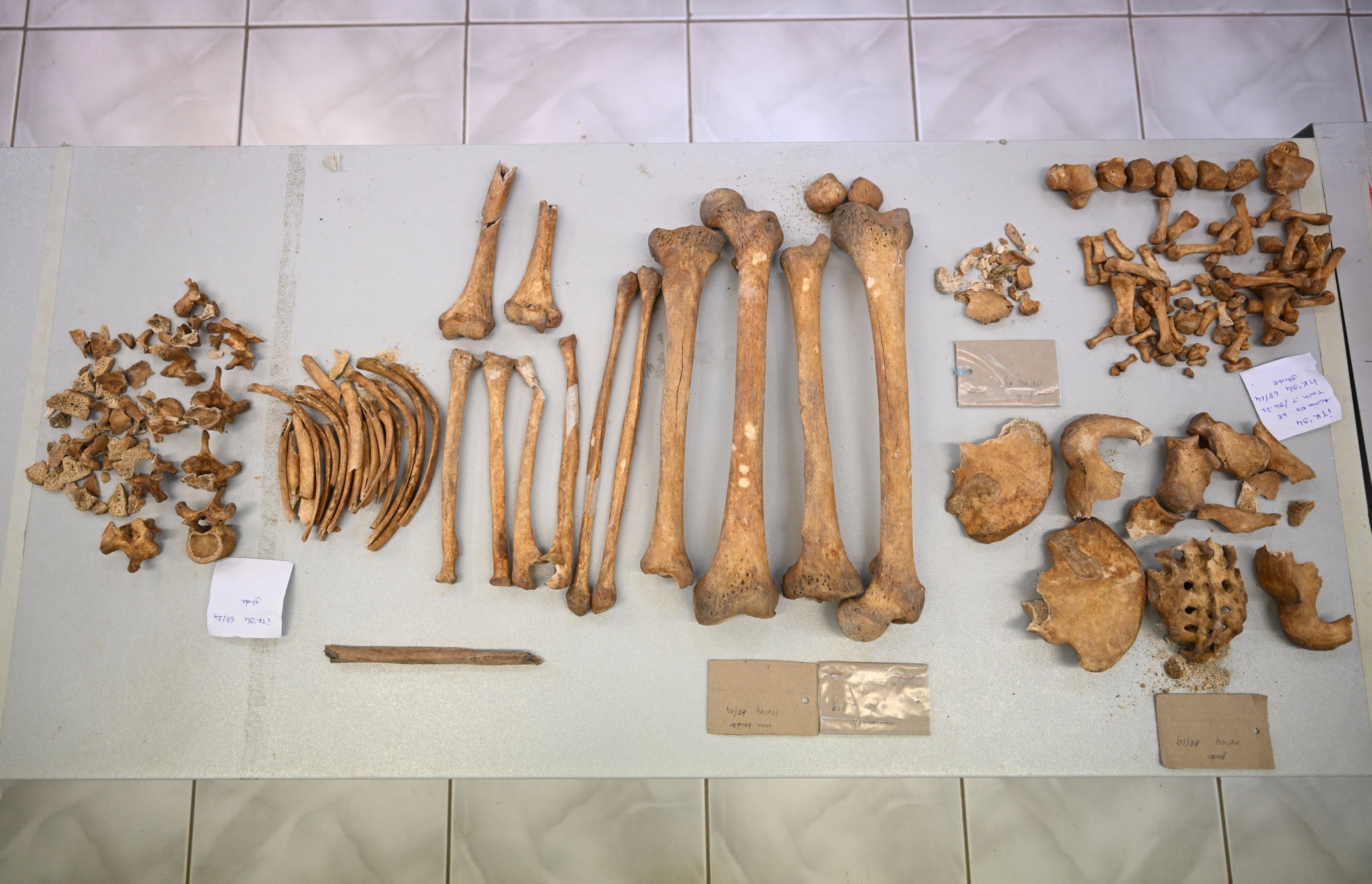
The bones found at the Çayönü Hill excavation were studied to reveal genetic information about the people who lived there 12,000 years ago, Diyarbakır, southeastern Türkiye, Dec. 29, 2025. (AA Photo)
by Daily Sabah with AA Jan 06, 2026 2:01 pm

Archaeologists are examining bones at Çayönü Hill in the Ergani district of Diyarbakır, southeastern Türkiye, to reveal genetic information about the people who lived there 12,000 years ago.

Çayönü, located on the Ergani Plain along the Tigris River, has settlement layers dating back to 10,000 B.C. The site was first discovered in 1963 during a surface survey, and initial excavations were launched in 1964 by Halet Çambel and professor Robert J. Braidwood.

The site is considered one of the earliest places where humans transitioned from nomadic to settled life and from hunting and gathering to agriculture, shedding light on early civilization. Excavations, which were suspended in 1991 due to security concerns and resumed a decade ago, continue to uncover the full spectrum of continuous human life at Çayönü.

Under the permission of the Ministry of Culture and Tourism, excavations led by Çanakkale Onsekiz Mart University Museology Department, Savaş Sarıaltun and coordinated by Hacettepe University Anthropology Department professor Ömür Dilek Erdal began in May 2025. Teams of archaeologists and anthropologists from across Türkiye participated, and the previous season concluded in December.

Artifacts uncovered at the site are documented individually at the Çayönü Hill Excavation House before being sent to Hacettepe University’s Anthropology Department for laboratory analysis, where experts gather data on the life histories of individuals.
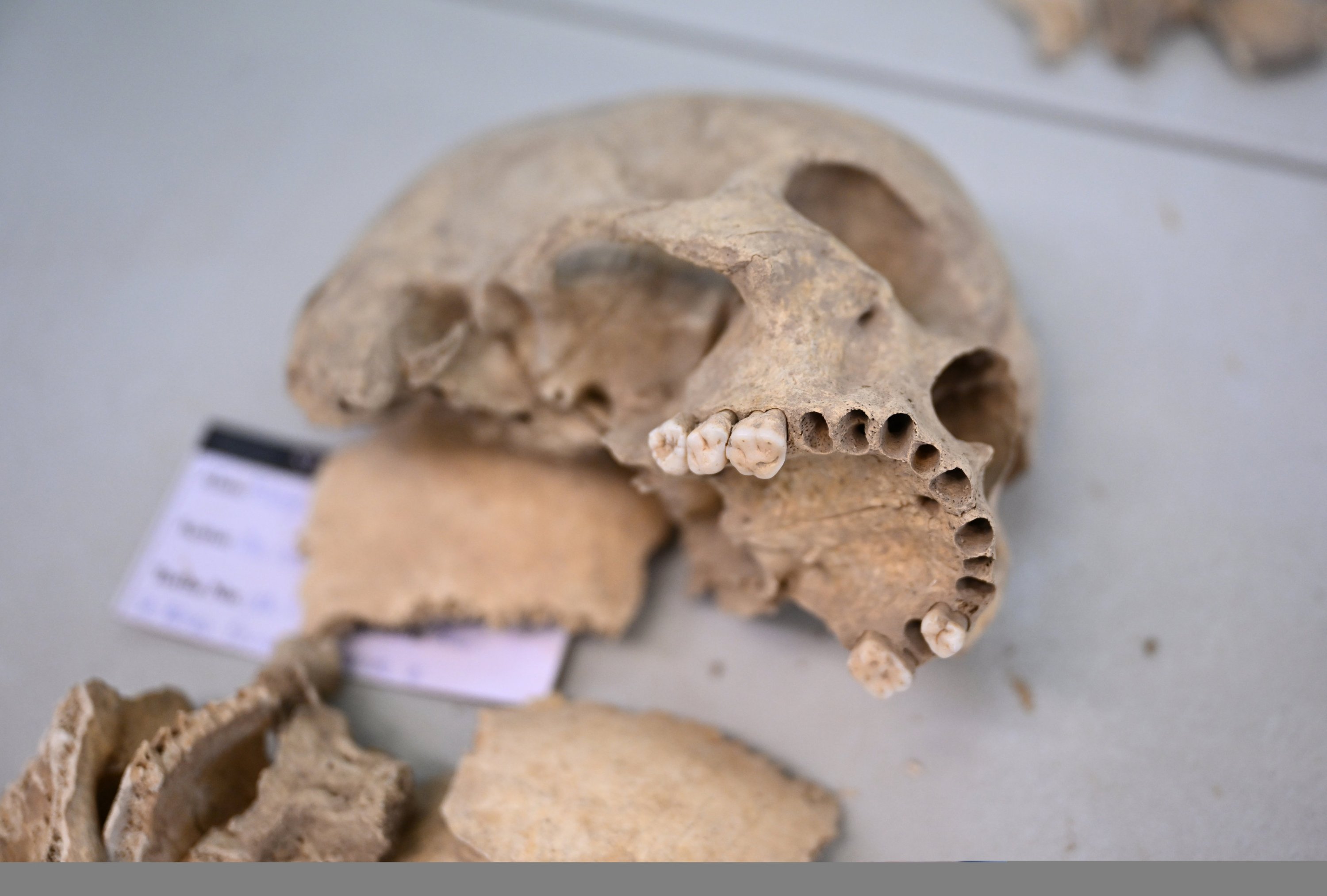
A skull found at the Çayönü Hill excavation, studied to reveal genetic information about the people who lived there 12,000 years ago, Diyarbakır, southeastern Türkiye, Dec. 29, 2025. (AA Photo)

Among recent discoveries is a 9,500-year-old “Public Structure” believed to have been used for gatherings and events, Neolithic grid-planned buildings, a Bronze Age water channel and eight burial sites, highlighting Çayönü Hills’ significance for understanding human civilization.

Extensive burial site identified

Sarıaltun told Anadolu Agency (AA) that 3,200 square meters (over 34,400 square feet) were excavated over eight months in 2025, with contributions from scholars at 10 Turkish universities.

“We uncovered a public structure, four grid-planned buildings from the Pre-Pottery Neolithic B period, dating to 9000-8500 B.C.,” he said. “Toward the end of the excavation, we encountered dense architecture from the Pottery Neolithic period, dating to 7000-6000 B.C. Since 2024, excavating large areas from the Early Bronze Age has helped us understand settlement patterns and cultural layers better. One of our significant findings is a cemetery dating to 2900-2750 B.C. We identified an extensive architectural burial area and worked on eight graves, seven from the Early Bronze Age and one from the Neolithic.”

Sarıaltun explained that these graves provide insights into social structures, age differences, diseases, societal organization and socioeconomic conditions. Almost all graves contained offerings, including pottery, copper and bronze items, tools and daggers. Two seals found near the cemetery suggest trade networks or social hierarchies at the time.

Excavated finds are first processed at Çayönü Hill laboratories before further specialized studies are conducted at researchers’ home institutions.
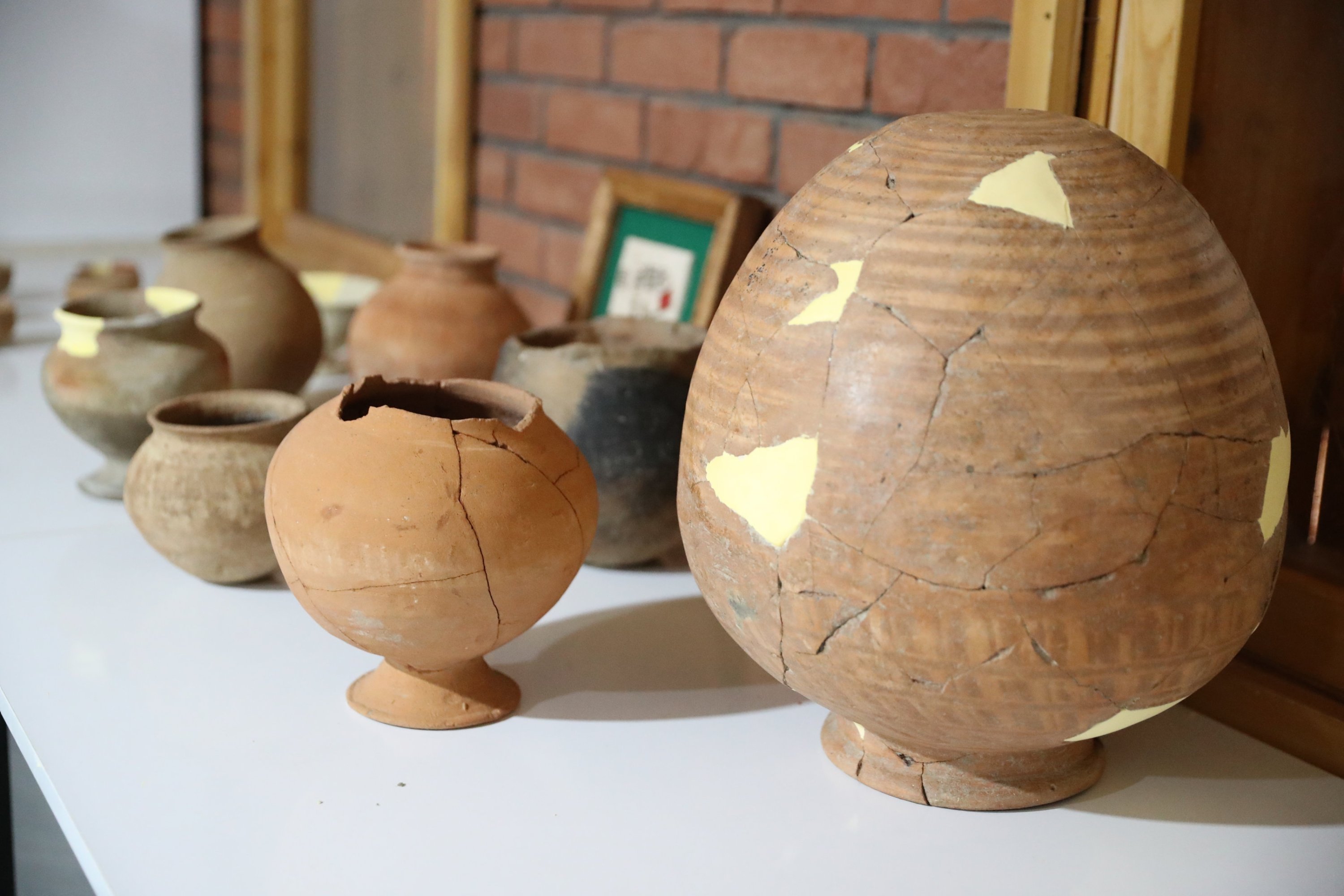
Artifacts found at the Çayönü Hill excavation, offering insight into the people who lived there 12,000 years ago, Diyarbakır, southeastern Türkiye, Dec. 29, 2025. (AA Photo)

Tracing connections

Sarıaltun said results, including DNA analyses, will be shared publicly in the coming years. “We are studying how these people fit into sociocultural networks and their connections to Mesopotamia, the Caucasus and Anatolia through DNA. This research will take years. Since 2024, we’ve been working intensively, and by 2026-2027, we hope to present a comprehensive picture.”

Erdal said skeletons are transported from archaeological centers to the lab with ministry permission, where they are cleaned, restored and analyzed according to international standards.

“About 255 individuals have been studied so far. The community was very heterogeneous with significant cultural variation, showing interactions with other groups,” Erdal said. “We see diverse burial traditions, but the community appears to have been peaceful. Skeletal analysis reveals daily life patterns, including early involvement of children in agricultural and household tasks. Each layer of the site shows distinct architectural features, reflecting a highly organized settlement.”

Erdal noted that uniform housing layouts suggest governance structures, though no strict social hierarchy was evident. “People from large and small houses engaged in similar activities such as farming, livestock and burial rituals. Labor was divided by gender: males showed traces of livestock work, females of domestic production. DNA evidence indicates connections with Mesopotamia and the Caucasus, with individuals from those regions settling at Çayönü.”


  • shortlink copied
  • Last Update: Jan 06, 2026 5:00 pm
    KEYWORDS
    excavation diyarbakir çayönü hill dna research
    The Daily Sabah Newsletter
    Keep up to date with what’s happening in Turkey, it’s region and the world.
    You can unsubscribe at any time. By signing up you are agreeing to our Terms of Use and Privacy Policy. This site is protected by reCAPTCHA and the Google Privacy Policy and Terms of Service apply.
    No Image
    10 best public beaches Turkey has to offer
    PHOTOGALLERY
    • POLITICS
    • Diplomacy
    • Legislation
    • War On Terror
    • EU Affairs
    • News Analysis
    • TÜRKİYE
    • Istanbul
    • Education
    • Investigations
    • Minorities
    • Diaspora
    • World
    • Mid-East
    • Europe
    • Americas
    • Asia Pacific
    • Africa
    • Syrian Crisis
    • İslamophobia
    • Business
    • Automotive
    • Economy
    • Energy
    • Finance
    • Tourism
    • Tech
    • Defense
    • Transportation
    • News Analysis
    • Lifestyle
    • Health
    • Environment
    • Travel
    • Food
    • Fashion
    • Science
    • Religion
    • History
    • Feature
    • Expat Corner
    • Arts
    • Cinema
    • Music
    • Events
    • Portrait
    • Performing Arts
    • Reviews
    • Sports
    • Football
    • Basketball
    • Motorsports
    • Tennis
    • Opinion
    • Columns
    • Op-Ed
    • Reader's Corner
    • Editorial
    • Photo gallery
    • DS TV
    • Jobs
    • privacy
    • about us
    • contact us
    • RSS
    © Turkuvaz Haberleşme ve Yayıncılık 2021