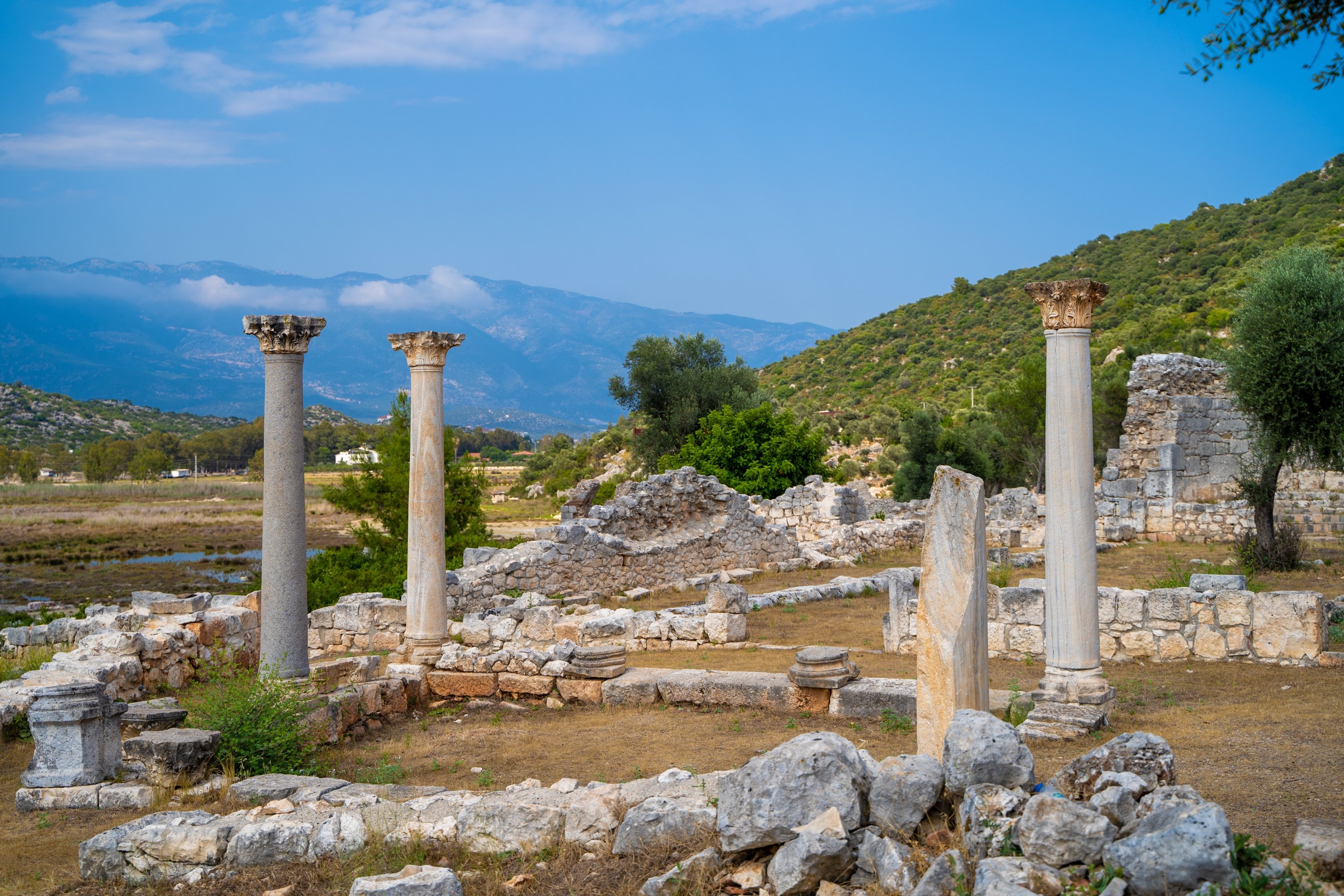
Purple dye made from sea snails known as murex in the ancient city of Myra-Andriake in Antalya's Demre district was among the most valuable commodities of the ancient world, serving as a symbol of power, status and privilege. Closely associated with religious and political elites, the color was so highly prized that its use was restricted by law during certain periods.
While murex shells had previously been discovered at the ancient city of Myra-Andriake, systematic excavations launched in 2009 under the direction of professor Nevzat Çevik, a faculty member at Akdeniz University's Department of Archaeology, revealed detailed archaeological evidence of purple dye workshops and a dedicated production center.
Production intensified in the fifth century A.D. and continued in subsequent centuries. Live murex snails collected from the sea were brought to the workshops, where a special tissue inside their bodies was extracted and carefully heated in lead cauldrons to produce the dye.
The labor-intensive process made purple dye exceptionally valuable. It was used in textiles and also traded as a raw material, becoming an important commodity that contributed to Andriake's economic prosperity. The color retained its significance as a symbol of power, status and privilege during the Roman and Byzantine periods.
Çevik said purple dye was highly prized in ancient times, particularly among religious and political elites.
"During certain periods, it was so exclusive that even those who could afford it were not allowed to buy or use it. Its use was sometimes restricted by law," he said. "Purple was not just a color; it was a symbol of power, status and privilege."
Purple dye production in the Middle East dates back to at least the Bronze Age, Çevik added.
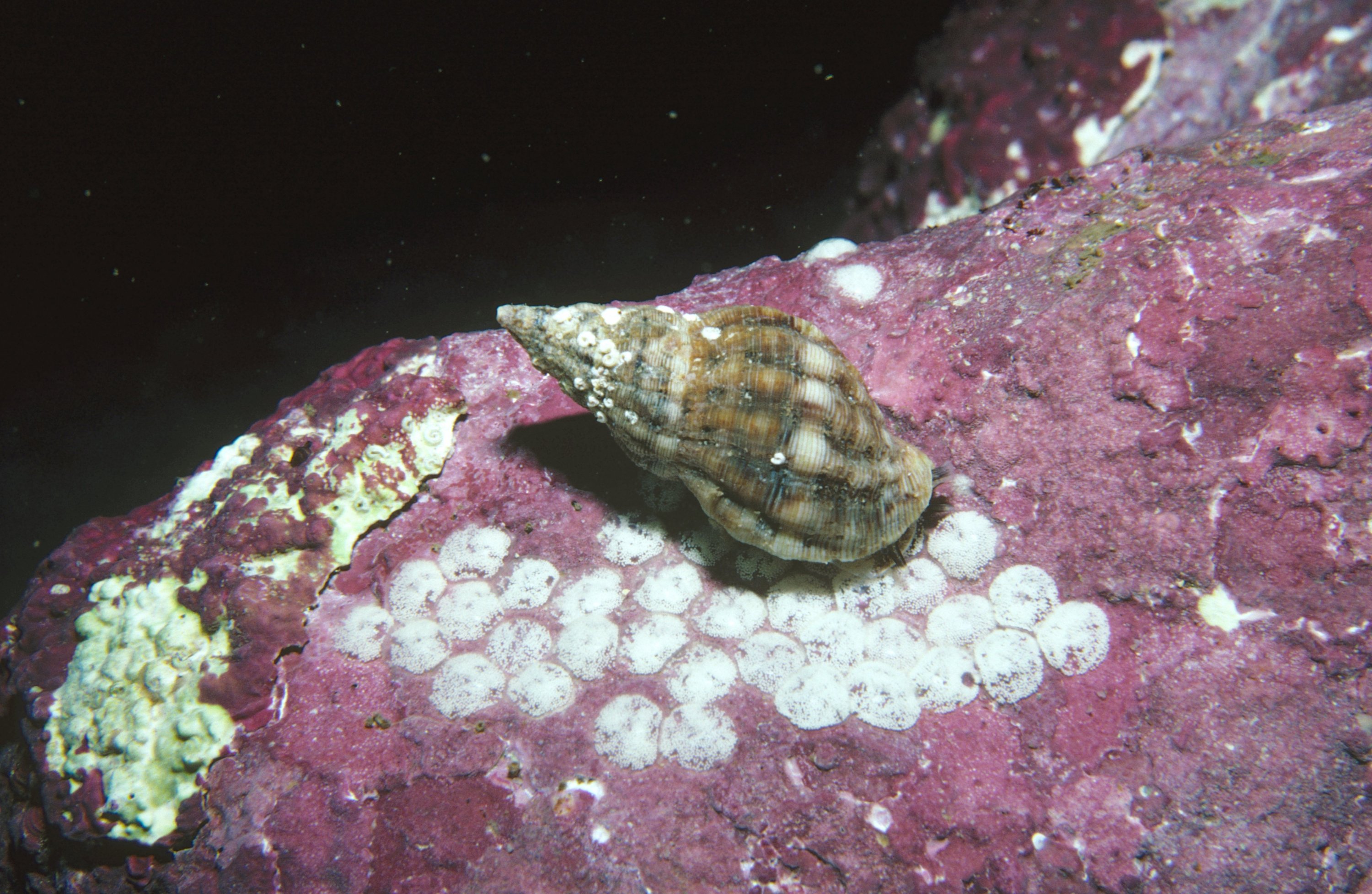
Çevik said archaeologists had uncovered murex dye-making workshops at Myra, where the marine snails used to produce the dye are also found in the waters around Myra and Kekova.
"We discovered the first workshops here dedicated to murex dye production. Ancient sources described how purple dye was made and murex shells had been found at various sites. But we did not know where or how the dye was produced or what equipment was used," he said.
Production at Andriake dates to the fifth century A.D. and later, Çevik said, adding that the harbor agora was repurposed as a production center after it ceased to serve its original function.
"The harbor agora was transformed into a factory, or more precisely, a purple dye production center," he said.
Çevik said production began with collecting murex snails from the sea and transporting them alive to the workshops, as the dye could not be obtained from dead snails.
"They were carried in water-filled containers and kept alive until they were ready to be processed," he said.
Excavations uncovered archaeological evidence of the process, including tons of broken murex shells and numerous amphora fragments. "Sometimes, the containers had to be broken to remove the snails inside," he said.
Çevik said the dye was extracted from a special tissue inside the marine snails.
“It is a tissue containing dark-colored veins and serves as the raw material for the purple dye. Once extracted, it is placed in lead cauldrons and heated in specially designed furnaces,” he said.
The cauldrons had to be heated indirectly, as direct exposure to flames or boiling the material would prevent the desired dye from forming.
“For this reason, the cauldrons were placed over heating channels. As they were heated, the color gradually emerged, eventually producing the purple dye,” Çevik said.
Çevik said the dye was used in textile production and was also sold as a raw material.
"Because it was an extremely expensive product, it generated substantial economic revenue for the region. We can say that the murex industry was one of the most important factors behind Andriake's prosperity, particularly from the fifth century A.D. onward," he said.
Purple dye was a highly prized natural colorant used for thousands of years, both during the Roman and Byzantine periods and long before them, he added.
Çevik noted that different murex species could produce shades ranging from reddish to yellowish hues, while certain species found in the region yielded particularly high-quality purple dye.
"This created an important advantage for the region. We published the findings from our excavations in a scientific monograph prepared in both Turkish and English," he said.
"This allowed us to bring the findings on the murex industry and purple dye production uncovered at Andriake to the attention of the international scientific community."