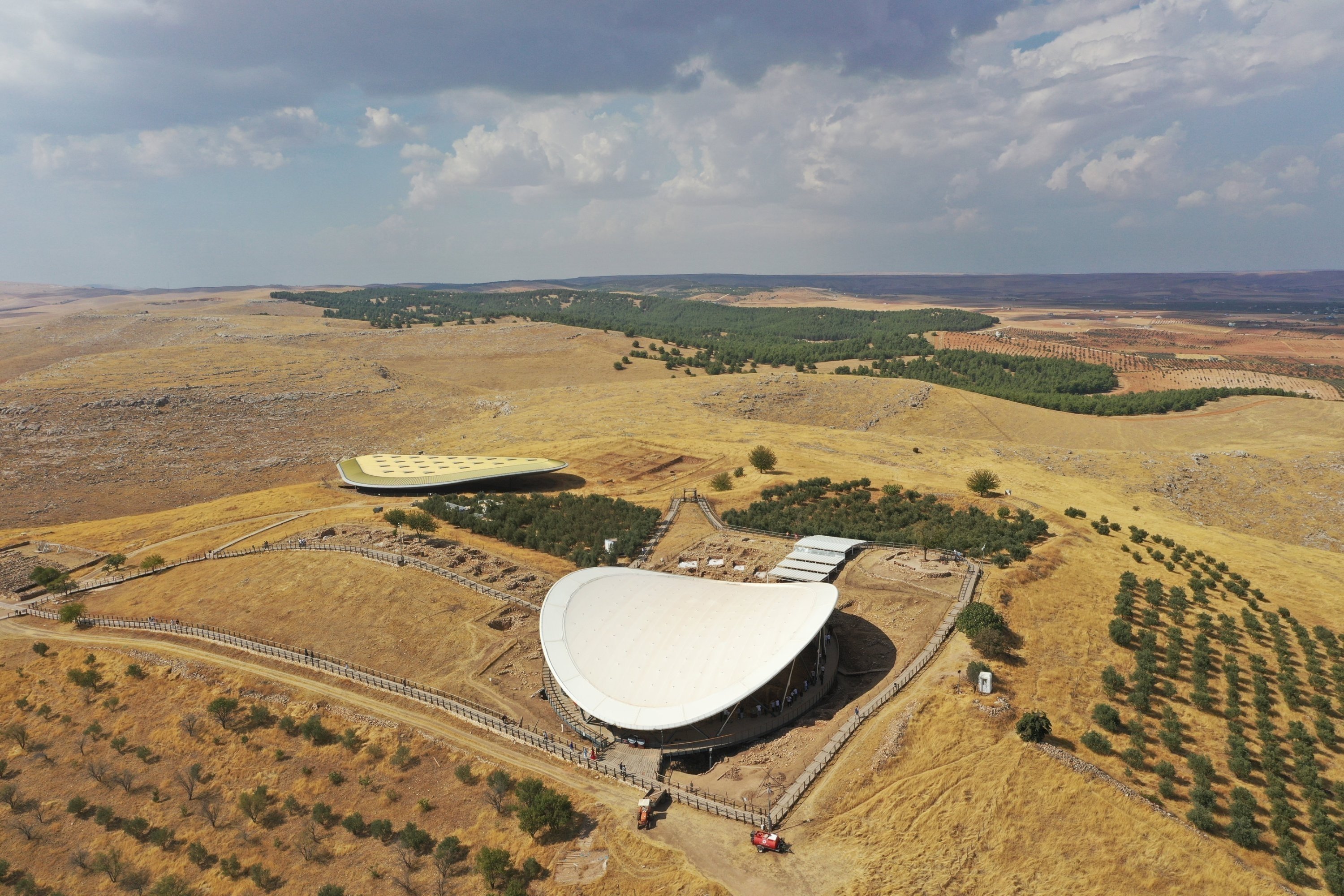
A new excavation area at Göbeklitepe, southeastern Türkiye, often called the “zero point of history” and recognized as a UNESCO World Heritage Site, is preparing to welcome visitors.
Located 18 kilometers (11 miles) from the city center, this historic site has changed our understanding of early human civilization with its Neolithic-era “T-shaped” standing stones, ranging from 3 to 6 meters (10 to 20 feet) in height and weighing 40 to 60 tons, many featuring carvings of wild animals.
Göbeklitepe was added to the UNESCO World Heritage List in 2018. Excavations have been ongoing since 1995 under the supervision of Türkiye’s Ministry of Culture and Tourism. Until now, visitors have been able to explore Göbeklitepe Excavation Area 1 (GT1), which is protected by a white roof.
In the coming month, the nearby Göbeklitepe Excavation Area 2 (GT2), covered by a green roof, is expected to open to the public. This will allow visitors to closely observe the Neolithic “T-shaped” stones adorned with various animal figures.
Professor Necmi Karul, head of excavations at Göbeklitepe, said that a new phase has begun at the site under the Ministry of Culture and Tourism’s “Legacy for the Future Project.”
He noted that visitor numbers are increasing each year, and improvements have been made to make the site easier and more comfortable to explore. New walking paths and visitor routes have been created, which will eventually extend to future excavation zones as well.
Regarding GT2, Karul explained that a wooden platform is being constructed. Once it is completed, visitors will be able to access the site while excavations continue. He emphasized that ongoing work in areas open to the public will not be hindered, and visitors will be able to explore safely without damaging the site.
Karul stressed the importance of providing the public with accurate knowledge about Göbeklitepe. He described the site as a shared heritage of humanity and said that the information uncovered at the site is carefully shared through multiple channels, including TV, documentaries, publications and the visitor center.
He also pointed out that misinformation sometimes circulates publicly and emphasized that opening excavation areas to visitors before work is finished could damage the site.
Karul concluded by highlighting that the protection of the archaeological site is always the top priority. While the public has a right to access the site, areas are only opened after careful study and preservation. Both the ministry and archaeologists prioritize responsible access while ensuring that the findings and the site itself remain intact.