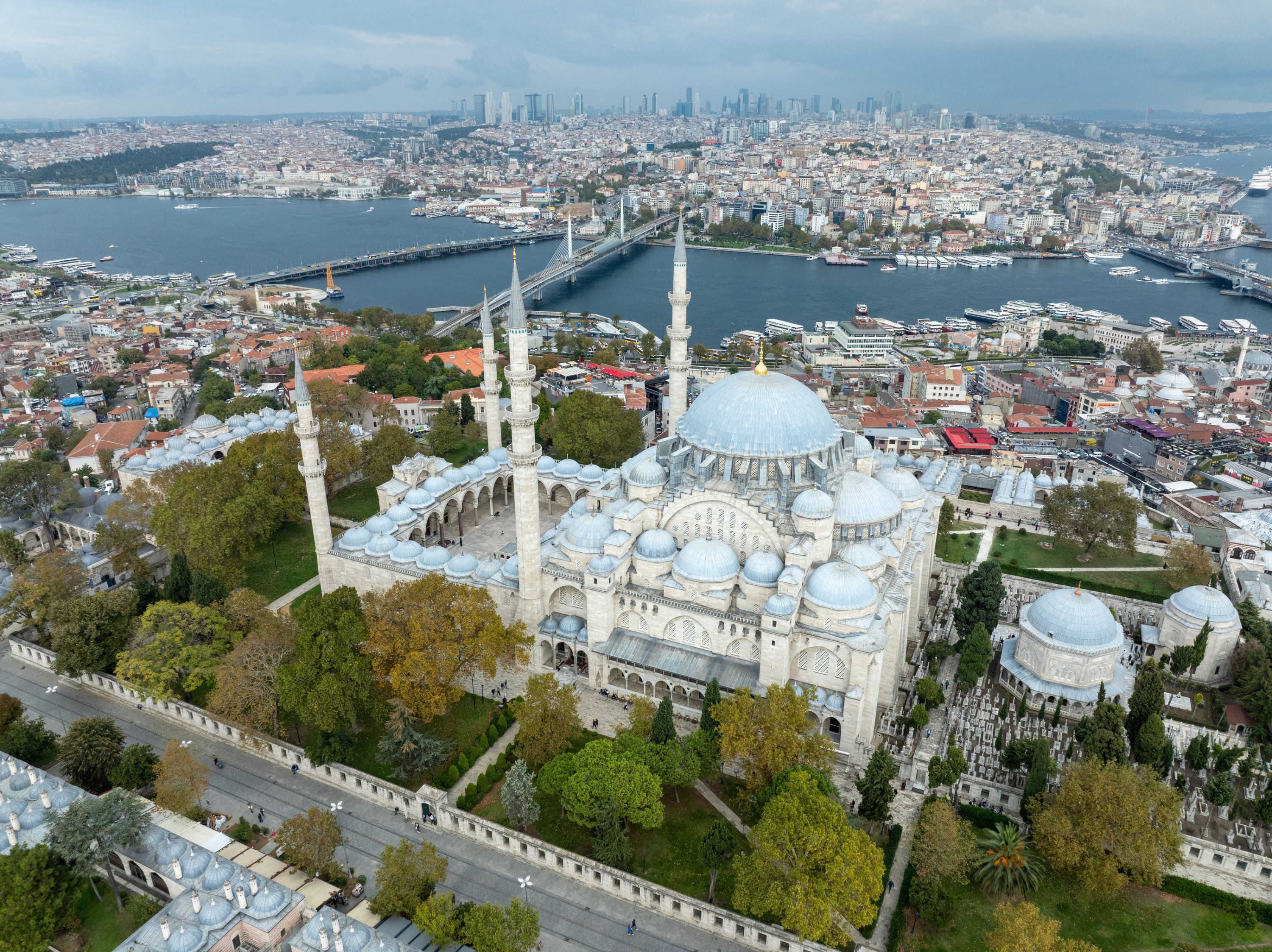
The Süleymaniye Mosque and Complex, one of the crowning achievements of Ottoman architecture, was completed and opened for prayers on Oct. 15, 1557. As the historic landmark marks the anniversary, stories from its many restoration projects are once again shedding light on its rich architectural history.
For centuries, the Süleymaniye Mosque has shaped Istanbul’s skyline. With its architectural design, engineering ingenuity and the harmony of the surrounding buildings, it stands as more than a place of worship: It is a living legacy that carries the cultural and social heritage of Ottoman civilization into the present day.
Commissioned by Sultan Suleiman the Magnificent and designed by chief Ottoman architect Mimar Sinan, the complex includes not only the mosque but also madrasas, a hospital, a soup kitchen, a bathhouse and other structures that reflect the Ottoman Empire’s approach to urban planning and social life.
Meticulous restoration work on the mosque, which Sinan described as his “masterpiece of the journeyman period,” has brought to light a wealth of previously unknown architectural details. These include hidden clay pots that help regulate the dome’s acoustics, inscriptions written on a metal surface designed to resist corrosion and original painted decorations dating back to Sinan’s time.
Kaya Üçer, an associate professor at Mimar Sinan Fine Arts University, described the Süleymaniye Mosque as the pinnacle of Mimar Sinan’s work in Istanbul, highlighting its striking location and intricate architectural details.
“I’m happy to have been involved in its restoration,” he said. “I’ve worked on many buildings, but Süleymaniye holds a very special place in my heart, just like Hagia Sophia.”
Üçer said many myths about the mosque had been passed down over the centuries and eventually accepted as fact. One such story claimed that clay pots had been built into the dome to improve its acoustics, although no one had actually seen them.
During the restoration, the team erected 20,000 cubic meters of scaffolding, giving them access to every part of the interior. While examining cracks in the dome, the restorers came across clay pots embedded among the bricks.
“At first, we wondered if these were the pots people had been talking about,” Üçer said.
The team found that the pots had been placed upright at regular intervals in a zigzag pattern, each with a hole in its base. Invisible from below, the pots help soften sound and prevent echoes, he explained. Experts also conducted tests to confirm their acoustic function.
“That finally put an end to a myth that had persisted for years,” Üçer said.
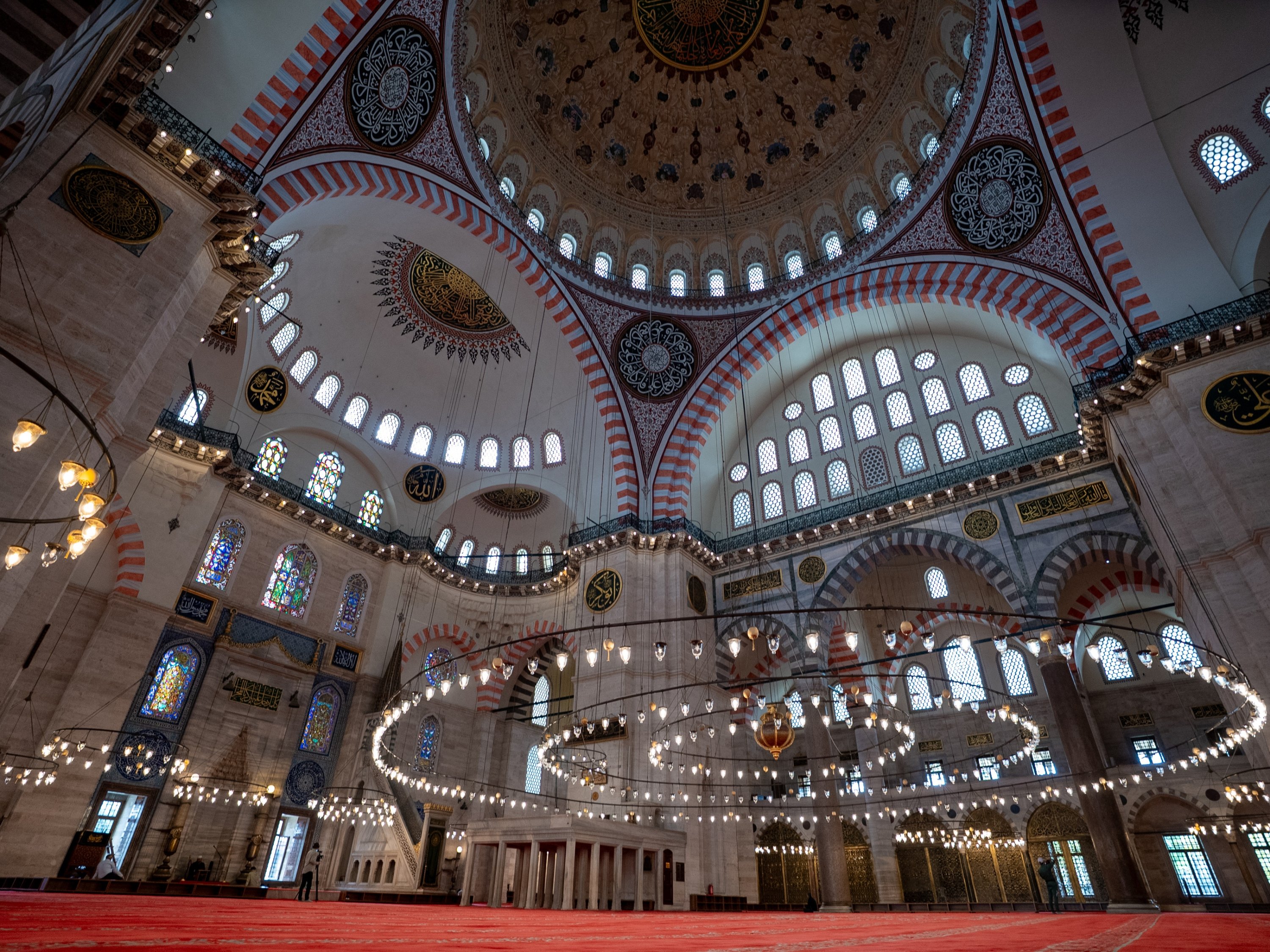
Üçer said the dome’s design allows sound to travel clearly across the space without creating an echo.
“Even if you stand at opposite ends of the dome, you can hear each other as if you were standing right next to one another,” he said.
He also highlighted the dome’s ornate decorations, which include elaborate Baroque and Rococo-style designs featuring floral bouquets.
During the restoration, the team carefully examined the layers beneath the existing paintwork to see whether any original decorations from Sinan’s time had survived.
Üçer said the team searched the main dome for traces of decoration from Sinan’s time, examining nearly every surface under ultraviolet light and scraping back layers of paint to uncover what lay beneath. They found traces of an earlier Baroque design, but only in sections of the dome.
“If the decoration had covered the entire dome, we would have exposed it for visitors to see,” he said.
The limited findings led the team to believe that two designs had been tested before one was chosen for the rest of the dome. The earlier ornamentation had survived beneath later layers, Üçer said, and the team restored the painted decorations seen today, bringing back the dome’s original grandeur.
Üçer also discussed the calligraphic inscription on the dome, which is traditionally attributed to Ahmed Karahisari. Historical records, however, name Hasan Çelebi, one of Karahisari’s students, as the calligrapher. The inscription is also said to have been retouched by Abdülfettah Efendi during restoration work in the 18th century.
“There’s a detail you can’t see with the naked eye from below,” Üçer said, explaining that the surface behind the dome’s calligraphic inscription is made of zinc and sits within a wooden frame covered in gold leaf. The inscription itself was applied to corrosion-resistant metal sheets fastened together with large nails, a technique designed to preserve it for centuries.
“It’s the only example of its kind I’ve ever seen, almost like painted decoration on metal,” he said.
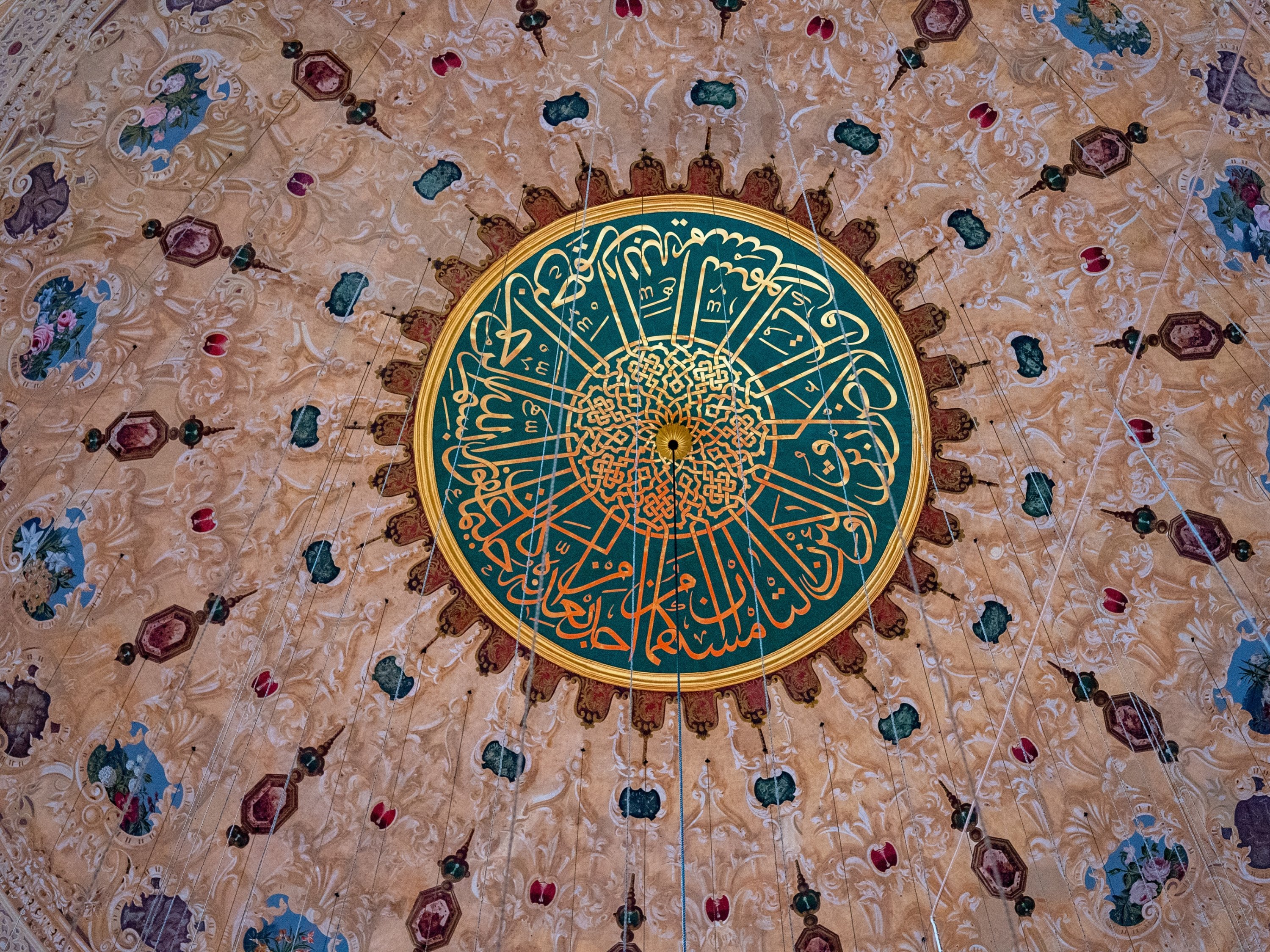
Üçer said the team eventually spotted a missing letter in the dome’s calligraphic inscription and consulted calligraphers before deciding how to proceed. The scientific committee agreed that the letter “h” belonged in the text, and the team added it on-site to help preserve the centuries-old inscription for future generations.
The construction of the Süleymaniye Mosque took about seven years, Üçer said, noting that its restoration required a similar length of time. The work was carried out with such care that the building should not need another major intervention for the next 50 years, he added.
The team also uncovered original painted decorations from Sinan’s era while scraping back layers of paint in the mosque’s porticoes and the imperial gallery, a section reserved for the sultan.
“We preserved the original sections and used them as a guide to restore the missing parts,” he said. “We even uncovered some magnificent motifs from the classical period, particularly rumi patterns, among the most widely used decorative designs of the 16th century.”
During the restoration, the team also discovered that parts of the structure above the water-level gauge near the mosque’s ablution fountain were missing. Üçer recalled spotting a missing fragment at the Directorate General of Foundations’ museum in Istanbul’s Fatih district. He suggested it might belong to the mosque’s water-level gauge, and the team went to the museum to inspect it and take measurements. The fragment’s pattern matched the original, and once they cleaned it and put it back in place, it fitted the broken section perfectly, he said.
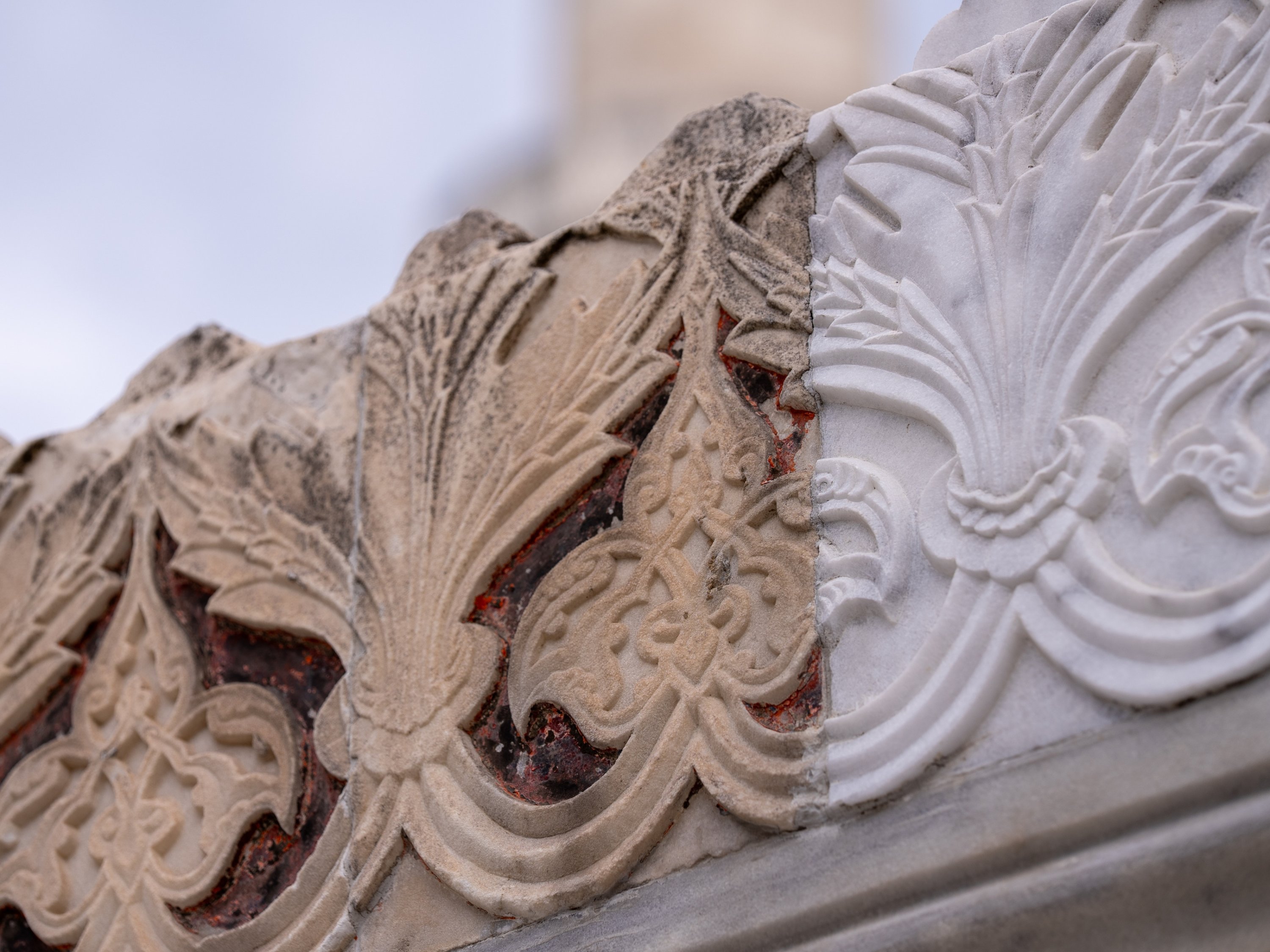
“One of the most important things Süleymaniye taught me was the importance of using local materials,” Üçer said.
During the restoration, the team cleaned the mosque’s exterior, removed old paint and applied a protective coating from a leading international brand. Within two or three months, however, a green discoloration began to appear on the surface.
The team contacted the manufacturer, which sent specialists to investigate. After studying the local conditions and adjusting the product over three to six months, the company returned with a revised formula, Üçer said. The team tested it on a small section of the mosque and found that the discoloration had disappeared while the coating retained its protective properties.
The experience highlighted how different Istanbul’s climate can be from the conditions in which restoration materials are developed, he said, pointing to variations in air quality, humidity, moisture and sunlight.
“This place has its own unique conditions, which is why I came to understand just how important local materials are in restoration work,” Üçer said.