Daily Sabah logo

Politics
Diplomacy Legislation War On Terror EU Affairs Elections News Analysis
TÜRKİYE
Istanbul Education Investigations Minorities Expat Corner Diaspora
World
Mid-East Europe Americas Asia Pacific Africa Syrian Crisis Islamophobia
Business
Automotive Economy Energy Finance Tourism Tech Defense Transportation News Analysis
Lifestyle
Health Environment Travel Food Fashion Science Religion History Feature Expat Corner
Arts
Cinema Music Events Portrait Reviews Performing Arts
Sports
Football Basketball Motorsports Tennis
Opinion
Columns Op-Ed Reader's Corner Editorial
PHOTO GALLERY
JOBS ABOUT US RSS PRIVACY CONTACT US
© Turkuvaz Haberleşme ve Yayıncılık 2025

Daily Sabah - Latest & Breaking News from Turkey | Istanbul

  • Politics
    • Diplomacy
    • Legislation
    • War On Terror
    • EU Affairs
    • Elections
    • News Analysis
  • TÜRKİYE
    • Istanbul
    • Education
    • Investigations
    • Minorities
    • Expat Corner
    • Diaspora
  • World
    • Mid-East
    • Europe
    • Americas
    • Asia Pacific
    • Africa
    • Syrian Crisis
    • Islamophobia
  • Business
    • Automotive
    • Economy
    • Energy
    • Finance
    • Tourism
    • Tech
    • Defense
    • Transportation
    • News Analysis
  • Lifestyle
    • Health
    • Environment
    • Travel
    • Food
    • Fashion
    • Science
    • Religion
    • History
    • Feature
    • Expat Corner
  • Arts
    • Cinema
    • Music
    • Events
    • Portrait
    • Reviews
    • Performing Arts
  • Sports
    • Football
    • Basketball
    • Motorsports
    • Tennis
  • Gallery
  • Opinion
    • Columns
    • Op-Ed
    • Reader's Corner
    • Editorial
  • TV
  • Life
  • Health
  • Environment
  • Travel
  • Food
  • Fashion
  • Science
  • Religion
  • History
  • Feature
  • Expat Corner

Scientists unearth world's oldest-known burial site in South Africa

by Agence France-Presse - AFP

MAROPENG, South Africa Jun 07, 2023 - 11:55 am GMT+3
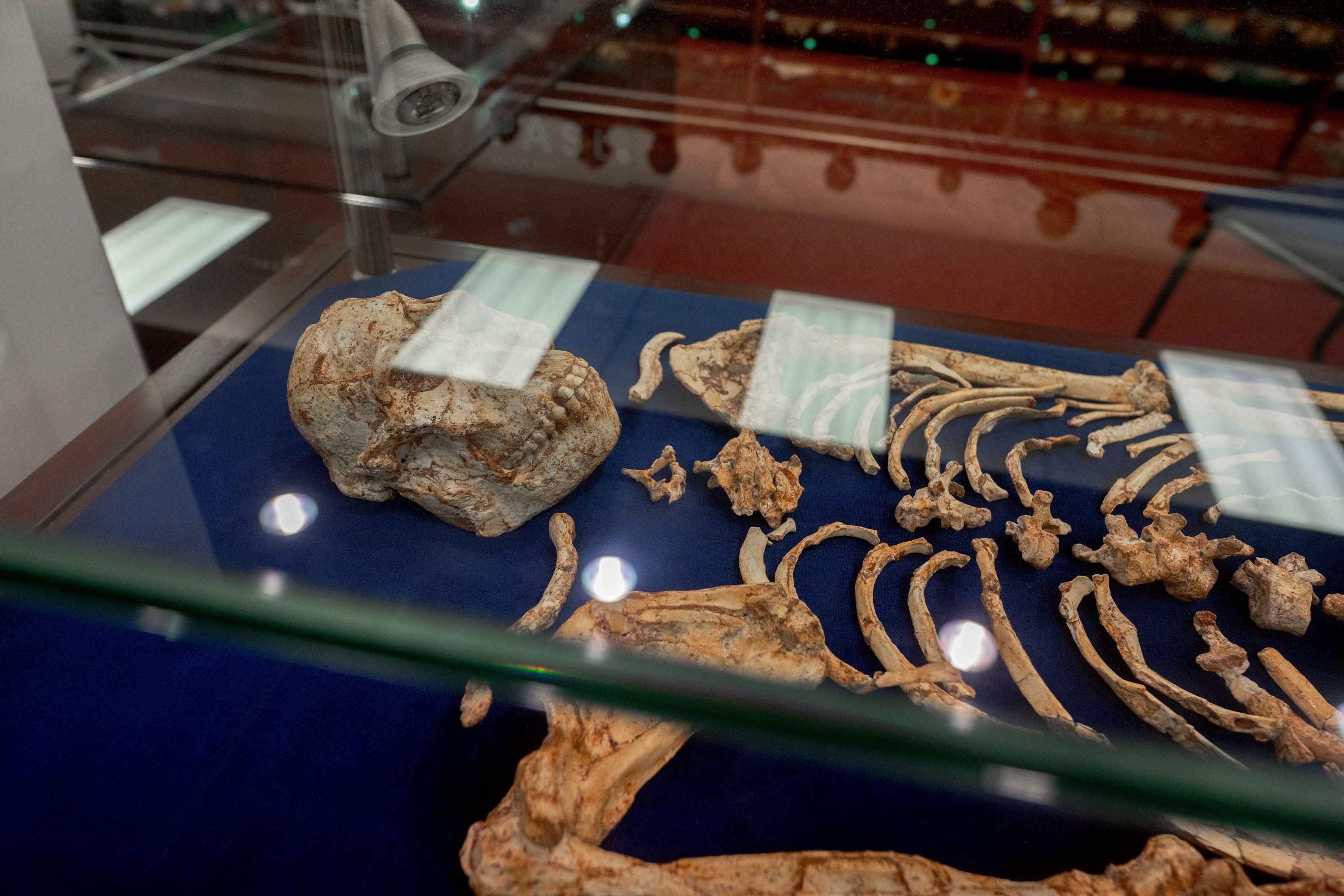
Bones of an Australopithecus Africanus in a shrine at the Center for Exploration of the Deep Human Journey, Wits University, in Johannesburg, South Africa, May 11, 2023. (AFP Photo)
by Agence France-Presse - AFP Jun 07, 2023 11:55 am

Palaeontologists in South Africa have unearthed what may be the oldest burial site in the world, containing remains of a small-brained ancient humans and carved symbols on cave walls, and perhaps forcing a revision of current theories.

Led by renowned palaeoanthropologist Lee Berger, researchers said they discovered several specimens buried about 30 meters (100 feet) underground in a cave system within the Cradle of Humankind, a UNESCO World Heritage site near Johannesburg.

"These are the most ancient interments yet recorded in the hominin record," the scientists wrote in a series of yet to be peer reviewed and preprint papers to be published in eLife.

The findings challenge the current understanding of human evolution, as it is normally held that the development of bigger brains allowed for the performing of complex, "meaning-making" activities such as burying the dead.

The oldest burials previously unearthed, found in the Middle East and Africa, were around 100,000 years old. Those found in South Africa by Berger, whose previous announcements have been controversial, and his fellow researchers, date back to at least 200,000 B.C.

Critically, they also belong to Homo naledi, which had brains about the size of oranges and stood about 1.5 meters (5 feet) tall with curved fingers and toes, tool-wielding hands and feet made for walking.

Homo naledi is named after the "Rising Star" cave system where the first bones were found in 2013.

The oval-shaped interments at the center of the new studies were also found there during excavations started in 2018.

The holes, which researchers say evidence suggests were deliberately dug and then filled in to cover the bodies, contain at least five individuals.

The burial site is not the only sign that Homo naledi was capable of complex emotional and cognitive behavior, the researchers said.

Engravings forming geometrical shapes, including a "rough hashtag figure," were also found on the apparently purposely smoothed surfaces of a cave pillar nearby.


  • shortlink copied
  • Last Update: Jun 07, 2023 2:54 pm
    KEYWORDS
    archaeology paleontology south africa ancient humans
    The Daily Sabah Newsletter
    Keep up to date with what’s happening in Turkey, it’s region and the world.
    You can unsubscribe at any time. By signing up you are agreeing to our Terms of Use and Privacy Policy. This site is protected by reCAPTCHA and the Google Privacy Policy and Terms of Service apply.
    No Image
    EFES-2024: Turkish military exercise showcases strategic co-op
    PHOTOGALLERY
    • POLITICS
    • Diplomacy
    • Legislation
    • War On Terror
    • EU Affairs
    • News Analysis
    • TÜRKİYE
    • Istanbul
    • Education
    • Investigations
    • Minorities
    • Diaspora
    • World
    • Mid-East
    • Europe
    • Americas
    • Asia Pacific
    • Africa
    • Syrian Crisis
    • İslamophobia
    • Business
    • Automotive
    • Economy
    • Energy
    • Finance
    • Tourism
    • Tech
    • Defense
    • Transportation
    • News Analysis
    • Lifestyle
    • Health
    • Environment
    • Travel
    • Food
    • Fashion
    • Science
    • Religion
    • History
    • Feature
    • Expat Corner
    • Arts
    • Cinema
    • Music
    • Events
    • Portrait
    • Performing Arts
    • Reviews
    • Sports
    • Football
    • Basketball
    • Motorsports
    • Tennis
    • Opinion
    • Columns
    • Op-Ed
    • Reader's Corner
    • Editorial
    • Photo gallery
    • DS TV
    • Jobs
    • privacy
    • about us
    • contact us
    • RSS
    © Turkuvaz Haberleşme ve Yayıncılık 2021