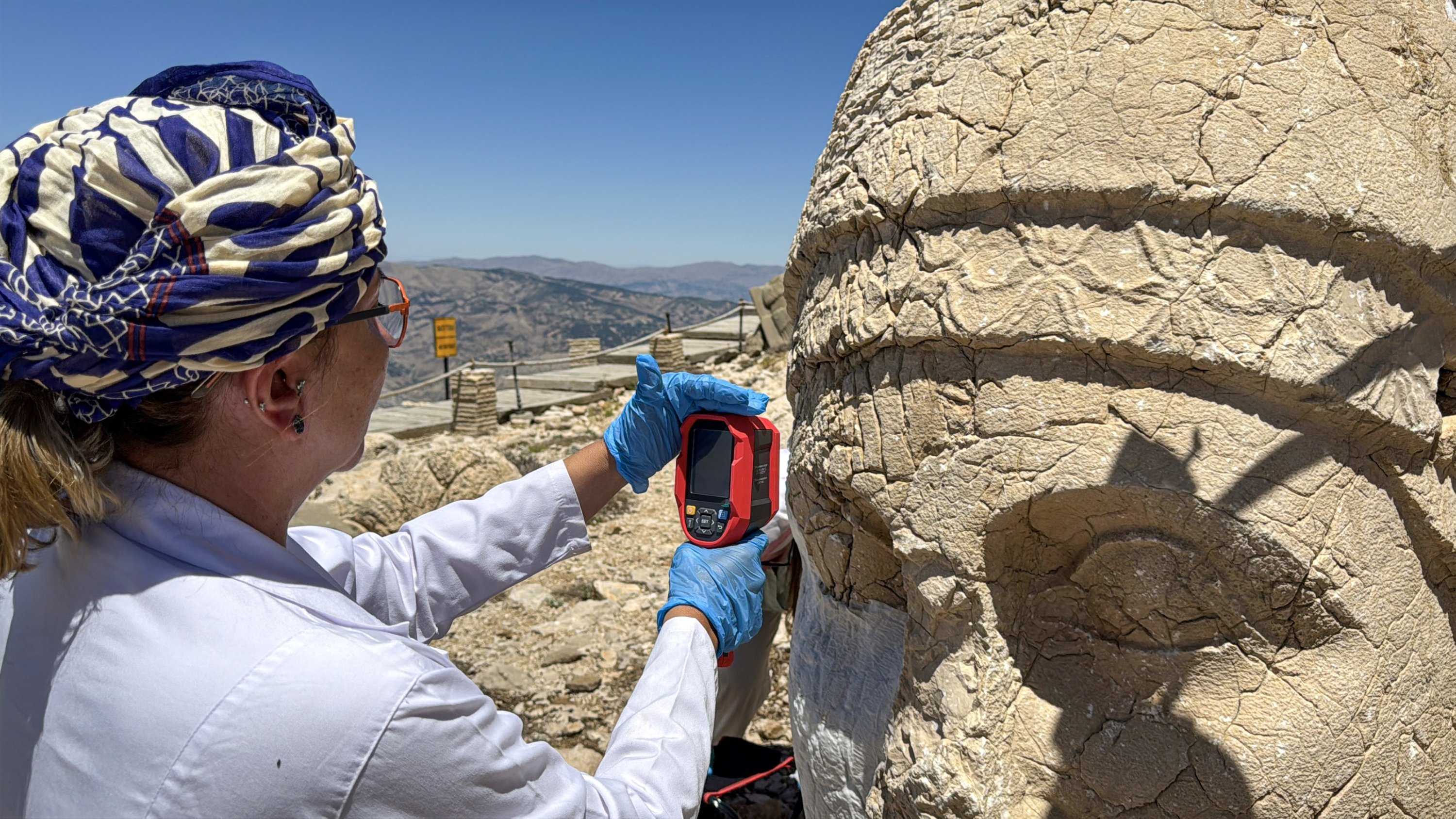
Conservation work on the giant stone statues atop Mount Nemrut, a UNESCO World Heritage Site in southeastern Türkiye, has expanded following promising results from a 2022 preservation project using nano-lime technology.
The initial restoration effort, led by the Gaziantep Regional Laboratory for Restoration and Conservation and the Adıyaman Museum Directorate, focused on repairing microcracks in the 2,206-meter-high mountain's iconic sculptures using a nano-dispersed calcium hydroxide solution.
Following positive outcomes from treatments on areas such as the foot of the Heracles statue, the teams accelerated work this year on the Eagle Head and the statue of King Antiochos I, both located on the site's West Terrace.
The process begins with cleaning surface deposits from the stone, followed by injecting the nano lime solution into fine cracks using syringes. This method not only strengthens the internal structure but also prevents water infiltration caused by rain and other environmental exposure, without compromising the statues' natural appearance.
Ayşe Ebru Çorbacı, director of the Gaziantep conservation lab, said the technique has proven effective since trial applications began two years ago.
"After monitoring the results of the 2022 pilot project, we saw that this method is reliable," Çorbacı told the state-run Anadolu Agency (AA). "We now plan to carry out a more comprehensive restoration this year. The aesthetic filler we're using will prevent water from penetrating the stone, but the cracks won’t be fully closed, preserving the statues’ original look for visitors."
The current phase of the project is anticipated to last approximately one month.
Adıyaman Museum Director Mehmet Alkan said the goal is to ensure the monumental sculptures endure for future generations.