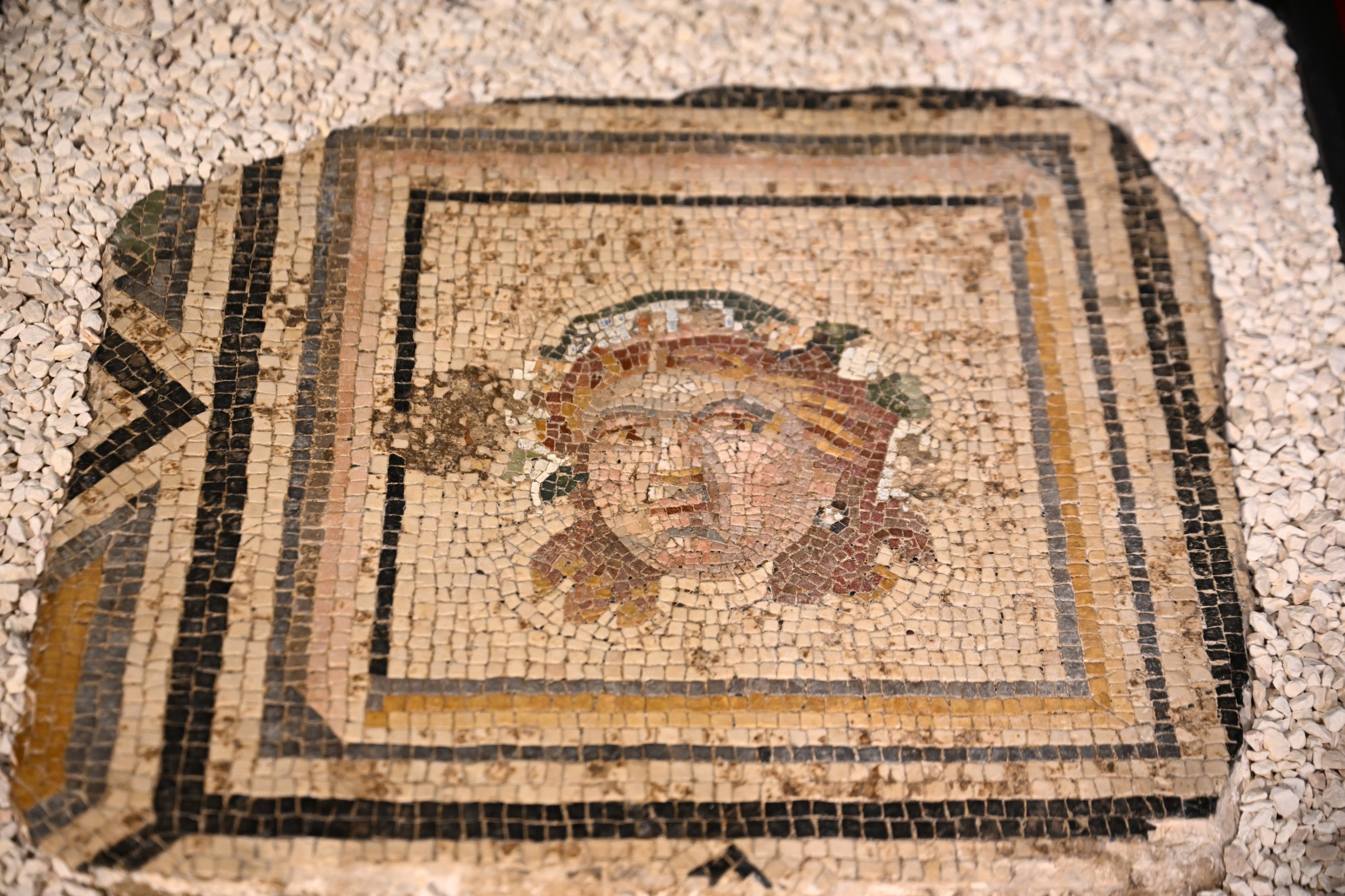
Türkiye has recovered the 13th panel of the famed "Gypsy Girl" mosaic from the United States, marking the latest return of an artifact linked to the ancient Roman city of Zeugma, Culture and Tourism Minister Mehmet Nuri Ersoy said Tuesday.
Speaking at a handover ceremony at the Zeugma Mosaic Museum in Gaziantep, in southeastern Türkiye, Ersoy said the newly returned panel, which dates to the A.D. second or third century, would allow researchers to study the mosaic more comprehensively and evaluate the composition in its original context.
"The addition of this panel to the collection of the Zeugma Mosaic Museum is an important achievement that will enable a more holistic scientific study of the Zeugma mosaics and contribute to reassessing the composition within its original context," Ersoy said.
Zeugma, located on the banks of the Euphrates River, was a major Roman city where trade, art and culture flourished, Ersoy said.
The "Gypsy Girl" mosaic, one of Türkiye’s best-known cultural symbols, was fragmented after illegal excavations in the 1960s, when numerous panels were smuggled out of the country.
Türkiye secured the return of 12 panels from the mosaic in 2018, and they have since been displayed at the Zeugma Mosaic Museum.
According to Ersoy, researchers from Grenoble Alpes University and Zeugma excavation director professor Kutalmış Görkay identified the newly recovered panel as part of the same mosaic composition. After the findings were submitted to the Culture and Tourism Ministry, officials determined that the panel had been sold and changed hands in the United States.
The ministry initially sought information from U.S. authorities about the artifact but was unable to identify the buyer. Ministry experts later discovered that the panel had been listed for sale again while monitoring international auctions, prompting Turkish authorities to renew their restitution request.
Ersoy said the artifact was ultimately returned following an investigation by U.S. Homeland Security Investigations, adding that the case demonstrated the importance of combining scientific research, legal mechanisms and international cooperation in combating the illicit trafficking of cultural property.
He said every cultural artifact has its own story and historical context and that the return of missing pieces helps restore not only physical objects but also historical memory.
Türkiye and the U.S. signed a memorandum of understanding in 2021 aimed at preventing the import of cultural property illegally removed from Türkiye into the United States. Ersoy said the agreement, which operates in five-year terms, has been extended for another five years.
Since 2002, Türkiye has recovered 13,454 cultural artifacts from abroad, including 9,139 returned over the past eight years, Ersoy said. He added that the government would continue efforts to combat illegal excavations and the trafficking of antiquities through stronger law enforcement, institutional cooperation and public awareness campaigns.
Gaziantep Governor Kemal Çeber said the province has benefited significantly from the return of historical artifacts and thanked those involved in the restitution process.
Gaziantep Metropolitan Mayor Fatma Şahin welcomed the panel's return, describing the recovery as the end of a 60-year separation.
The ceremony was attended by local officials, Zeugma excavation director professor Kutalmış Görkay, Karkamış excavation director professor Nicolo Marchetti and other guests. Following the event, officials toured the museum.