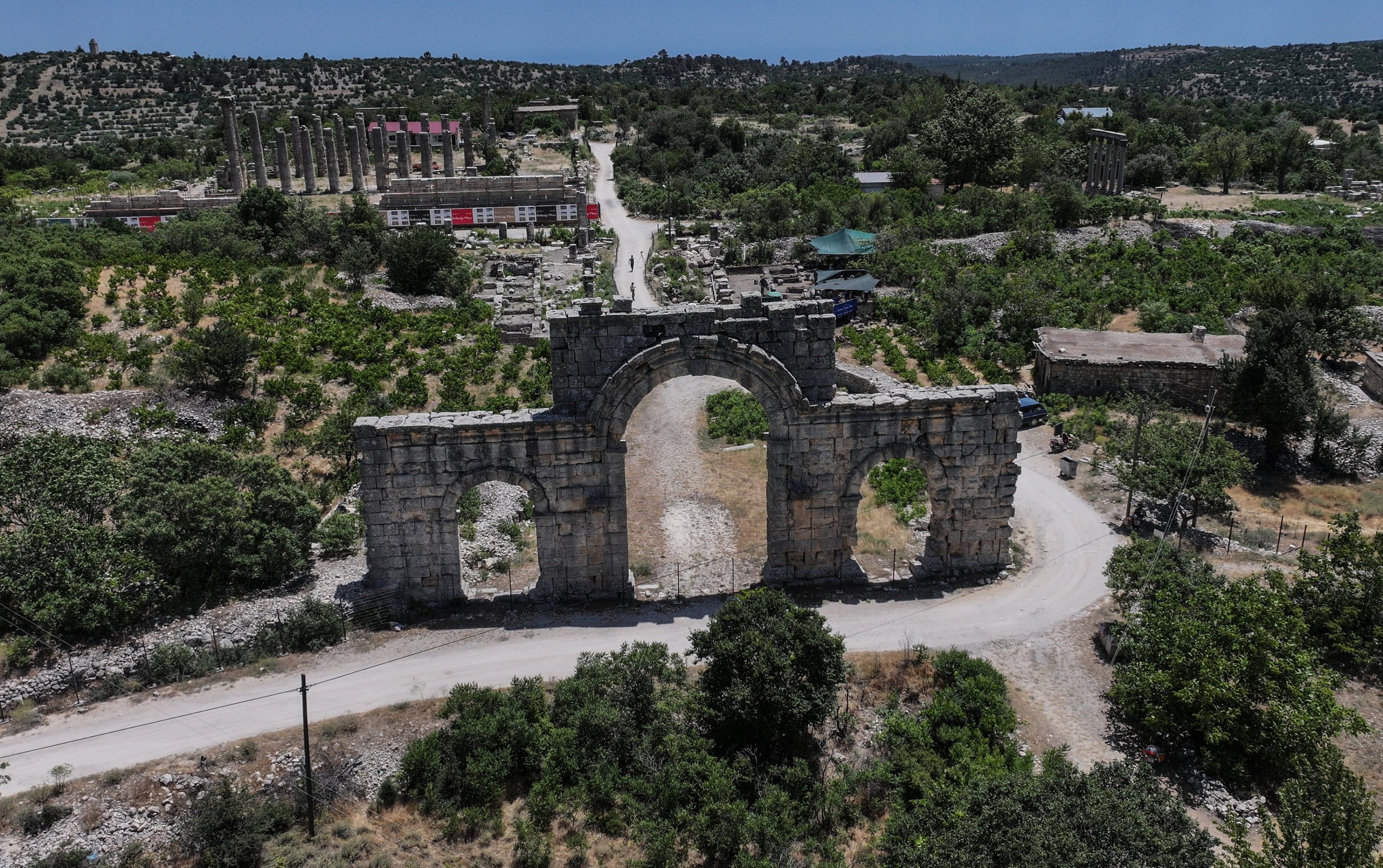
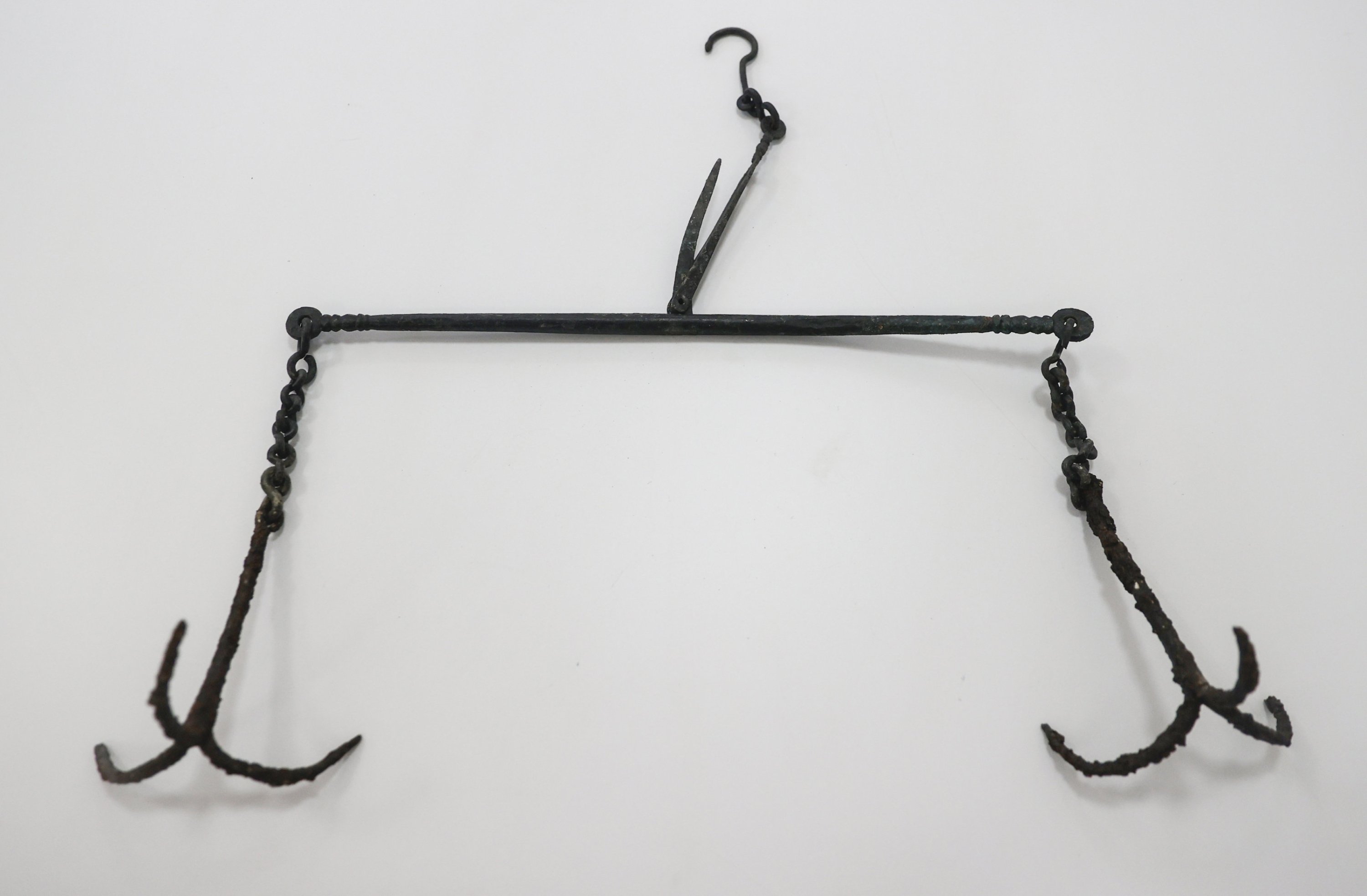
In the archaeological excavations carried out at the ancient city of Uzuncaburç in Mersin, southern Türkiye, five iron weights shaped like letters and a balance scale, estimated to be around 1,600 years old, have been unearthed.
Located 30 kilometers north of the Silifke district, the ancient city, one of the best-preserved structures dating back to the Hellenistic period, continues to be the focus of excavations led jointly by the Ministry of Culture and Tourism and Mersin University (MEÜ).
The ongoing work, supported by the ministry’s "Heritage for the Future Project," is conducted by a team headed by professor Ümit Aydınoğlu from MEÜ’s Archaeology Department.
The excavations aim to bring to light the historical artifacts of Uzuncaburç, which is known for its colonnaded streets, temples, monumental fountains and theater.
The team discovered five iron weights shaped like letters and a balance scale during the excavation of one of the two colonnaded streets running through the center of the ancient city. These artifacts are believed to date back approximately 1600 years.
These findings are expected to shed light on trade activities during Late Antiquity (the A.D. fourth to seventh centuries). Research in this area continues with the aim of uncovering further discoveries.
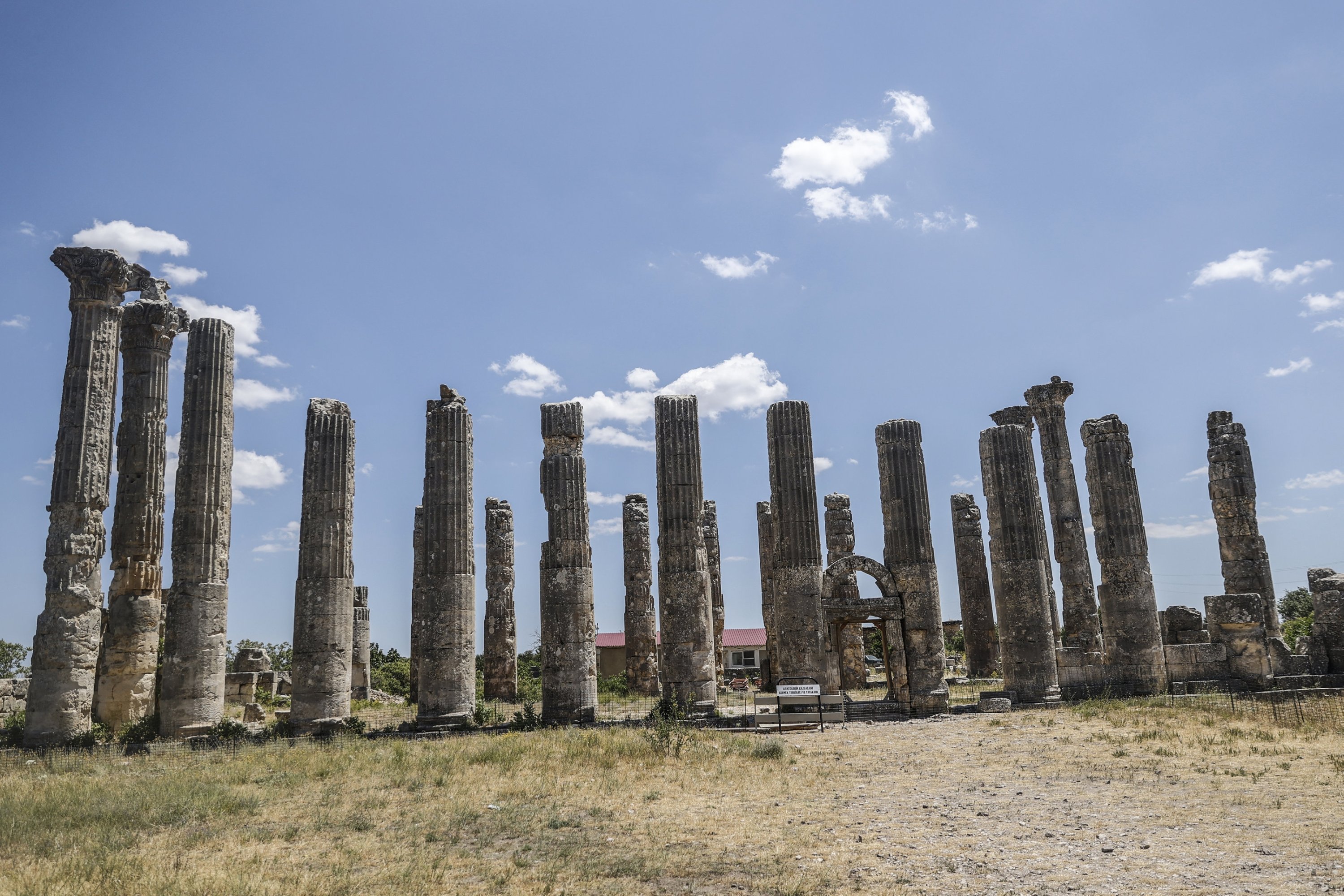
Aydınoğlu told Anadolu Agency (AA) that this season’s efforts focused heavily on the colonnaded streets.
He noted that numerous shops were uncovered in this area, along with significant materials such as coins and cutting tools, which provide valuable data on the trade activities of the ancient city.
Drawing attention to the fact that the scale was found as a complete set, Aydınoğlu explained: "These types of iron balance scales with hanging pans were quite common during Late Antiquity. What is even more interesting is that alongside the scale set, five weights were found. The weights are made in the form of letters from the ancient Greek alphabet. Each weight corresponds to multiples of certain standard weights. At that time, a weight system called "litra" was used. Our weights range from half a litra up to 5 litras. In modern measurements, this corresponds to roughly between 150 grams and 1.5 kilograms."
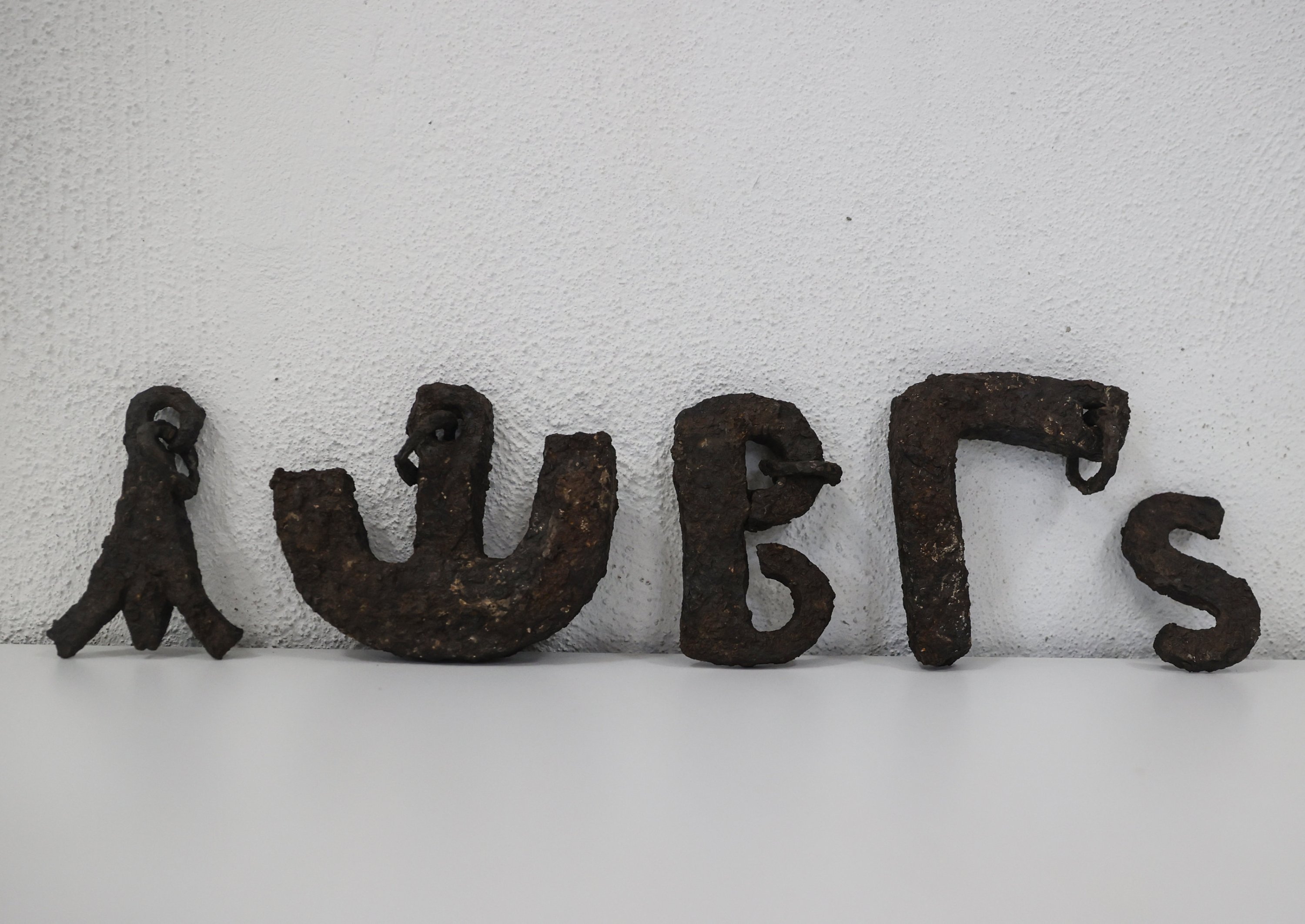
Aydınoğlu stated that such examples had not been encountered in previous excavations and emphasized that the weights were labeled using letters.
He said: "They used symbolism on the weights. It might have been a method employed by local merchants or a commonly used system. We are very happy to have found the first complete set of a measurement system."
Highlighting the team’s goal to fully uncover the colonnaded streets and reveal the main structural framework of the city, he also mentioned plans to restore some of the shops discovered there.
Regarding other ongoing efforts at Uzuncaburç, which has preserved buildings dating back to the Hellenistic period, Aydınoğlu added: "We have completed the environmental arrangement of the ancient city, installed informational signs and created walking paths. Within a few years, Uzuncaburç will become one of Türkiye’s well-known archaeological village models."