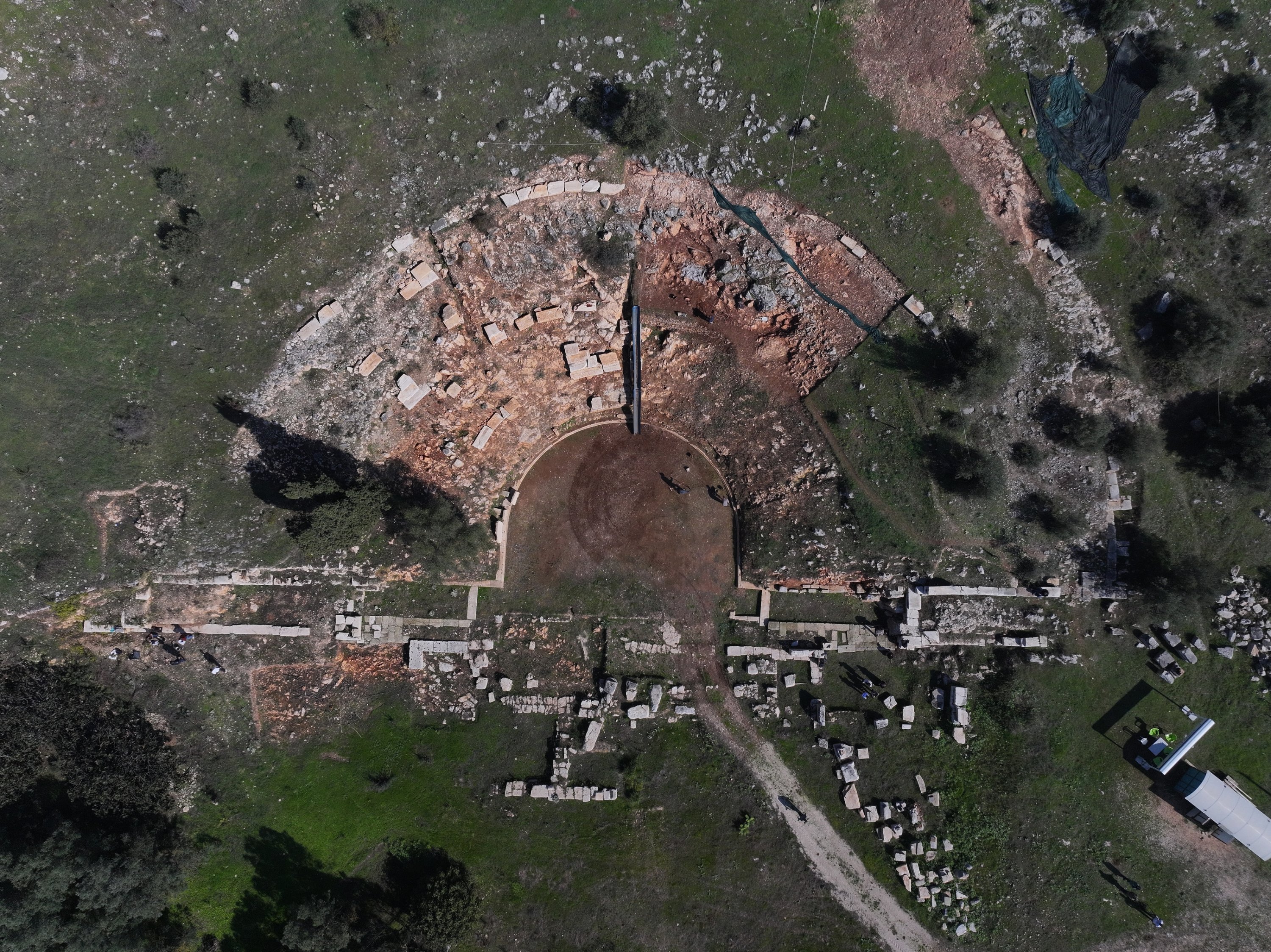
An ancient tomb has been uncovered during excavations at the ancient theater of Apollonia ad Rhyndacum in Gölyazı, a picturesque neighborhood in northwestern Türkiye's Bursa province. The discovery is expected to shed new light on the settlement’s history during the Hellenistic period.
Excavations at the ancient theater began in 2021 and are being carried out under the direction of professor Derya Şahin, a faculty member in the Department of Archeology at Bursa Uludağ University.
The theater was built into the slopes of Zambaktepe overlooking Lake Uluabat during the Hellenistic period and is thought to have held around 5,000 people. It also had VIP sections resembling private boxes. Archaeologists have so far uncovered 42 rows of seats and returned them to their original positions.
Archaeologists uncovered a tomb dating to the first century A.D. north of the theater’s lower seating section. The tomb has an adobe burial chamber covered with terracotta roof tiles.
Examinations of the tomb revealed that the deceased had been cremated.
Speaking to Anadolu Agency (AA), excavation director Şahin said this season’s work at the theater is expected to conclude by the end of November.
She said the team, comprising two archaeologists, a restorer and workers, had largely completed excavations in the lower seating section. In its northern part, they have been working to uncover the buried remains of the structure, excavate down to the bedrock and identify the original seating foundations.
“This year, we came across an unusual tomb with an adobe burial chamber and a terracotta-tile roof. It was a fascinating discovery,” Şahin said. “Why was there a tomb here? That is a big question mark, but it has also made us very excited.”
She described the tomb, dating to the first century, as the season’s most significant discovery in the northern section of the lower seating area.
Şahin noted that a necropolis, or burial ground, was already known to exist near the ancient city’s entrance. The newly discovered tomb closely resembles other known graves in the area in terms of its construction and features.
“Given that the ancient city already had a designated necropolis, what was a tomb doing inside the theater?” she said. “The tomb must have had a special significance, perhaps linked to something sacred or heroic.”
Archaeologists determined that the deceased had been cremated, Şahin added, making it difficult to establish how many people were buried there based on the surviving bones.
“Because the remains were burned, the tomb has not yielded many finds,” she said.
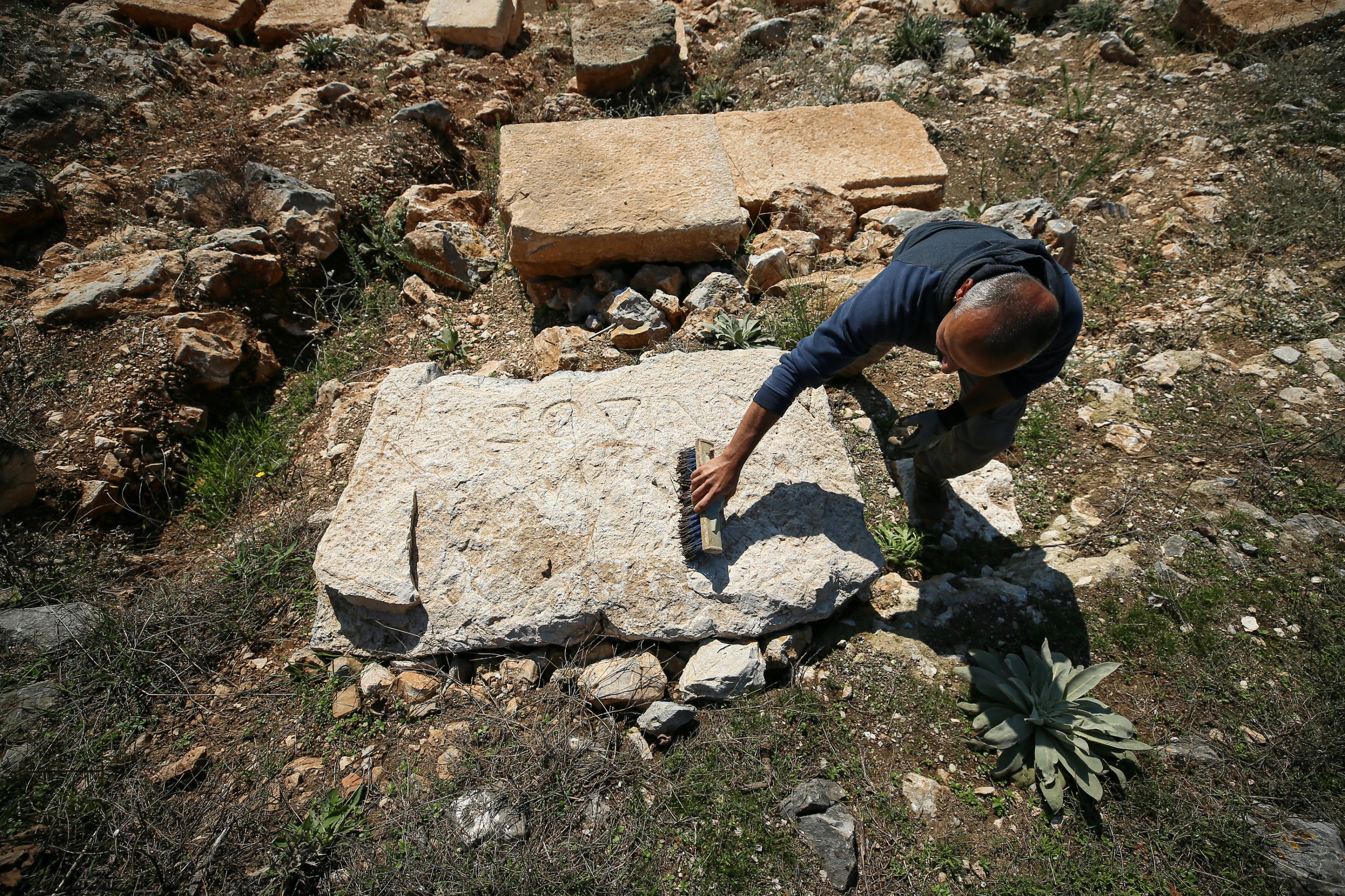
Excavations have also been conducted in the theater’s upper seating section, although little evidence of its underlying infrastructure has been found.
“Since the area has been completely destroyed, it has not been possible to establish much about the upper cavea,” Şahin said. “We believe it may have rested on a vaulted structure.”
The team suspects the theater had two levels, with a passageway about 1 meter (3.3 feet) wide, known as a diazoma, separating the seating sections.
“We envision another seating area above the passageway, supported by a vaulted structure,” Şahin said.
The theater initially followed the characteristics of a typical Hellenistic design, built into a hillside. However, inscriptions suggest that its final phase dates to the early second century A.D.
Şahin said the upper section may have rested on vaults, similar to those used in Roman-era theaters.
She emphasized that excavations are taking place in an ancient settlement that has remained continuously inhabited, making it difficult to find structures as well-preserved as those in abandoned and isolated ancient cities. Nevertheless, the work has yielded important findings about the site’s history.
The area surrounding the theater also holds considerable archaeological potential, she said. Structures connected to the theater, another temple or a nearby road may yet be discovered.
“Many possibilities remain hidden, preserving their mysteries,” Şahin said.