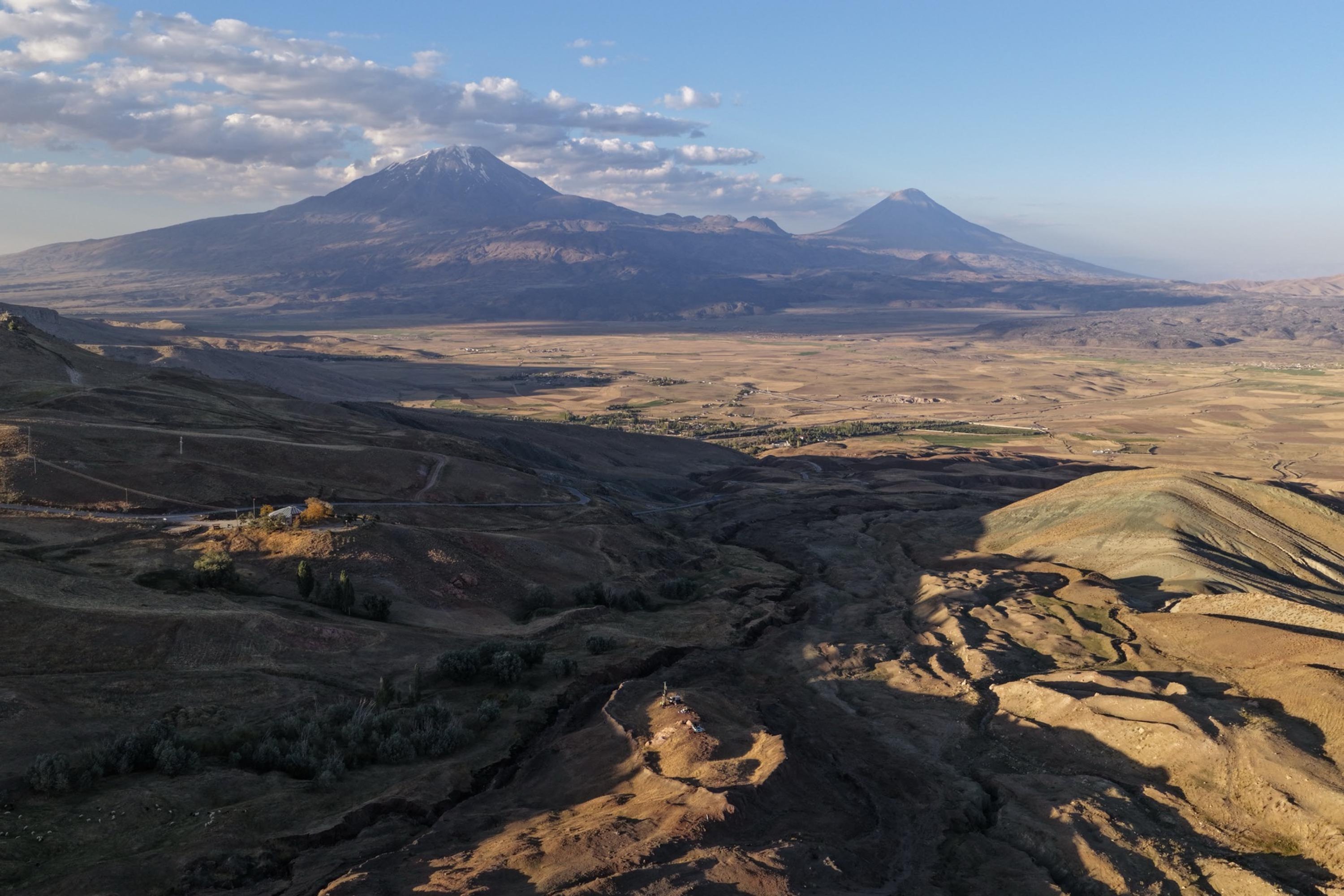
Researchers with a Sivas Cumhuriyet University-led project have completed on-site studies at a ship-shaped geological formation in Ağrı’s Doğubayazıt district that some believe could be the remains of Noah’s Ark.
Andrew Jones, an American researcher and deputy head of the team, said core drilling produced continuous soil samples, while radar scans detected several anomalies beneath the surface.
Laboratory studies are continuing to determine whether the formation is natural or human-made, Jones said. The final report is expected in April or May next year.
The formation was discovered Sept. 11, 1959, by Army Capt. Ilhan Durupınar, a mapping engineer who was surveying Eastern Anatolia by plane for the Turkish Armed Forces (TSK). The discovery led numerous Turkish and foreign researchers to study the area amid claims that it could be the remains of Noah’s Ark.
The latest research began in May 2026 under a project led by professor Cenker Atila of Sivas Cumhuriyet University’s Archaeology Department. About 20 scientists from five countries spent nearly 90 days studying the formation between the villages of Telçeker and Üzengili.
Researchers used drones to model the terrain and a new-generation radar system to scan beneath the surface. About 1,000 soil samples were collected from different points and sent to laboratories for analysis, while core drilling was also conducted.
Jones said one of the most significant findings was that the formation does not consist of a single mass of rock.
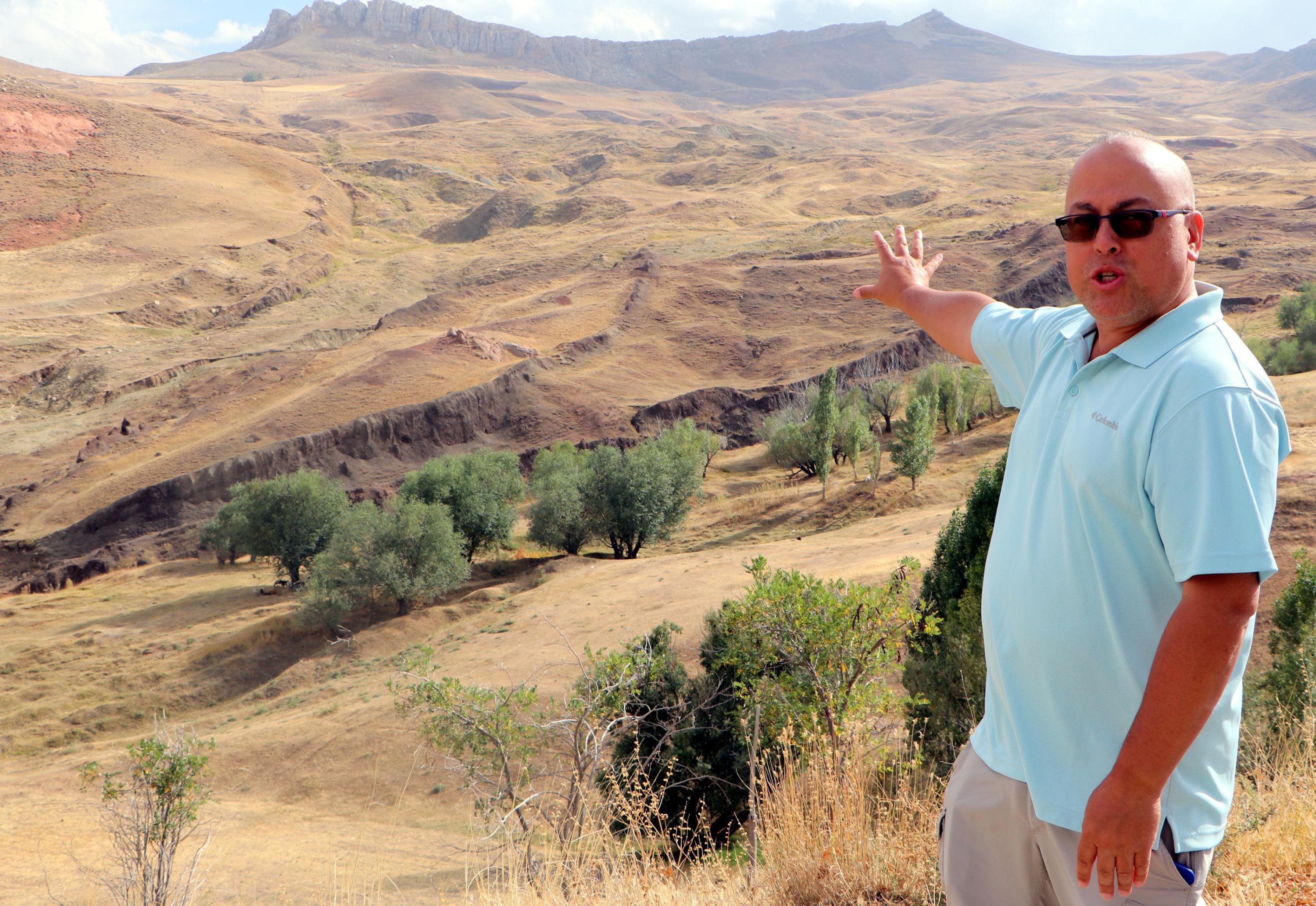
“Some people had suggested that this was a natural formation, a solid rock mass that had eroded over millions of years and taken the shape of a ship,” Jones said. “But the biggest finding from our drilling was that the structure is entirely soil. There are some large rock blocks in the area, but the core drilling machine continuously brought up soil samples.”
Jones stressed that the findings do not yet provide a definitive conclusion.
“This could be a natural formation, or it could be a man-made structure. What we are doing now is investigating it using scientific methods,” he said.
Researchers found highly organic, very dark soil beneath the surface and will test whether it could be evidence of decayed wood or human activity, Jones said.
Radar scans conducted in August also detected anomalies beneath the surface. Jones said the preliminary results identified points that could indicate unnatural objects or structures, but the team is still waiting for the final report from the American radar scientist.
“This was one of the reasons we carried out drilling. We wanted to reach those depths and collect samples,” Jones said.
Jones said researchers had conducted various studies in the area since its discovery in 1959, but previous work had largely focused on the ship-shaped formation visible on the surface.
“For the first time, with government permission, a university has been able to go beneath the surface and see what is there,” Jones said. “We obtained permission for core drilling because we wanted to see what was beneath the surface.”
Jones said the final report will be prepared after the radar data and soil samples are evaluated together.
He also cautioned against claims circulating on social media and some news websites that the research had already confirmed the presence of Noah’s Ark.
“Some people want to make statements before they have gathered all the facts,” Jones said. “Some say it has been 100% confirmed, while others make claims about what we have discovered that we have never actually told them.”
“There are still laboratory studies to be conducted and final reports to be written. So our work is not finished, and we cannot make such a statement until it is,” he said.
“If it is really true, we hope it will be very good for Türkiye and the world,” Jones said. “We are doing everything we can to conduct the research in the best possible way. However, the results are not yet definitive. We are continuing the testing process.”