Daily Sabah logo

Politics
Diplomacy Legislation War On Terror EU Affairs Elections News Analysis
TÜRKİYE
Istanbul Education Investigations Minorities Expat Corner Diaspora
World
Mid-East Europe Americas Asia Pacific Africa Syrian Crisis Islamophobia
Business
Automotive Economy Energy Finance Tourism Tech Defense Transportation News Analysis
Lifestyle
Health Environment Travel Food Fashion Science Religion History Feature Expat Corner
Arts
Cinema Music Events Portrait Reviews Performing Arts
Sports
Football Basketball Motorsports Tennis
Opinion
Columns Op-Ed Reader's Corner Editorial
PHOTO GALLERY
JOBS ABOUT US RSS PRIVACY CONTACT US
© Turkuvaz Haberleşme ve Yayıncılık 2026

Daily Sabah - Latest & Breaking News from Turkey | Istanbul

  • Politics
    • Diplomacy
    • Legislation
    • War On Terror
    • EU Affairs
    • Elections
    • News Analysis
  • TÜRKİYE
    • Istanbul
    • Education
    • Investigations
    • Minorities
    • Expat Corner
    • Diaspora
  • World
    • Mid-East
    • Europe
    • Americas
    • Asia Pacific
    • Africa
    • Syrian Crisis
    • Islamophobia
  • Business
    • Automotive
    • Economy
    • Energy
    • Finance
    • Tourism
    • Tech
    • Defense
    • Transportation
    • News Analysis
  • Lifestyle
    • Health
    • Environment
    • Travel
    • Food
    • Fashion
    • Science
    • Religion
    • History
    • Feature
    • Expat Corner
  • Arts
    • Cinema
    • Music
    • Events
    • Portrait
    • Reviews
    • Performing Arts
  • Sports
    • Football
    • Basketball
    • Motorsports
    • Tennis
  • Gallery
  • Opinion
    • Columns
    • Op-Ed
    • Reader's Corner
    • Editorial
  • TV
  • Life
  • Health
  • Environment
  • Travel
  • Food
  • Fashion
  • Science
  • Religion
  • History
  • Feature
  • Expat Corner

Asteroid dust that could help shed light on origin of life arrives on Earth

by French Press Agency - AFP

TOKYO Dec 05, 2020 - 10:24 pm GMT+3
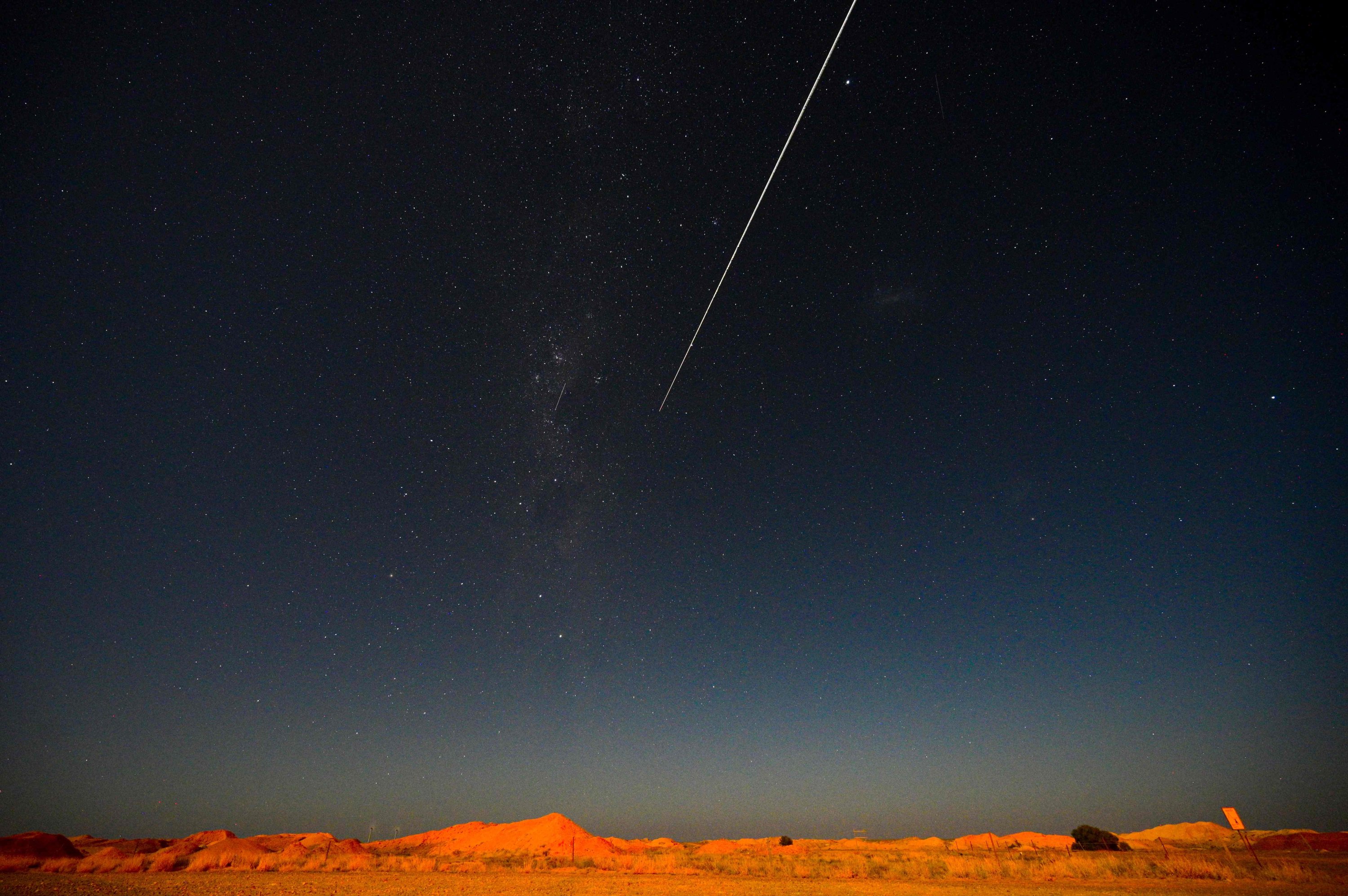
JAXA's Hayabusa-2 probe's sample drop to earth after landing on and gathering material from an asteroid some 300 million kilometers from Earth is seen from Coober Pedy in South Australia on Dec. 6, 2020.  (AFP Photo)
JAXA's Hayabusa-2 probe's sample drop to earth after landing on and gathering material from an asteroid some 300 million kilometers from Earth is seen from Coober Pedy in South Australia on Dec. 6, 2020. (AFP Photo)
by French Press Agency - AFP Dec 05, 2020 10:24 pm

In a streak of light across the night sky, samples collected from a distant asteroid arrived on Earth on Sunday after being dropped off by Japanese space probe Hayabusa-2.

Scientists hope the precious samples, which are expected to amount to no more than 0.1 grams of material, could help shed light on the origin of life and the formation of the universe.

The capsule carrying samples entered the atmosphere just before 2:30 am Japan time (5:30 p.m. GMT), creating a shooting-star-like fireball as it entered Earth's atmosphere.

"Six years and it has finally come back to Earth," an official narrating a live broadcast of the arrival said, as images showed officials from Japan's space agency JAXA cheering and pumping their fists in excitement.

The capsule separated from Hayabusa-2 on Saturday, when the refrigerator-sized space probe that launched into space in 2014 was 220,000 kilometers (136,701 miles) away from Earth.

It landed in the southern Australian desert, where it will be recovered from an area spanning some 100 square kilometers (39 square miles), with search crews guided by beacons emitted as the capsule descended.

The samples were collected from the asteroid Ryugu, some 300 million kilometers from Earth during two crucial phases of Hayabusa-2's mission last year.

The probe collected both surface dust and pristine material from below the surface that was stirred up by firing an "impactor" into the asteroid.

The material collected from the asteroid is believed to be unchanged since the time the universe was formed.

Larger celestial bodies like Earth went through radical changes including heating and solidifying, changing the composition of the materials on their surface and below.

But "when it comes to smaller planets or smaller asteroids, these substances were not melted, and therefore it is believed that substances from 4.6 billion years ago are still there," Hayabusa-2 mission manager Makoto Yoshikawa told reporters before the capsule arrived.

Extended mission for probe

Scientists are especially keen to discover whether the samples contain organic matter, which could have helped seed life on Earth.

"We still don't know the origin of life on Earth and through this Hayabusa-2 mission, if we are able to study and understand these organic materials from Ryugu, it could be that these organic materials were the source of life on Earth," Yoshikawa said,

Once the samples are recovered, they will be processed in Australia and then flown back to Japan.

Half the material will be shared between JAXA, U.S. space agency NASA and other international organizations, and the rest kept for future study as advances are made in analytic technology.

More tasks for Hayabusa-2

The work however isn't over for Hayabusa-2, which was launched in December 2014.

The probe will now begin an extended mission targeting two new asteroids.

Hayabusa-2 will complete a series of orbits around the sun for around six years before approaching the first of its target asteroids – named 2001 CC21 – in July 2026.

The probe won't get that close, but scientists hope it will be able to photograph it and that the fly-by will help develop knowledge about how to protect Earth against asteroid impact.

Hayabusa-2 will then head toward its main target, 1998 KY26, a ball-shaped asteroid with a diameter of just 30 meters. When the probe arrives at the asteroid in July 2031, it will be approximately 300 million kilometers from Earth.

It will observe and photograph the asteroid, no easy task given that it is spinning rapidly, rotating on its axis about every 10 minutes.

But Hayabusa-2 is unlikely to land and collect samples, as it probably won't have enough fuel to return them to Earth.


  • shortlink copied
  • KEYWORDS
    asteroid space&science
    The Daily Sabah Newsletter
    Keep up to date with what’s happening in Turkey, it’s region and the world.
    You can unsubscribe at any time. By signing up you are agreeing to our Terms of Use and Privacy Policy. This site is protected by reCAPTCHA and the Google Privacy Policy and Terms of Service apply.
    No Image
    Turkey's ancient coastal castles
    PHOTOGALLERY
    • POLITICS
    • Diplomacy
    • Legislation
    • War On Terror
    • EU Affairs
    • News Analysis
    • TÜRKİYE
    • Istanbul
    • Education
    • Investigations
    • Minorities
    • Diaspora
    • World
    • Mid-East
    • Europe
    • Americas
    • Asia Pacific
    • Africa
    • Syrian Crisis
    • İslamophobia
    • Business
    • Automotive
    • Economy
    • Energy
    • Finance
    • Tourism
    • Tech
    • Defense
    • Transportation
    • News Analysis
    • Lifestyle
    • Health
    • Environment
    • Travel
    • Food
    • Fashion
    • Science
    • Religion
    • History
    • Feature
    • Expat Corner
    • Arts
    • Cinema
    • Music
    • Events
    • Portrait
    • Performing Arts
    • Reviews
    • Sports
    • Football
    • Basketball
    • Motorsports
    • Tennis
    • Opinion
    • Columns
    • Op-Ed
    • Reader's Corner
    • Editorial
    • Photo gallery
    • DS TV
    • Jobs
    • privacy
    • about us
    • contact us
    • RSS
    © Turkuvaz Haberleşme ve Yayıncılık 2021