

Daily Sabah logo

Politics
Diplomacy Legislation War On Terror EU Affairs Elections News Analysis
TÜRKİYE
Istanbul Education Investigations Minorities Expat Corner Diaspora
World
Mid-East Europe Americas Asia Pacific Africa Syrian Crisis Islamophobia
Business
Automotive Economy Energy Finance Tourism Tech Defense Transportation News Analysis
Lifestyle
Health Environment Travel Food Fashion Science Religion History Feature Expat Corner
Arts
Cinema Music Events Portrait Reviews Performing Arts
Sports
Football Basketball Motorsports Tennis
Opinion
Columns Op-Ed Reader's Corner Editorial
PHOTO GALLERY
JOBS ABOUT US RSS PRIVACY CONTACT US
© Turkuvaz Haberleşme ve Yayıncılık 2025

Daily Sabah - Latest & Breaking News from Turkey | Istanbul

  • Politics
    • Diplomacy
    • Legislation
    • War On Terror
    • EU Affairs
    • Elections
    • News Analysis
  • TÜRKİYE
    • Istanbul
    • Education
    • Investigations
    • Minorities
    • Expat Corner
    • Diaspora
  • World
    • Mid-East
    • Europe
    • Americas
    • Asia Pacific
    • Africa
    • Syrian Crisis
    • Islamophobia
  • Business
    • Automotive
    • Economy
    • Energy
    • Finance
    • Tourism
    • Tech
    • Defense
    • Transportation
    • News Analysis
  • Lifestyle
    • Health
    • Environment
    • Travel
    • Food
    • Fashion
    • Science
    • Religion
    • History
    • Feature
    • Expat Corner
  • Arts
    • Cinema
    • Music
    • Events
    • Portrait
    • Reviews
    • Performing Arts
  • Sports
    • Football
    • Basketball
    • Motorsports
    • Tennis
  • Gallery
  • Opinion
    • Columns
    • Op-Ed
    • Reader's Corner
    • Editorial
  • TV
  • Life
  • Health
  • Environment
  • Travel
  • Food
  • Fashion
  • Science
  • Religion
  • History
  • Feature
  • Expat Corner

Asteroid samples could redefine our understanding of life’s origins

by Agence France-Presse - AFP

PARIS Jan 30, 2025 - 9:24 am GMT+3
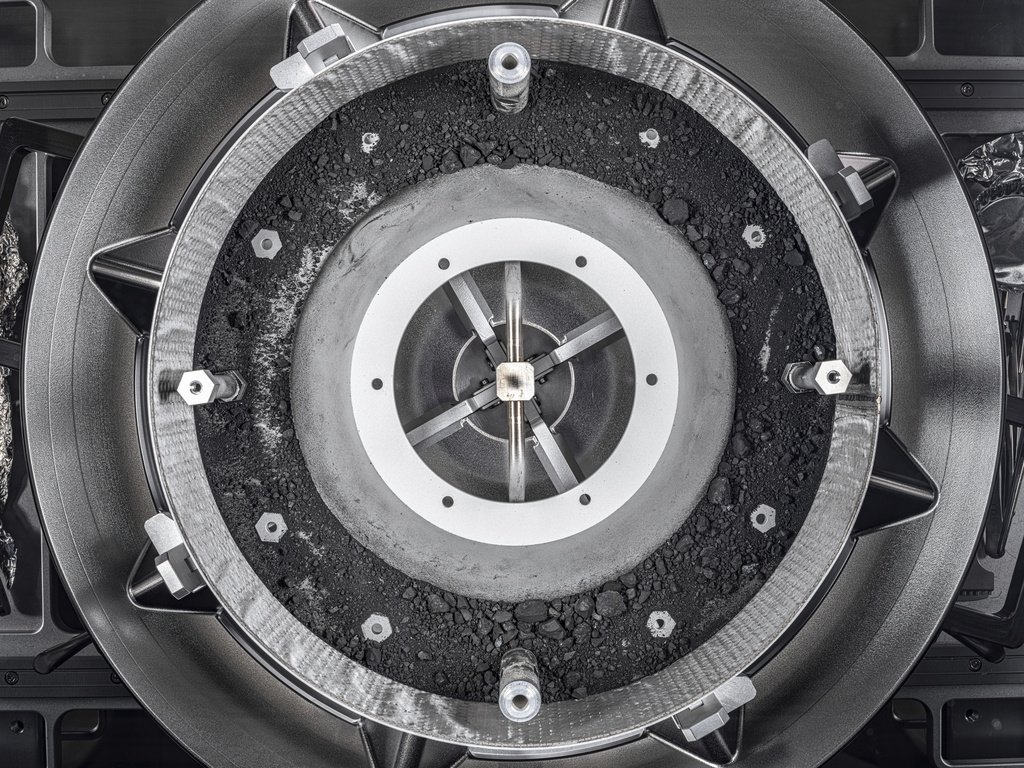
This image provided by NASA shows a top-down view of the OSIRIS-REx Touch-and-Go-Sample-Acquisition-Mechanism (TAGSAM) head with the lid removed, revealing the remainder of the asteroid sample inside. (AP Photo)
by Agence France-Presse - AFP Jan 30, 2025 9:24 am

Pristine samples of the asteroid Bennu transported to Earth contain the "basic building blocks" for life, shedding new light on the perennial question of how life began on our planet.

The revelation, in two studies published Wednesday, is the result of work on just 120 grams of material – about the weight of a banana –collected from Bennu by NASA's OSIRIS-REx spacecraft in 2020.

The samples from Bennu, then around 300 million kilometers (186 million miles) from Earth, were returned in a capsule that OSIRIS-REx dropped off during a pass-by in 2023.

An initial analysis had already revealed evidence of high carbon content and water.

But the new research found that evaporated water on Bennu's parent asteroid left behind "the raw ingredients of life," said Tim McCoy, curator of meteorites at the Smithsonian's National Museum of Natural History and co-lead author of one of the studies.

"We have discovered that next step on a pathway to life," he said in a press release issued by the museum.

Bennu appears to have formed around 65 million years ago from the debris of a parent asteroid dating back some 4.5 billion years.

The findings suggest Bennu's parent was once home to pockets of liquid water. When these evaporated, they left behind a "briny broth" of salts and minerals.

Some of the minerals include compounds that have never been seen in samples from outer space, the museum said.

An analysis of the samples strongly suggests a "non-terrestrial origin," adds one of the studies.

That could lend support to the theory that life on Earth was seeded from outer space.

The samples "give unprecedented insight into the processes that drove the formation of the Solar System," according to Yasuhito Sekine, a professor at the Institute of Science Tokyo.

"This discovery was only possible by analyzing samples that were collected directly from the asteroid, then carefully preserved back on Earth," he added.

"The salts would otherwise have rapidly absorbed moisture in the Earth's humid atmosphere."

Huge progress

The researchers believe similar salty brines may exist on other extraterrestrial bodies, including the dwarf planet Ceres and Saturn's moon Enceladus, as well as other asteroids.

They plan to reexamine specimens already on Earth for traces of compounds that previous research might have missed.

"Even though asteroid Bennu has no life, the question is, could other icy bodies harbor life?" said Nick Timms, an associate professor at Curtin University's School of Earth and Planetary Sciences, also involved in the research.

Much about life's origin remains unclear despite the secrets revealed by Bennu, McCoy cautioned.

"We now know we have the basic building blocks to move along this pathway toward life, but we don't know how far along that pathway this environment could allow things to progress," he said.

Still, Sara Russell, co-lead author with McCoy and a cosmic mineralogist at the museum, said the research had made "huge progress in understanding how asteroids like Bennu evolved and how they may have helped make the Earth habitable."

OSIRIS-REx wasn't the first probe to rendezvous with an asteroid and bring back samples for study – Japan succeeded in the feat twice, returning celestial dust in 2010 and 2020.

In addition to scientific insights, a better understanding of Bennu's composition could prove useful if humanity ever needs to steer it away.

Space agencies are constantly monitoring asteroids over potential impact risks.

A recently discovered asteroid dubbed 2024 YR4, estimated to be between 40 and 100 meters (130 and 330 feet) wide, has a 1.2% chance of impacting Earth on Dec. 22, 2032, the European Space Agency said Wednesday.

That is only considered a level-three risk on the 10-level Torino Impact Hazard Scale, the ESA said, adding that an asteroid's chances of impact often drop after additional observations.
  • shortlink copied
  • Last Update: Jan 30, 2025 10:29 am
    KEYWORDS
    asteroid nasa earth solar system
    The Daily Sabah Newsletter
    Keep up to date with what’s happening in Turkey, it’s region and the world.
    You can unsubscribe at any time. By signing up you are agreeing to our Terms of Use and Privacy Policy. This site is protected by reCAPTCHA and the Google Privacy Policy and Terms of Service apply.
    No Image
    Facing hunger, Peru's poor band together with 'common pots'
    PHOTOGALLERY
    • POLITICS
    • Diplomacy
    • Legislation
    • War On Terror
    • EU Affairs
    • News Analysis
    • TÜRKİYE
    • Istanbul
    • Education
    • Investigations
    • Minorities
    • Diaspora
    • World
    • Mid-East
    • Europe
    • Americas
    • Asia Pacific
    • Africa
    • Syrian Crisis
    • İslamophobia
    • Business
    • Automotive
    • Economy
    • Energy
    • Finance
    • Tourism
    • Tech
    • Defense
    • Transportation
    • News Analysis
    • Lifestyle
    • Health
    • Environment
    • Travel
    • Food
    • Fashion
    • Science
    • Religion
    • History
    • Feature
    • Expat Corner
    • Arts
    • Cinema
    • Music
    • Events
    • Portrait
    • Performing Arts
    • Reviews
    • Sports
    • Football
    • Basketball
    • Motorsports
    • Tennis
    • Opinion
    • Columns
    • Op-Ed
    • Reader's Corner
    • Editorial
    • Photo gallery
    • DS TV
    • Jobs
    • privacy
    • about us
    • contact us
    • RSS
    © Turkuvaz Haberleşme ve Yayıncılık 2021