Daily Sabah logo

Politics
Diplomacy Legislation War On Terror EU Affairs Elections News Analysis
TÜRKİYE
Istanbul Education Investigations Minorities Expat Corner Diaspora
World
Mid-East Europe Americas Asia Pacific Africa Syrian Crisis Islamophobia
Business
Automotive Economy Energy Finance Tourism Tech Defense Transportation News Analysis
Lifestyle
Health Environment Travel Food Fashion Science Religion History Feature Expat Corner
Arts
Cinema Music Events Portrait Reviews Performing Arts
Sports
Football Basketball Motorsports Tennis
Opinion
Columns Op-Ed Reader's Corner Editorial
PHOTO GALLERY
JOBS ABOUT US RSS PRIVACY CONTACT US
© Turkuvaz Haberleşme ve Yayıncılık 2025

Daily Sabah - Latest & Breaking News from Turkey | Istanbul

  • Politics
    • Diplomacy
    • Legislation
    • War On Terror
    • EU Affairs
    • Elections
    • News Analysis
  • TÜRKİYE
    • Istanbul
    • Education
    • Investigations
    • Minorities
    • Expat Corner
    • Diaspora
  • World
    • Mid-East
    • Europe
    • Americas
    • Asia Pacific
    • Africa
    • Syrian Crisis
    • Islamophobia
  • Business
    • Automotive
    • Economy
    • Energy
    • Finance
    • Tourism
    • Tech
    • Defense
    • Transportation
    • News Analysis
  • Lifestyle
    • Health
    • Environment
    • Travel
    • Food
    • Fashion
    • Science
    • Religion
    • History
    • Feature
    • Expat Corner
  • Arts
    • Cinema
    • Music
    • Events
    • Portrait
    • Reviews
    • Performing Arts
  • Sports
    • Football
    • Basketball
    • Motorsports
    • Tennis
  • Gallery
  • Opinion
    • Columns
    • Op-Ed
    • Reader's Corner
    • Editorial
  • TV
  • Life
  • Health
  • Environment
  • Travel
  • Food
  • Fashion
  • Science
  • Religion
  • History
  • Feature
  • Expat Corner

NASA estimates 3.1% chance of 'city killer' asteroid hitting Earth

by Agence France-Presse - AFP

WASHINGTON Feb 18, 2025 - 10:36 pm GMT+3
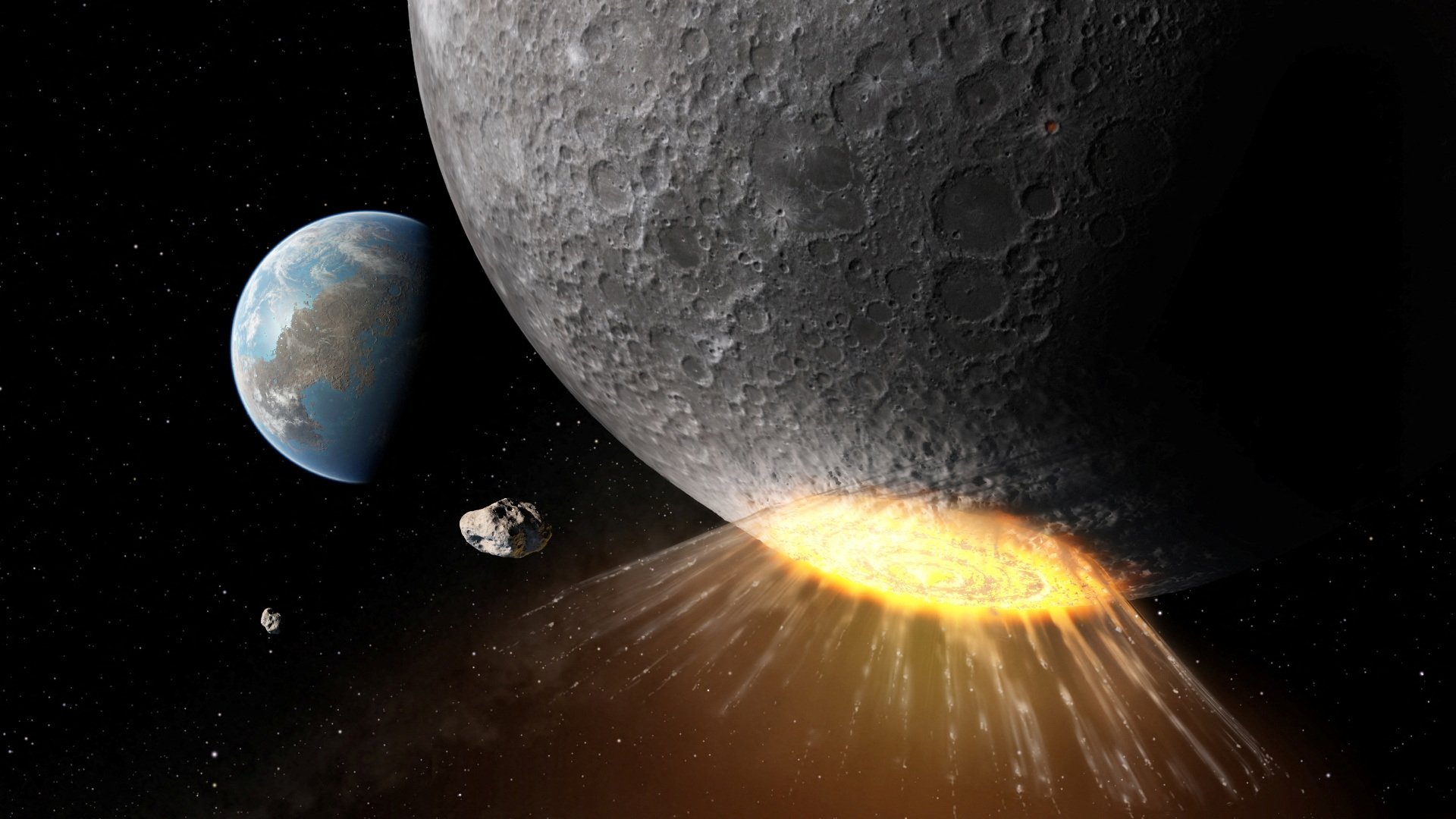
An undated artistic rendering shows an asteroid or comet striking near the Moon's south pole about 3.8 billion years ago, an impact that carved out two large craters. (Lunar and Planetary Institute/Daniel D. Durda/Handout via Reuters)
by Agence France-Presse - AFP Feb 18, 2025 10:36 pm

NASA announced Tuesday that a city-leveling asteroid now has a 3.1% chance of impacting Earth in 2032, making it the most dangerous space rock ever recorded in modern forecasting.

Despite the rising odds, experts say there's no need for alarm. The global astronomical community is closely monitoring the situation and the James Webb Space Telescope is set to fix its gaze on the object, known as 2024 YR4, next month.

"I'm not panicking," Bruce Betts, chief scientist for the nonprofit Planetary Society told AFP.

"Naturally when you see the percentages go up, it doesn't make you feel warm and fuzzy and good," he added, but explained that as astronomers gather more data, the probability will likely edge up before rapidly dropping to zero.

2024 YR4 was first detected on December 27 last year by the El Sauce Observatory in Chile.

Astronomers estimate its size to be 130 to 300 feet (40-90 meters) wide, based on its brightness. Analysis of its light signatures suggests it has a fairly typical composition, rather than being a rare metal-rich asteroid.

The International Asteroid Warning Network (IAWN), a worldwide planetary defense collaboration, issued a warning memo on Jan. 29 after the impact probability had crossed 1%. Since then, the figure has fluctuated but continues to trend upward.

NASA's latest calculations estimate the impact probability at 3.1%, with a potential Earth impact date of December 22, 2032.

That translates to odds of one in 32 – roughly the same as correctly guessing the outcome of five consecutive coin tosses.

The last time an asteroid of greater than 30 meters in size posed such a significant risk was Apophis in 2004, when it briefly had a 2.7% chance of striking Earth in 2029 – a possibility later ruled out by additional observations.

Surpassing that threshold is "historic," said Richard Moissl, head of the European Space Agency's planetary defense office, which puts the risk slightly lower at 2.8%.

"It's a very, very rare event," he told AFP, but added: "This is not a crisis at this point in time. This is not the dinosaur killer. This is not the planet killer. This is at most dangerous for a city."

Data from the Webb telescope – the most powerful space observatory – will be key in better understanding its trajectory, said the Planetary Society's Betts.

"Webb is able to see things that are very, very dim," he said – which is key because the asteroid's orbit is currently taking it out towards Jupiter, and its next close approach won't be until 2028.

Unlike the six-mile-wide (10-kilometer-wide) asteroid that wiped out the dinosaurs 66 million years ago, 2024 YR4 is classified as a "city killer" – not a global catastrophe, but still capable of causing significant destruction.

Its potential devastation comes less from its size and more from its velocity, which could be nearly 40,000 miles per hour if it hits.

If it enters Earth's atmosphere, the most likely scenario is an airburst, meaning it would explode midair with a force of approximately eight megatons of TNT – more than 500 times the power of the Hiroshima bomb.

But an impact crater can't be ruled out if the size is closer to the higher end of estimates, said Betts.

If it does hit, possible impact sites include over the eastern Pacific Ocean, northern South America, the Atlantic Ocean, Africa, the Arabian Sea, and South Asia, the IAWN memo states.

The good news, experts emphasize, is that there is ample time to prepare. If necessary, spacecraft could be sent to deflect the asteroid – technology that was successfully demonstrated in NASA's 2022 DART mission, which altered the course of a non-threatening asteroid.


  • shortlink copied
  • Last Update: Feb 19, 2025 12:29 am
    KEYWORDS
    asteroid space nasa earth
    The Daily Sabah Newsletter
    Keep up to date with what’s happening in Turkey, it’s region and the world.
    You can unsubscribe at any time. By signing up you are agreeing to our Terms of Use and Privacy Policy. This site is protected by reCAPTCHA and the Google Privacy Policy and Terms of Service apply.
    "Les Miserables" by Victor Hugo
    The 10 toughest books to read, according to research
    PHOTOGALLERY
    • POLITICS
    • Diplomacy
    • Legislation
    • War On Terror
    • EU Affairs
    • News Analysis
    • TÜRKİYE
    • Istanbul
    • Education
    • Investigations
    • Minorities
    • Diaspora
    • World
    • Mid-East
    • Europe
    • Americas
    • Asia Pacific
    • Africa
    • Syrian Crisis
    • İslamophobia
    • Business
    • Automotive
    • Economy
    • Energy
    • Finance
    • Tourism
    • Tech
    • Defense
    • Transportation
    • News Analysis
    • Lifestyle
    • Health
    • Environment
    • Travel
    • Food
    • Fashion
    • Science
    • Religion
    • History
    • Feature
    • Expat Corner
    • Arts
    • Cinema
    • Music
    • Events
    • Portrait
    • Performing Arts
    • Reviews
    • Sports
    • Football
    • Basketball
    • Motorsports
    • Tennis
    • Opinion
    • Columns
    • Op-Ed
    • Reader's Corner
    • Editorial
    • Photo gallery
    • DS TV
    • Jobs
    • privacy
    • about us
    • contact us
    • RSS
    © Turkuvaz Haberleşme ve Yayıncılık 2021