Daily Sabah logo

Politics
Diplomacy Legislation War On Terror EU Affairs Elections News Analysis
TÜRKİYE
Istanbul Education Investigations Minorities Expat Corner Diaspora
World
Mid-East Europe Americas Asia Pacific Africa Syrian Crisis Islamophobia
Business
Automotive Economy Energy Finance Tourism Tech Defense Transportation News Analysis
Lifestyle
Health Environment Travel Food Fashion Science Religion History Feature Expat Corner
Arts
Cinema Music Events Portrait Reviews Performing Arts
Sports
Football Basketball Motorsports Tennis
Opinion
Columns Op-Ed Reader's Corner Editorial
PHOTO GALLERY
JOBS ABOUT US RSS PRIVACY CONTACT US
© Turkuvaz Haberleşme ve Yayıncılık 2025

Daily Sabah - Latest & Breaking News from Turkey | Istanbul

  • Politics
    • Diplomacy
    • Legislation
    • War On Terror
    • EU Affairs
    • Elections
    • News Analysis
  • TÜRKİYE
    • Istanbul
    • Education
    • Investigations
    • Minorities
    • Expat Corner
    • Diaspora
  • World
    • Mid-East
    • Europe
    • Americas
    • Asia Pacific
    • Africa
    • Syrian Crisis
    • Islamophobia
  • Business
    • Automotive
    • Economy
    • Energy
    • Finance
    • Tourism
    • Tech
    • Defense
    • Transportation
    • News Analysis
  • Lifestyle
    • Health
    • Environment
    • Travel
    • Food
    • Fashion
    • Science
    • Religion
    • History
    • Feature
    • Expat Corner
  • Arts
    • Cinema
    • Music
    • Events
    • Portrait
    • Reviews
    • Performing Arts
  • Sports
    • Football
    • Basketball
    • Motorsports
    • Tennis
  • Gallery
  • Opinion
    • Columns
    • Op-Ed
    • Reader's Corner
    • Editorial
  • TV
  • Life
  • Health
  • Environment
  • Travel
  • Food
  • Fashion
  • Science
  • Religion
  • History
  • Feature
  • Expat Corner

Researchers study next big hurdle in space missions, 'space anemia'

by Reuters

Jan 15, 2022 - 1:26 pm GMT+3
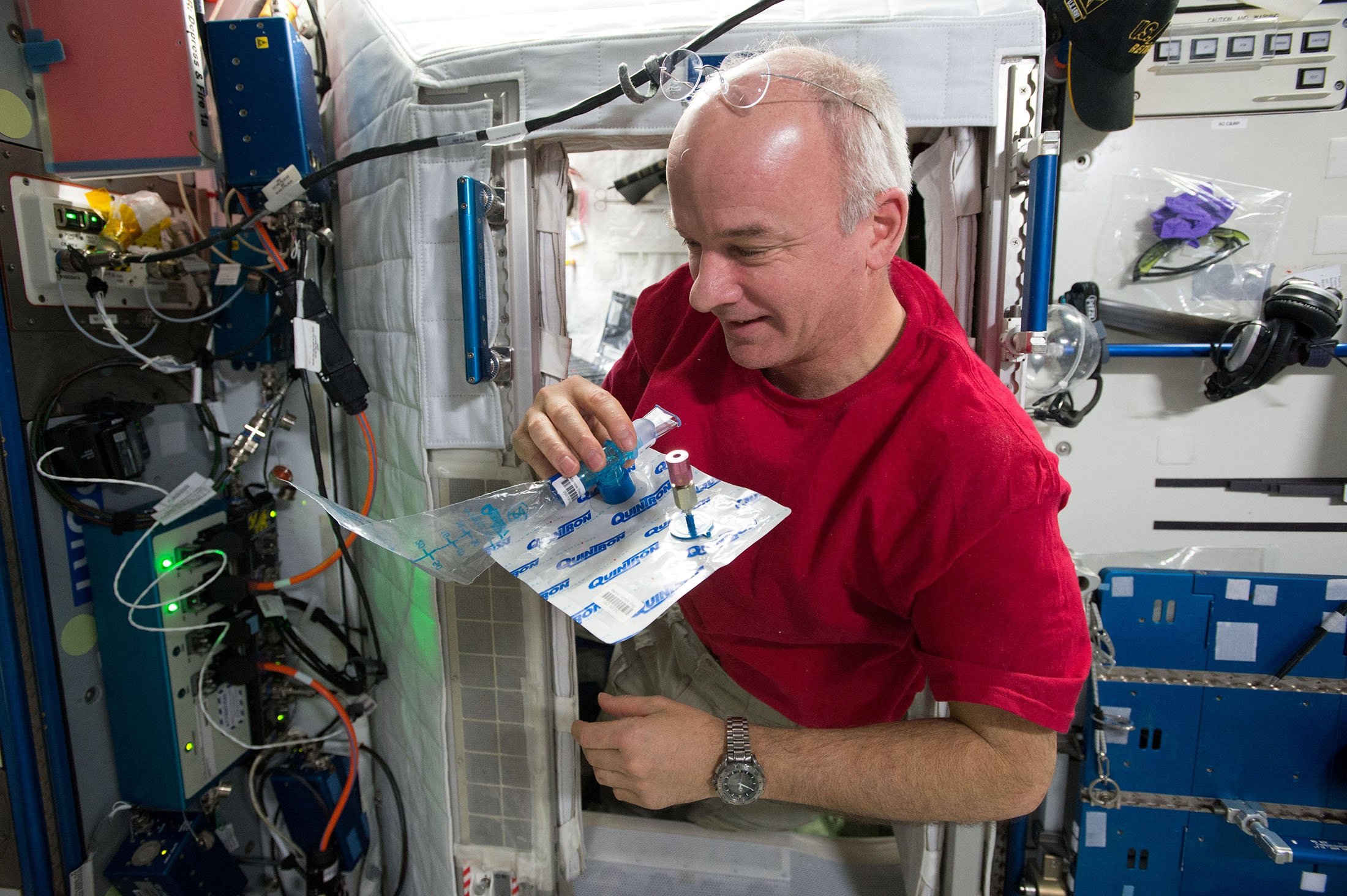
Astronaut Jeff Williams collects a breath sample on board the International Space Station, as can be seen in this undated handout photo. (NASA via Reuters)
by Reuters Jan 15, 2022 1:26 pm

Reaching Mars may not be much of a problem for the spacecraft, but for humans there could be a few bumps along the way, including things like having enough oxygen-carrying red blood cells for the journey, new research suggests.

Even space tourists lining up for short trips might have to stay home if they are at risk for anemia, or red blood cell deficiency, researchers said.

Astronauts are known to experience "space anemia," but until now it was thought to be temporary. One NASA study called it "a 15-day ailment."

Doctors attributed it to the destruction of red blood cells, or hemolysis, resulting from fluid shifts as astronauts' bodies accommodated to weightlessness and again as they re-accommodated to gravity.

In fact, anemia is "a primary effect of going to space," said Dr. Guy Trudel of the University of Ottawa, who led a study of 14 astronauts funded by the Canadian Space Agency. "As long as you are in space, you are destroying more blood cells" than you are making."

Normally, the body destroys and replaces nearly 2 million red blood cells per second. Trudel's team found astronauts' bodies destroyed 3 million red blood cells per second during their six-month missions.
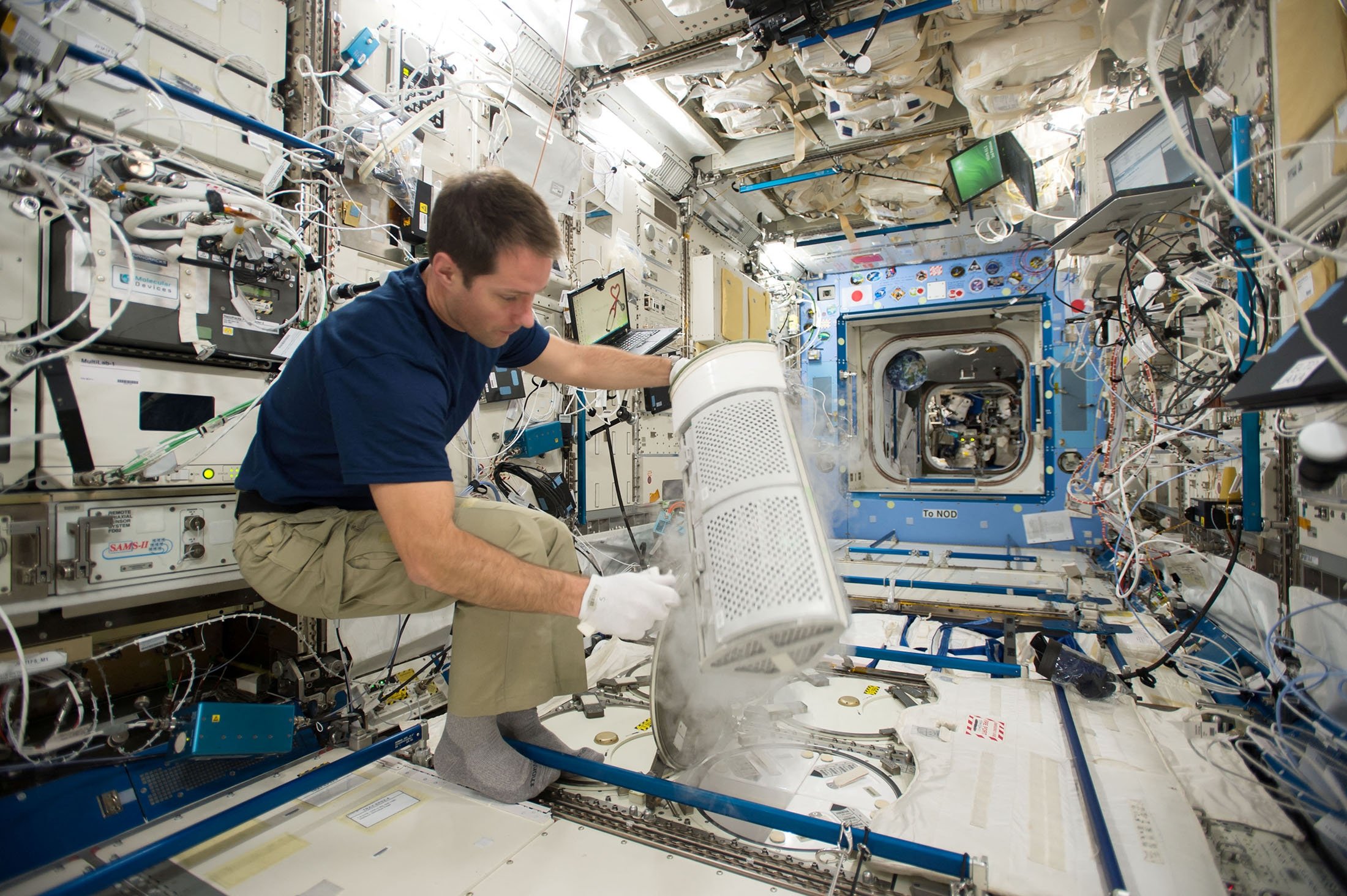
Astronaut Thomas Pesquet inserts blood samples into the Minus Eighty-Degree Laboratory Freezer aboard the International Space Station, as can be seen in this undated handout photo. (NASA via Reuters)

"We thought we knew about space anemia, and we did not," Trudel said.

The astronauts generated extra red cells to compensate for the destroyed ones. But, Trudel asked, how long can the body constantly produce 50% more red cells? A roundtrip mission to Mars would take about two years, NASA estimated.

"If you are on your way to Mars and ... you can't keep up" with the need to produce all those extra red blood cells, "you could be in serious trouble," Trudel said.

Having fewer red blood cells in space is not a problem when your body is weightless, he added. But after landing on Earth, and potentially on other planets, anemia could affect astronauts' energy, endurance and strength.

A year after returning to Earth, the astronauts' red blood cells had not completely returned to pre-flight levels, his team reported on Friday in Nature Medicine.

Trudel also studies the effects of immobility on patients who are bedridden for weeks or months.

The new findings mimic what he sees in his patients, he said, which suggests that what happens in space may also be happening in immobile patients.

"A solution to one could also apply to the other," he said.

Sulekha Anand, who researches human physiology at San Jose State University and was not involved in the study, agreed.

"The findings have implications for understanding the physiological consequences of space flight and anemia in patients on the ground," she said.

Trudel's team is studying ways to solve the problem, he said.

  • shortlink copied
  • KEYWORDS
    space nasa anemia space mission mars space exploration space anemia
    The Daily Sabah Newsletter
    Keep up to date with what’s happening in Turkey, it’s region and the world.
    You can unsubscribe at any time. By signing up you are agreeing to our Terms of Use and Privacy Policy. This site is protected by reCAPTCHA and the Google Privacy Policy and Terms of Service apply.
    No Image
    Life under lockdown in Shanghai
    PHOTOGALLERY
    • POLITICS
    • Diplomacy
    • Legislation
    • War On Terror
    • EU Affairs
    • News Analysis
    • TÜRKİYE
    • Istanbul
    • Education
    • Investigations
    • Minorities
    • Diaspora
    • World
    • Mid-East
    • Europe
    • Americas
    • Asia Pacific
    • Africa
    • Syrian Crisis
    • İslamophobia
    • Business
    • Automotive
    • Economy
    • Energy
    • Finance
    • Tourism
    • Tech
    • Defense
    • Transportation
    • News Analysis
    • Lifestyle
    • Health
    • Environment
    • Travel
    • Food
    • Fashion
    • Science
    • Religion
    • History
    • Feature
    • Expat Corner
    • Arts
    • Cinema
    • Music
    • Events
    • Portrait
    • Performing Arts
    • Reviews
    • Sports
    • Football
    • Basketball
    • Motorsports
    • Tennis
    • Opinion
    • Columns
    • Op-Ed
    • Reader's Corner
    • Editorial
    • Photo gallery
    • DS TV
    • Jobs
    • privacy
    • about us
    • contact us
    • RSS
    © Turkuvaz Haberleşme ve Yayıncılık 2021