Daily Sabah logo

Politics
Diplomacy Legislation War On Terror EU Affairs Elections News Analysis
TÜRKİYE
Istanbul Education Investigations Minorities Expat Corner Diaspora
World
Mid-East Europe Americas Asia Pacific Africa Syrian Crisis Islamophobia
Business
Automotive Economy Energy Finance Tourism Tech Defense Transportation News Analysis
Lifestyle
Health Environment Travel Food Fashion Science Religion History Feature Expat Corner
Arts
Cinema Music Events Portrait Reviews Performing Arts
Sports
Football Basketball Motorsports Tennis
Opinion
Columns Op-Ed Reader's Corner Editorial
PHOTO GALLERY
JOBS ABOUT US RSS PRIVACY CONTACT US
© Turkuvaz Haberleşme ve Yayıncılık 2026

Daily Sabah - Latest & Breaking News from Turkey | Istanbul

  • Politics
    • Diplomacy
    • Legislation
    • War On Terror
    • EU Affairs
    • Elections
    • News Analysis
  • TÜRKİYE
    • Istanbul
    • Education
    • Investigations
    • Minorities
    • Expat Corner
    • Diaspora
  • World
    • Mid-East
    • Europe
    • Americas
    • Asia Pacific
    • Africa
    • Syrian Crisis
    • Islamophobia
  • Business
    • Automotive
    • Economy
    • Energy
    • Finance
    • Tourism
    • Tech
    • Defense
    • Transportation
    • News Analysis
  • Lifestyle
    • Health
    • Environment
    • Travel
    • Food
    • Fashion
    • Science
    • Religion
    • History
    • Feature
    • Expat Corner
  • Arts
    • Cinema
    • Music
    • Events
    • Portrait
    • Reviews
    • Performing Arts
  • Sports
    • Football
    • Basketball
    • Motorsports
    • Tennis
  • Gallery
  • Opinion
    • Columns
    • Op-Ed
    • Reader's Corner
    • Editorial
  • TV
  • Life
  • Health
  • Environment
  • Travel
  • Food
  • Fashion
  • Science
  • Religion
  • History
  • Feature
  • Expat Corner

Those bright spots on Ceres are actually underground saltwater oceans

by REUTERS

WASHINGTON Aug 12, 2020 - 9:25 am GMT+3
Edited By Yasemin Nicola Sakay
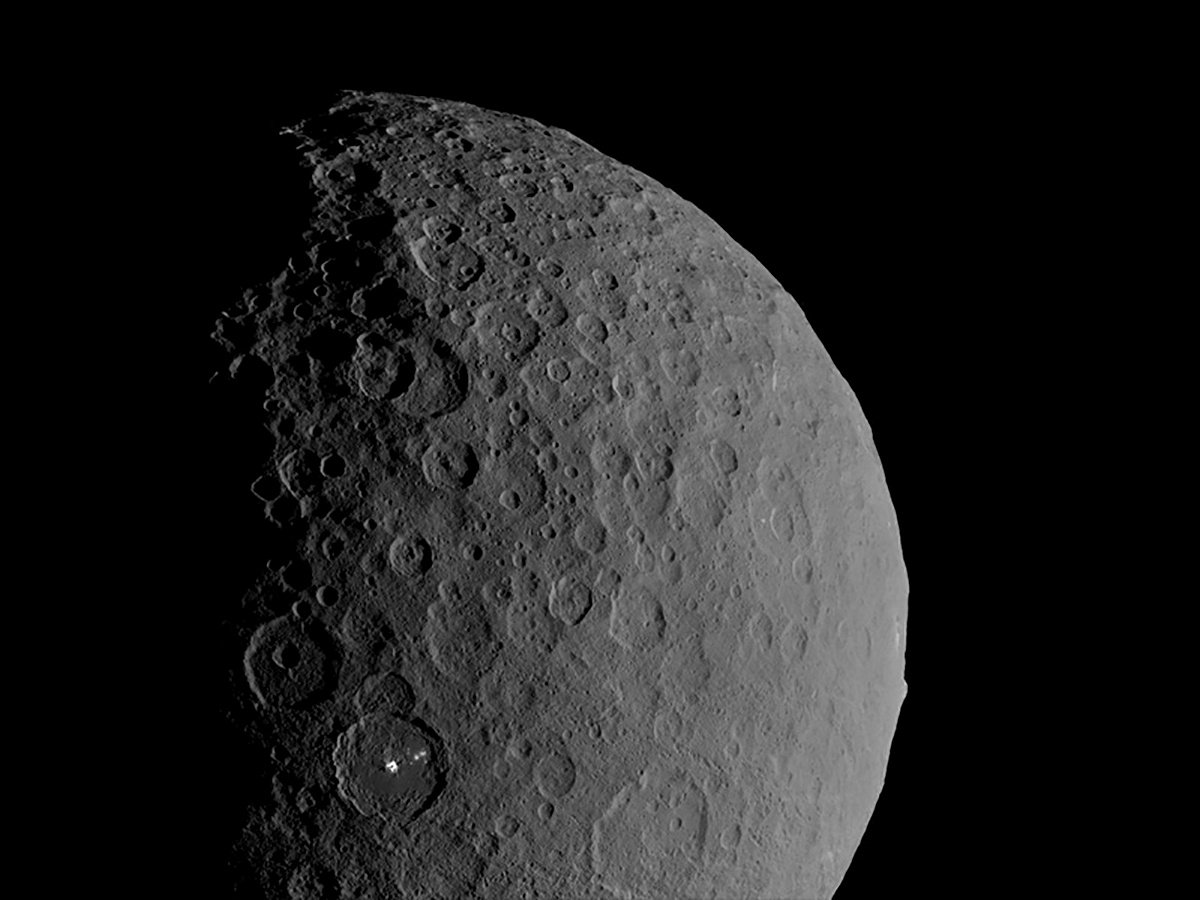
Occator Crater and Ahuna Mons appear together in this view of the dwarf planet Ceres obtained by NASA's Dawn spacecraft on Feb. 11, 2017. (NASA/JPL-Caltech/UCLA/MPS/DLR/IDA handout via Reuters)
by REUTERS Aug 12, 2020 9:25 am
Edited By Yasemin Nicola Sakay

Ceres, the largest object in the asteroid belt between Mars and Jupiter, is an "ocean world" with a big reservoir of salty water under its frigid surface, scientists said in findings that raise interest in this dwarf planet as a possible outpost for life.

Research published Monday based on data obtained by NASA's Dawn spacecraft, which flew as close as 22 miles (35 km) from the surface in 2018, provides a new understanding of Ceres, including evidence indicating it remains geologically active with cryovolcanism – volcanoes oozing icy material.

The findings confirm the presence of a subsurface reservoir of brine – salt-enriched water – remnants of a vast subsurface ocean that has been gradually freezing.

"This elevates Ceres to 'ocean world' status, noting that this category does not require the ocean to be global," said planetary scientist and Dawn principal investigator Carol Raymond. "In the case of Ceres, we know the liquid reservoir is a regional scale but we cannot tell for sure that it is global. However, what matters most is that there is liquid on a large scale."
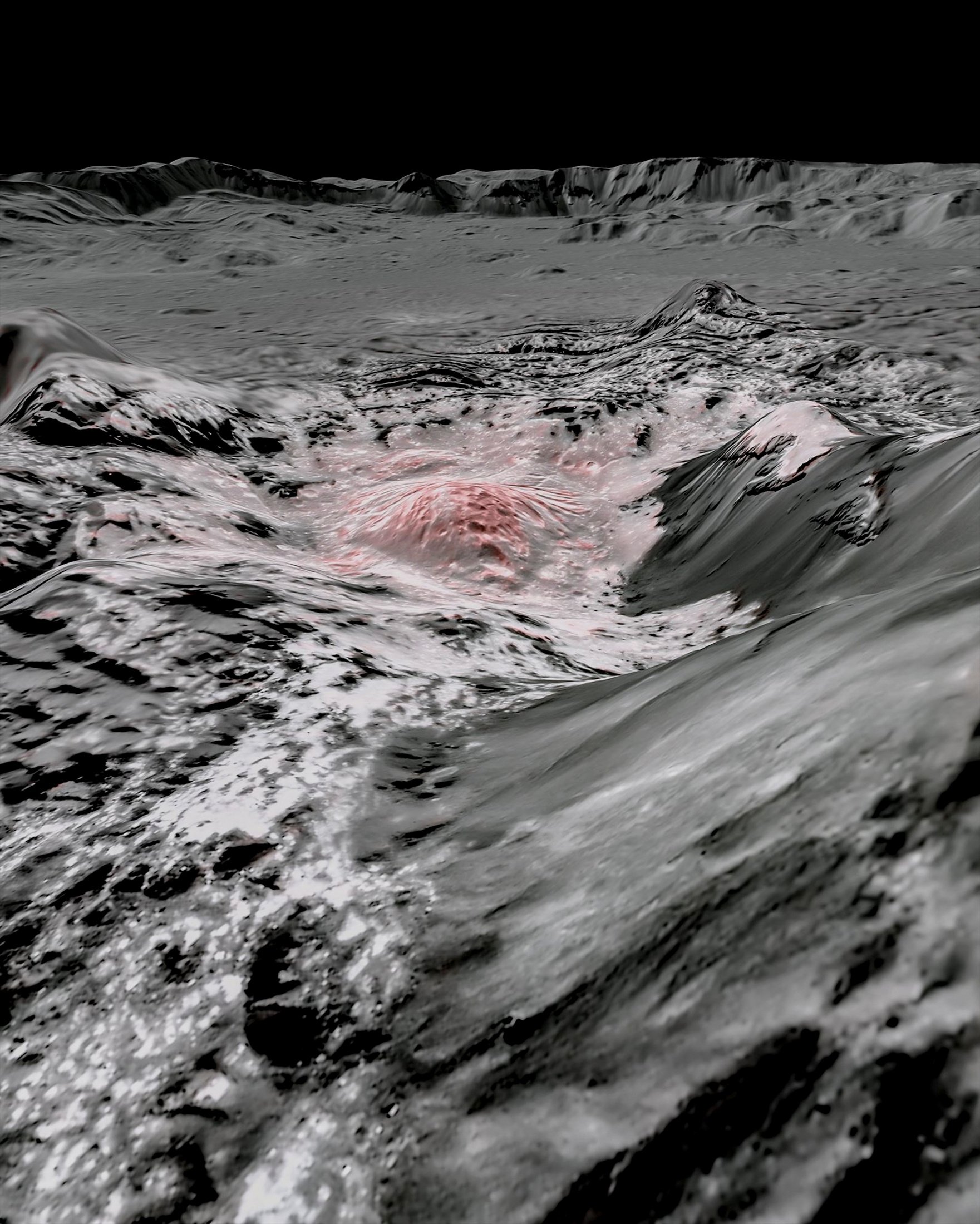
Mosaic image using false color to highlight the recently exposed brine, or salty liquids, that were pushed up from a deep reservoir under the crust of the dwarf planet Ceres. (NASA/JPL-Caltech/UCLA/MPS/DLR/IDA/Handout via REUTERS)

Ceres has a diameter of about 590 miles (950 km). The scientists focused on the 57-mile-wide (92-km-wide) Occator Crater, formed by an impact about 22 million years ago in Ceres' northern hemisphere. It has two bright areas – salt crusts left by liquid that percolated up to the surface and evaporated.

The liquid, they concluded, originated in a brine reservoir hundreds of miles (kilometers) wide lurking about 25 miles (40 km) below the surface, with the impact creating fractures allowing the salty water to escape.

The research was published in the journals Nature Astronomy, Nature Geoscience and Nature Communications.

Other solar system bodies beyond Earth where subsurface oceans are known or appear to exist include Jupiter's moon Europa, Saturn's moon Enceladus, Neptune's moon Triton and the dwarf planet Pluto.

Water is considered a key ingredient for life. Scientists want to assess whether Ceres was ever habitable by microbial life.

"There is major interest at this stage in quantifying the habitability potential of the deep brine reservoir, especially considering it is cold and getting quite rich in salts," said planetary scientist Julie Castillo of NASA's Jet Propulsion Laboratory.


  • shortlink copied
  • Last Update: Aug 12, 2020 11:18 am
    KEYWORDS
    space science mars jupiter ceres dwarf planets signs of life nasa
    The Daily Sabah Newsletter
    Keep up to date with what’s happening in Turkey, it’s region and the world.
    You can unsubscribe at any time. By signing up you are agreeing to our Terms of Use and Privacy Policy. This site is protected by reCAPTCHA and the Google Privacy Policy and Terms of Service apply.
    No Image
    'Pink Moon' coincides with Ramadan, Easter and Passover
    PHOTOGALLERY
    • POLITICS
    • Diplomacy
    • Legislation
    • War On Terror
    • EU Affairs
    • News Analysis
    • TÜRKİYE
    • Istanbul
    • Education
    • Investigations
    • Minorities
    • Diaspora
    • World
    • Mid-East
    • Europe
    • Americas
    • Asia Pacific
    • Africa
    • Syrian Crisis
    • İslamophobia
    • Business
    • Automotive
    • Economy
    • Energy
    • Finance
    • Tourism
    • Tech
    • Defense
    • Transportation
    • News Analysis
    • Lifestyle
    • Health
    • Environment
    • Travel
    • Food
    • Fashion
    • Science
    • Religion
    • History
    • Feature
    • Expat Corner
    • Arts
    • Cinema
    • Music
    • Events
    • Portrait
    • Performing Arts
    • Reviews
    • Sports
    • Football
    • Basketball
    • Motorsports
    • Tennis
    • Opinion
    • Columns
    • Op-Ed
    • Reader's Corner
    • Editorial
    • Photo gallery
    • DS TV
    • Jobs
    • privacy
    • about us
    • contact us
    • RSS
    © Turkuvaz Haberleşme ve Yayıncılık 2021