Daily Sabah logo

Politics
Diplomacy Legislation War On Terror EU Affairs Elections News Analysis
TÜRKİYE
Istanbul Education Investigations Minorities Expat Corner Diaspora
World
Mid-East Europe Americas Asia Pacific Africa Syrian Crisis Islamophobia
Business
Automotive Economy Energy Finance Tourism Tech Defense Transportation News Analysis
Lifestyle
Health Environment Travel Food Fashion Science Religion History Feature Expat Corner
Arts
Cinema Music Events Portrait Reviews Performing Arts
Sports
Football Basketball Motorsports Tennis
Opinion
Columns Op-Ed Reader's Corner Editorial
PHOTO GALLERY
JOBS ABOUT US RSS PRIVACY CONTACT US
© Turkuvaz Haberleşme ve Yayıncılık 2025

Daily Sabah - Latest & Breaking News from Turkey | Istanbul

  • Politics
    • Diplomacy
    • Legislation
    • War On Terror
    • EU Affairs
    • Elections
    • News Analysis
  • TÜRKİYE
    • Istanbul
    • Education
    • Investigations
    • Minorities
    • Expat Corner
    • Diaspora
  • World
    • Mid-East
    • Europe
    • Americas
    • Asia Pacific
    • Africa
    • Syrian Crisis
    • Islamophobia
  • Business
    • Automotive
    • Economy
    • Energy
    • Finance
    • Tourism
    • Tech
    • Defense
    • Transportation
    • News Analysis
  • Lifestyle
    • Health
    • Environment
    • Travel
    • Food
    • Fashion
    • Science
    • Religion
    • History
    • Feature
    • Expat Corner
  • Arts
    • Cinema
    • Music
    • Events
    • Portrait
    • Reviews
    • Performing Arts
  • Sports
    • Football
    • Basketball
    • Motorsports
    • Tennis
  • Gallery
  • Opinion
    • Columns
    • Op-Ed
    • Reader's Corner
    • Editorial
  • TV
  • Life
  • Health
  • Environment
  • Travel
  • Food
  • Fashion
  • Science
  • Religion
  • History
  • Feature
  • Expat Corner

US, Japan’s lunar landers launched for moon missions

by Associated Press

CAPE CANAVERAL Jan 15, 2025 - 12:51 pm GMT+3
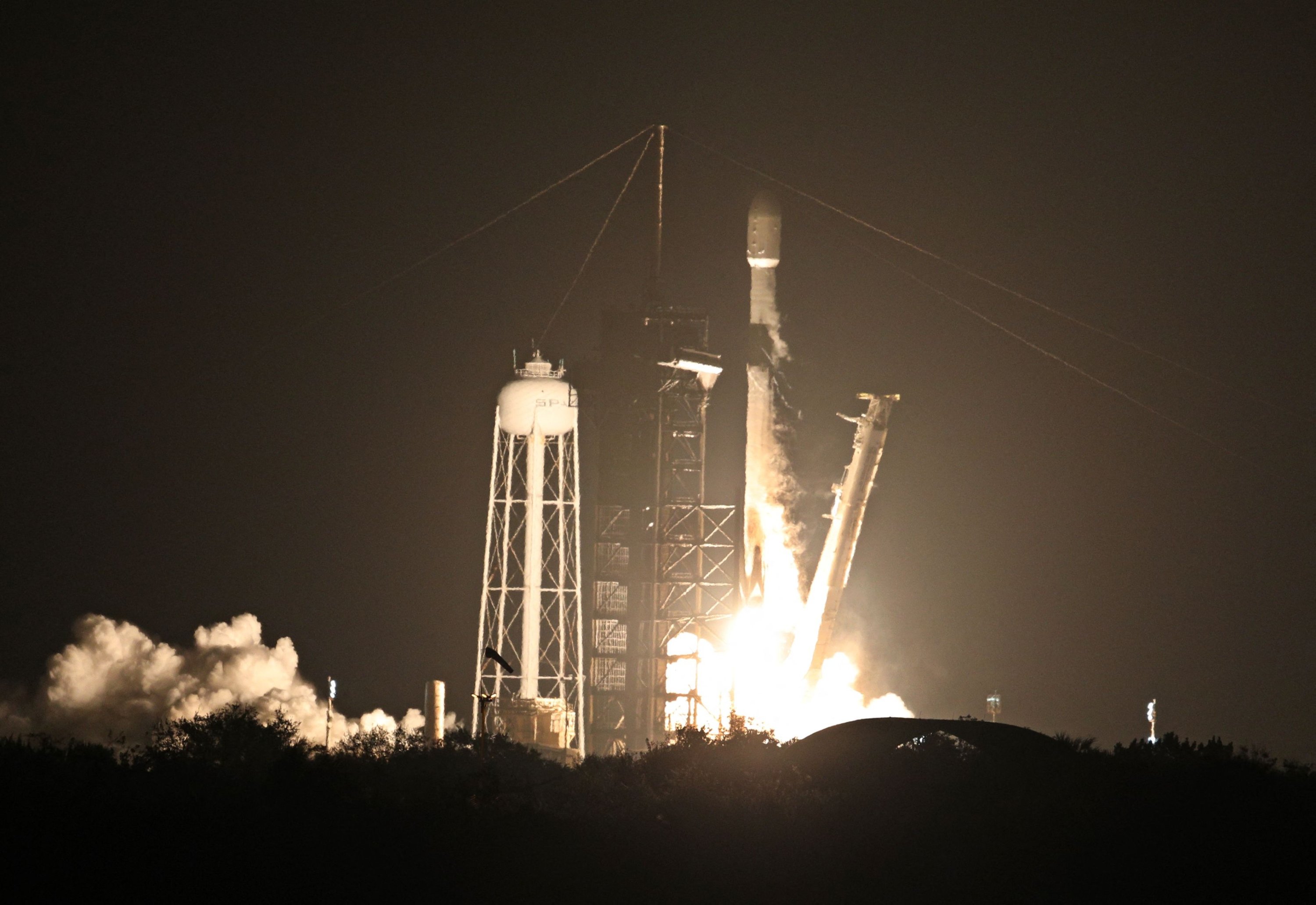
A SpaceX Falcon 9 rocket, carrying Firefly Aerospace's Blue Ghost and ispace's Resilience lunar landers, lifts off from Launch Complex 39A at the Kennedy Space Center in Cape Canaveral, Florida, U.S., Jan. 15, 2025. (AFP Photo)
by Associated Press Jan 15, 2025 12:51 pm

In a two-for-one moonshot, SpaceX launched a pair of lunar landers Wednesday for U.S. and Japanese companies looking to jumpstart business on Earth’s dusty sidekick.

The two landers rocketed away in the middle of the night from NASA’s Kennedy Space Center, the latest in a stream of private spacecraft aiming for the moon. They shared the ride to save money but parted company an hour into the flight exactly as planned, taking separate roundabout routes for the monthslong journey.

It is the second attempt for the Tokyo-based ispace, whose first lander crashed into the moon two years ago. This time, it has a rover on board with a scoop to gather up lunar dirt for study and plans to test potential food and water sources for future explorers.

Lunar newcomer Texas-based Firefly Aerospace is flying 10 experiments for NASA, including a vacuum to gather dirt, a drill to measure the temperature below the surface and a device that could be used by future moonwalkers to keep the sharp, abrasive particles off their spacesuits and equipment.

Firefly’s Blue Ghost – named after a species of U.S. Southeastern fireflies – should reach the moon first. The 6-foot-6-inch-tall (2-meter-tall) lander will attempt a touchdown in early March at Mare Crisium, a volcanic plain in the northern latitudes.

The slightly bigger ispace lander named Resilience will take four to five months to get there, targeting a touchdown in late May or early June at Mare Frigoris, even farther north on the moon’s near side.
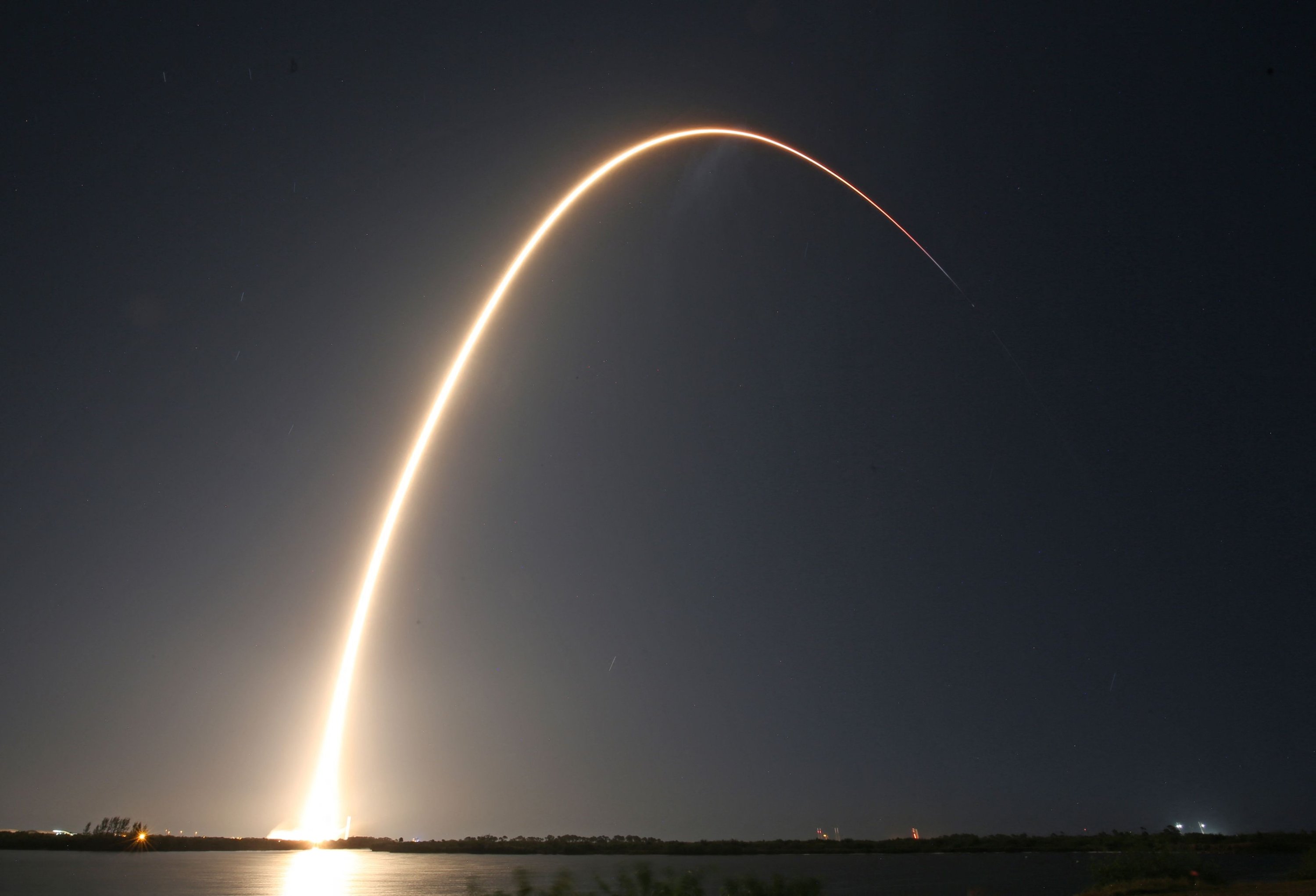
A SpaceX Falcon 9 rocket, carrying Firefly Aerospace's Blue Ghost and ispace's Resilience lunar landers, streaks into orbit after lifting off from Launch Complex 39A at the Kennedy Space Center in Cape Canaveral, Florida, U.S., Jan. 15, 2025. (AFP Photo)

"We don’t think this is a race. Some people say ‘race to the moon,’ but it’s not about the speed,” ispace’s founder CEO Takeshi Hakamada said this week from Cape Canaveral.

Both Hakamada and Firefly CEO Jason Kim acknowledge the challenges still ahead, given the wreckage littering the lunar landscape. Only five countries have successfully placed spacecraft on the moon since the 1960s: the former Soviet Union, the U.S., China, India and Japan.

"We’ve done everything we can on the design and the engineering,” Kim said. Even so, he pinned an Irish shamrock to his jacket lapel Tuesday night for good luck.

The U.S. remains the only one to have landed astronauts. NASA’s Artemis program, the successor to Apollo, aims to get astronauts back on the moon by the end of the decade.

Before that can happen, "we’re sending a lot of science and a lot of technology ahead of time to prepare for that,” NASA's science mission chief Nicky Fox said on the eve of launch.

If they achieve their respective touchdowns, both spacecraft will spend two weeks operating in constant daylight, shutting down once darkness hits.

Once lowered onto the lunar surface, ispace’s 11-pound (5-kilogram) rover will stay near the lander, traveling up to hundreds of yards (meters) in circles at a speed of less than one inch (a couple of centimeters) per second. The rover has its own special delivery to drop off on the lunar dust: a toy-size red house designed by a Swedish artist.

NASA is paying $101 million to Firefly for the mission and another $44 million for the experiments. Hakamada declined to divulge the cost of ispace’s rebooted mission with six experiments, saying it's less than the first mission, which topped $100 million.

Coming up by the end of February is the second moonshot for NASA by Houston-based Intuitive Machines. Last year, the company achieved the first U.S. lunar touchdown in over a half-century, landing sideways near the South Pole but still managing to operate.


  • shortlink copied
  • Last Update: Jan 15, 2025 3:52 pm
    KEYWORDS
    nasa spacex moon
    The Daily Sabah Newsletter
    Keep up to date with what’s happening in Turkey, it’s region and the world.
    You can unsubscribe at any time. By signing up you are agreeing to our Terms of Use and Privacy Policy. This site is protected by reCAPTCHA and the Google Privacy Policy and Terms of Service apply.
    No Image
    Kenya charcoal sellers' tough labor
    PHOTOGALLERY
    • POLITICS
    • Diplomacy
    • Legislation
    • War On Terror
    • EU Affairs
    • News Analysis
    • TÜRKİYE
    • Istanbul
    • Education
    • Investigations
    • Minorities
    • Diaspora
    • World
    • Mid-East
    • Europe
    • Americas
    • Asia Pacific
    • Africa
    • Syrian Crisis
    • İslamophobia
    • Business
    • Automotive
    • Economy
    • Energy
    • Finance
    • Tourism
    • Tech
    • Defense
    • Transportation
    • News Analysis
    • Lifestyle
    • Health
    • Environment
    • Travel
    • Food
    • Fashion
    • Science
    • Religion
    • History
    • Feature
    • Expat Corner
    • Arts
    • Cinema
    • Music
    • Events
    • Portrait
    • Performing Arts
    • Reviews
    • Sports
    • Football
    • Basketball
    • Motorsports
    • Tennis
    • Opinion
    • Columns
    • Op-Ed
    • Reader's Corner
    • Editorial
    • Photo gallery
    • DS TV
    • Jobs
    • privacy
    • about us
    • contact us
    • RSS
    © Turkuvaz Haberleşme ve Yayıncılık 2021