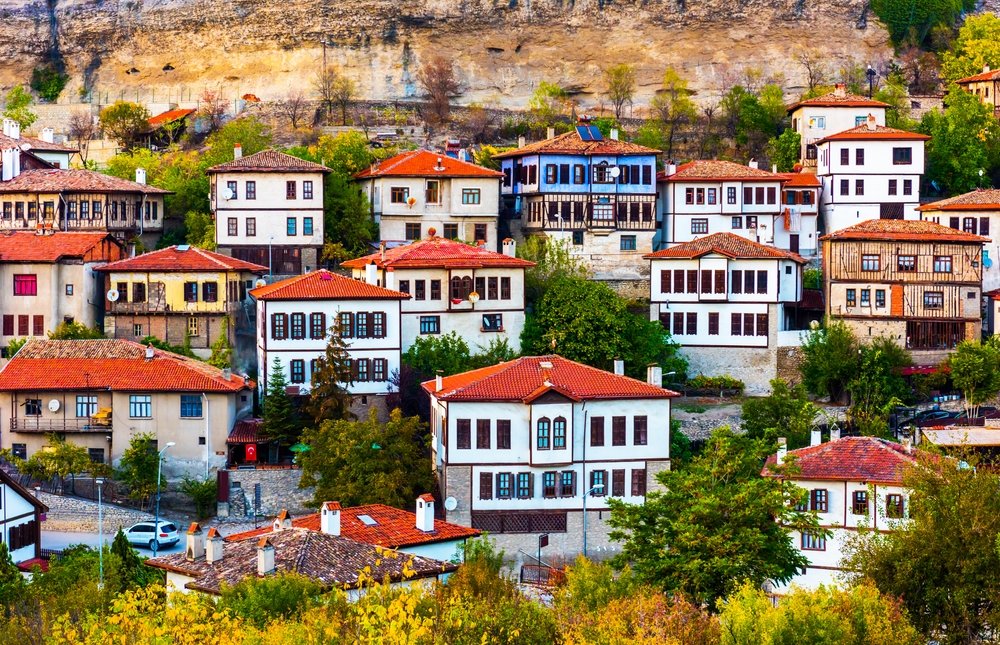
The districts of Safranbolu in Karabük and Amasra in Bartın, located in northern Türkiye and known for their natural beauty and culinary traditions, closed 2025 with record-breaking tourist numbers. Both districts are popular destinations, with Safranbolu listed as a UNESCO World Heritage Site.
Amasra, famous for its pristine coves, clean beaches and calm sea, attracted nearly 3 million domestic and international visitors last year. Safranbolu, renowned for its historical sites, welcomed over 3 million tourists, marking an increase of approximately 500,000 visitors in each district compared to the previous year.
Often referred to as the “fingerprint of the Ottoman Empire” for its reflection of Ottoman architecture, city life and culture, Safranbolu offers visitors a journey back in time. The town, which functions as an “open-air museum,” preserves inns, baths, mosques, fountains and bridges from the Ottoman period, as well as mansions built between the 18th and 20th centuries.
“2025 was a good year for tourism,” said Şebnem Urgancıoğlu, president of the Safranbolu Tourism Operators Association. She noted a nearly 5% increase in foreign tourists staying overnight and more than 3 million day visitors.
“While these are promising figures, we are not content. We will continue working with all our institutions, the government and the municipality to achieve even better results,” she said.
Thanks to markets in East Asia, Safranbolu experiences year-round tourist activity. Visitors from Taiwan, China and Thailand form the largest group of international tourists. Urgancıoğlu added that the district continues to participate in tourism fairs, including EMITT in Istanbul and ITB Berlin in Germany, to promote the region globally.
The municipality also works with multiple institutions on the “Purple Flag Project,” which focuses on quality and sustainable tourism. Urgancıoğlu highlighted plans to improve visitor centers and address traffic and parking challenges in the coming year.
Amasra, historically founded as “Sesamos” by Phoenicians in the 12th century B.C., boasts relics from the Hellenistic, Roman, Byzantine, Genoese, Seljuk and Ottoman periods. Its historic castle was added to UNESCO’s World Heritage Tentative List in 2013.
The district is famous for its untouched coves, clean beaches and seafood-centered cuisine. Last year, the completion of the “Amasra Port Passenger Terminal and Marina” project by the Ministry of Transport and Infrastructure contributed to nearly 3 million visitors, including 500,000 overnight guests and 30,000 cruise ship passengers.
“Amasra is like the showcase of the Black Sea region,” said Melih Saylam, president of the Amasra Culture and Tourism Association. “It’s fortunate not only for its sea, sand, and sun but also for its history and gastronomy.”
Saylam cited a historic anecdote from the conquest of Amasra by Fatih Sultan Mehmet, who reportedly called it “the apple of the world.” During the summer months, the district’s population swells from 6,000 to 60,000. Cruise ship arrivals over the past 3.5 years have further boosted tourism, adding around 30,000 visitors annually.
Local restaurateur Mete Ayyıldız said that holiday and summer seasons brought strong business, with visitors admiring Amasra’s nature, seafood and signature salads.
“In winter, guests come to enjoy the historical sites and culinary offerings. The colder sea makes the fish even more delicious. Our Amasra salad has become a brand. Amasra, with its fish and salad, is a point of pride for our region,” he said.