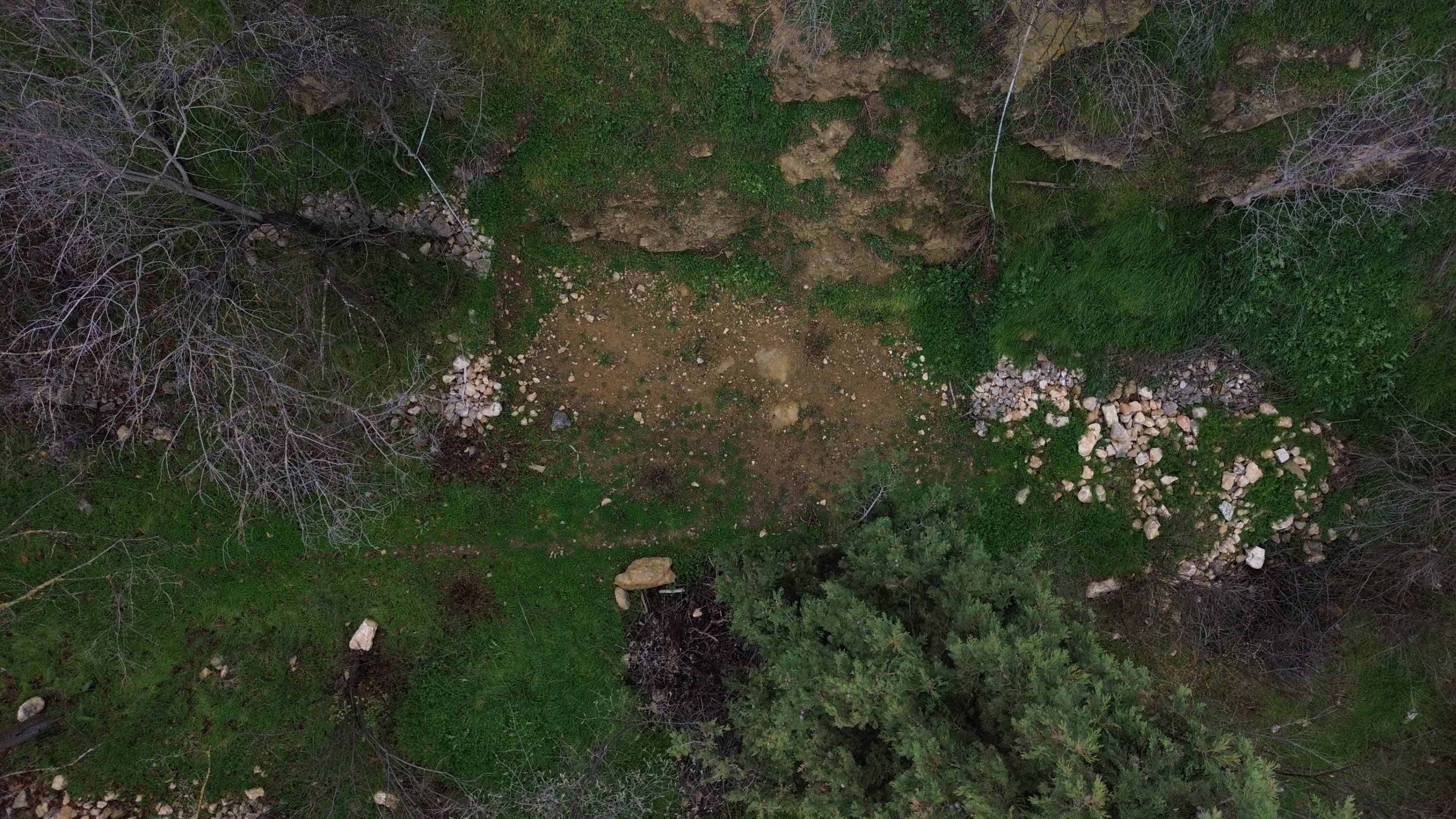
The site of the house belonging to Osman I, also called Osman Ghazi, the founder of the Ottoman Empire, in Bilecik has been officially registered as a cultural heritage site, following a 20-year research effort by professor Taner Bilgin, head of the History Department at Bilecik Şeyh Edebali University’s Faculty of Humanities and Social Sciences. Historical records indicate that the house was destroyed during the Greek occupation of Bilecik in the Turkish War of Independence.
Bilgin, who began teaching at a vocational school in Söğüt, Bilecik, in 2005, met Celal Devecioğlu, a local resident who had been a child during the War of Independence. Devecioğlu told him that Osman Ghazi’s house had been located on the grounds of the Şeyh Edebali Complex and was later demolished by occupying Greek forces. This prompted Bilgin to search for the exact location of the house.
During a 2006 visit to a painting exhibition in Berlin, Germany, Bilgin discovered a painting depicting Osman Ghazi’s house, created in 1891 by the wife of a German worker involved in railway construction in Bilecik during the reign of Sultan Abdulhamid II. The painting had been preserved and displayed by the couple’s grandchildren.
Continuing his research at the Presidential State Archives, Bilgin in 2011 found an Ottoman-era document sent in April 1911 from the Bilecik Mutasarrıflık (district administration) to the Ministry of Interior regarding the renovation of Osman Ghazi’s house.
Bilgin also consulted the 1935 book "Bilecik History and Geography Study," written in Ottoman Turkish by former Bilecik Mayor Necmi Kadıoğlu, which described the house as a two-story building with gilded ceilings and carved wooden details. Using this evidence, Bilgin applied to the Bilecik Governorship last year to have the site officially registered.
Following fieldwork by the Eskişehir Regional Board for the Protection of Cultural Heritage on the grounds of the Şeyh Edebali Complex, the house’s location, historical existence and architectural features were officially registered in 2025.
Speaking to Anadolu Agency (AA), Bilgin said Bilecik holds a central place in the origins of the Ottoman Empire, founded in 1299. “Many structures were built here during and after that time, but most have not survived to the present day. During the War of Independence, Bilecik was among the cities most affected by destruction,” he said.
Bilgin emphasized that historians rely on documented evidence. “That’s why I began asking, ‘Where exactly was Osman Ghazi’s house?’ in archives and other sources,” he said.
He noted that Kadıoğlu’s book provided detailed information about the house: “It had gilded ceilings, two floors and carved wooden elements. Documents also show that gifts were sent to this area during Sultan Abdülhamid II’s reign.”
After gathering evidence, Bilgin applied to the governor's office for official recognition. “A team from the Eskişehir Regional Board for the Protection of Cultural Heritage conducted field inspections. Using land registry records, they confirmed this was vakıf (charitable endowment) property. The 40-square-meter site is now officially recognized as the location of Osman Ghazi’s house. I hope we can restore this two-story house,” he said.
Bilgin added that, according to historical records, the Kesilioğulları family was responsible for maintaining and protecting the house.