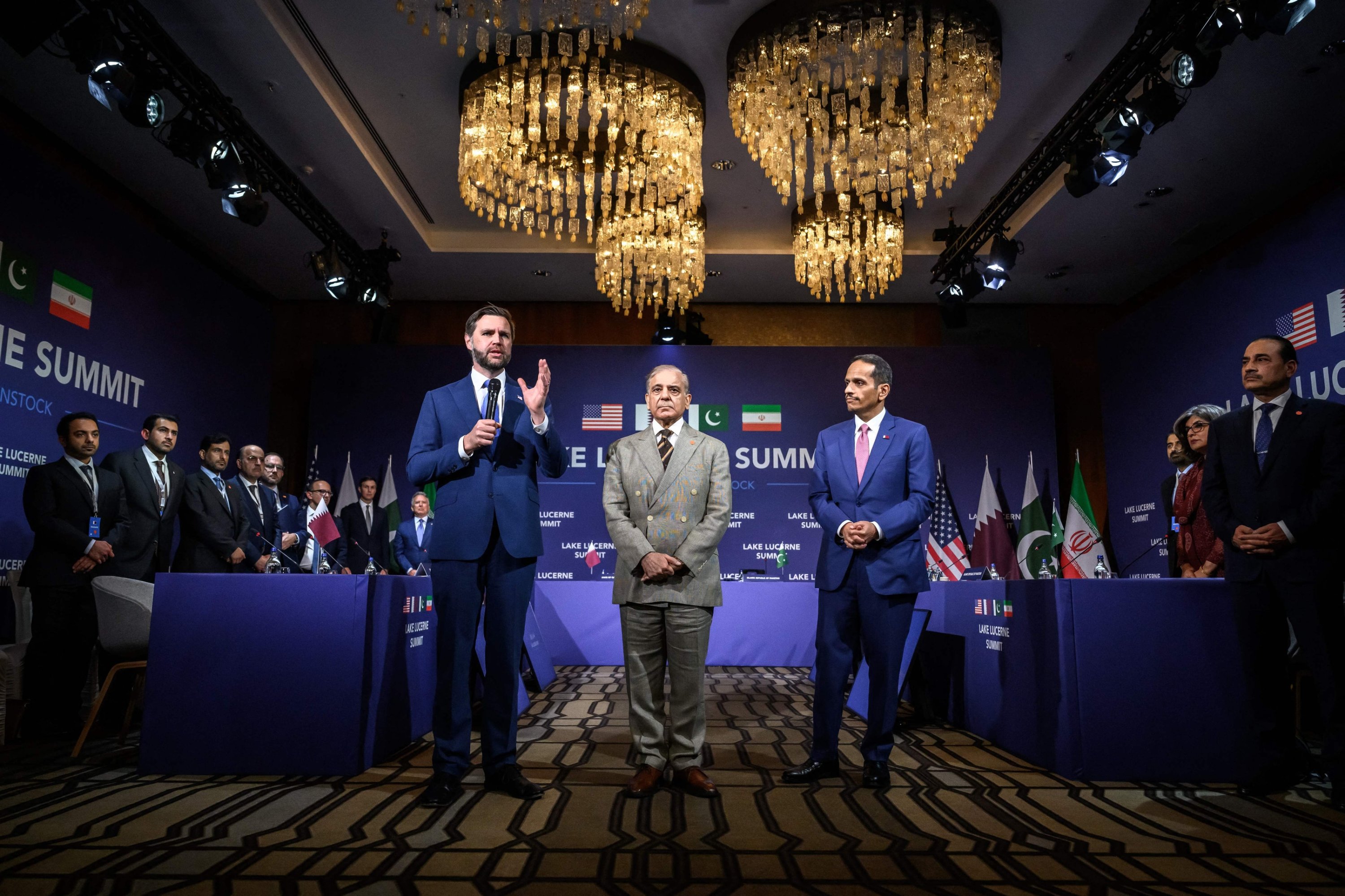
Iran and the United States signed the Islamabad Memorandum of Understanding on June 17 to end the war. The memorandum is a 14-point framework agreement that envisages the end of military strikes, opening the Strait of Hormuz to commercial vessels, and the extension of the ceasefire. Unfortunately, the memorandum does not settle major issues between the two sides, including Iran’s nuclear program, the regime of the Strait of Hormuz, the Iranian ballistic missile program, and Iran’s network of non-state actors in the region.
Pakistan has brokered the deal; Türkiye, Saudi Arabia, Egypt and Qatar have played facilitator roles in the negotiations. It was a great success, because it was the first agreement signed between Iran and the U.S. since Iran's Islamic Revolution in 1979.
It seems that the two sides of the agreement, Iran and the U.S., want to reach a final agreement.
On the one hand, Iran wants to consolidate its new administration and leadership so that it can protect its regime. The war and the reaction of the Iranian people have shown, contrary to expectations, that the Iranian state and society are very resilient.
On the other hand, the U.S. has its own reasons to end the war. First of all, the pressure from the Make America Great Again (MAGA) supporters is increasing. With each passing day, support for President Donald Trump and Israel’s aggressive policies is decreasing. For Trump, the likelihood of losing the midterm elections and losing the majority in Congress is increasing. Furthermore, the Zionist movement is losing power in the West. In particular, those who prioritize Israel over their respective national interests in the U.S. are losing ground.
However, the success of the agreement signed between Iran and the U.S. largely depends on the positions of different regional and global powers. Some actors are playing destructive roles, while some others are taking on constructive roles in the process.
As expected, Israel is at the forefront of the disruptive actors because it benefits from the climate of war and conflict. Israel, which was not part of the deal, has expressed strong disapproval of the agreement. It does not want peace and stability in the region; on the contrary, it wants to continue its aggression in Lebanon. Although the agreement included Lebanon, Israel continued to strike southern Lebanon several times. It exploits every development in the region for its expansionist and aggressive policies.
When we look at the constructive states, we see that a group of states welcomes the agreement and struggles to bring peace and stability to the region. The leading states of this group are Türkiye, Pakistan, Saudi Arabia, Egypt and Qatar. They are trying to influence the U.S. and deter and contain Israel, and to establish a regional bloc that works for stability.
Each member of this group has complementary characteristics and influences. Pakistan is one of the most powerful and nuclear-armed regional powers that has close relations with the Middle Eastern countries. Saudi Arabia is the strongest and most resilient country in the Gulf. Türkiye stands out, especially in economic production and the defense industry. Egypt is the largest Arab country, with a huge population and a strategic geographical location.
Members of this group have decided to come together as a result of the insecurity caused by the war with Iran. They have learned their lesson that no global power will come to their aid when they are attacked by other powers. Therefore, they have decided to establish regional blocs in order to increase their deterrence against potential threats.
Looking at the current situation in the Middle East, we see a new balance of power emerging. First and foremost, the regional system that the U.S. and Israel tried to establish with the Abraham Accords has failed. It was expected that most regional states would join this agreement and that a regional system would be established under Israeli leadership. Although Israel has largely destroyed the Gaza Strip and continues its aggression in the West Bank and Lebanon, it is far from securing its national security.
Furthermore, neither Western states nor non-Western powers can allow Israel’s expansionism and aggression indefinitely. Sooner or later, they will have to take caution. Considering the recent reactions of some officials in the Trump administration, we can say that the U.S. government has begun to criticize Israel. It is obvious that when the West abandons this project, Israel will only behave like a normal state.
In other words, the agreement is framed in Iran and by some analysts as a victory for Iran and a defeat for the attacking states. The result of the war angered many in the U.S. At least, the two aggressor states did not achieve their goals. Before the war, Iran was in a weaker position, while the U.S. and Israel were in a stronger position. As a result of the war, the positions of the U.S. and Israel weakened, while Iran’s position strengthened. The war has saved the vulnerable Iranian regime from collapse.
The U.S. and Israel’s war against Iran has brought different countries together. Some unexpected developments occurred in the region. A new rapprochement has begun between Türkiye and two of the most important Arab countries, Saudi Arabia and Egypt. Pakistan-Saudi agreement signed after the war contributed to the rapprochement between Ankara and Riyadh. It seems that, from now on, this bloc will be more effective in the regional design in the near future.