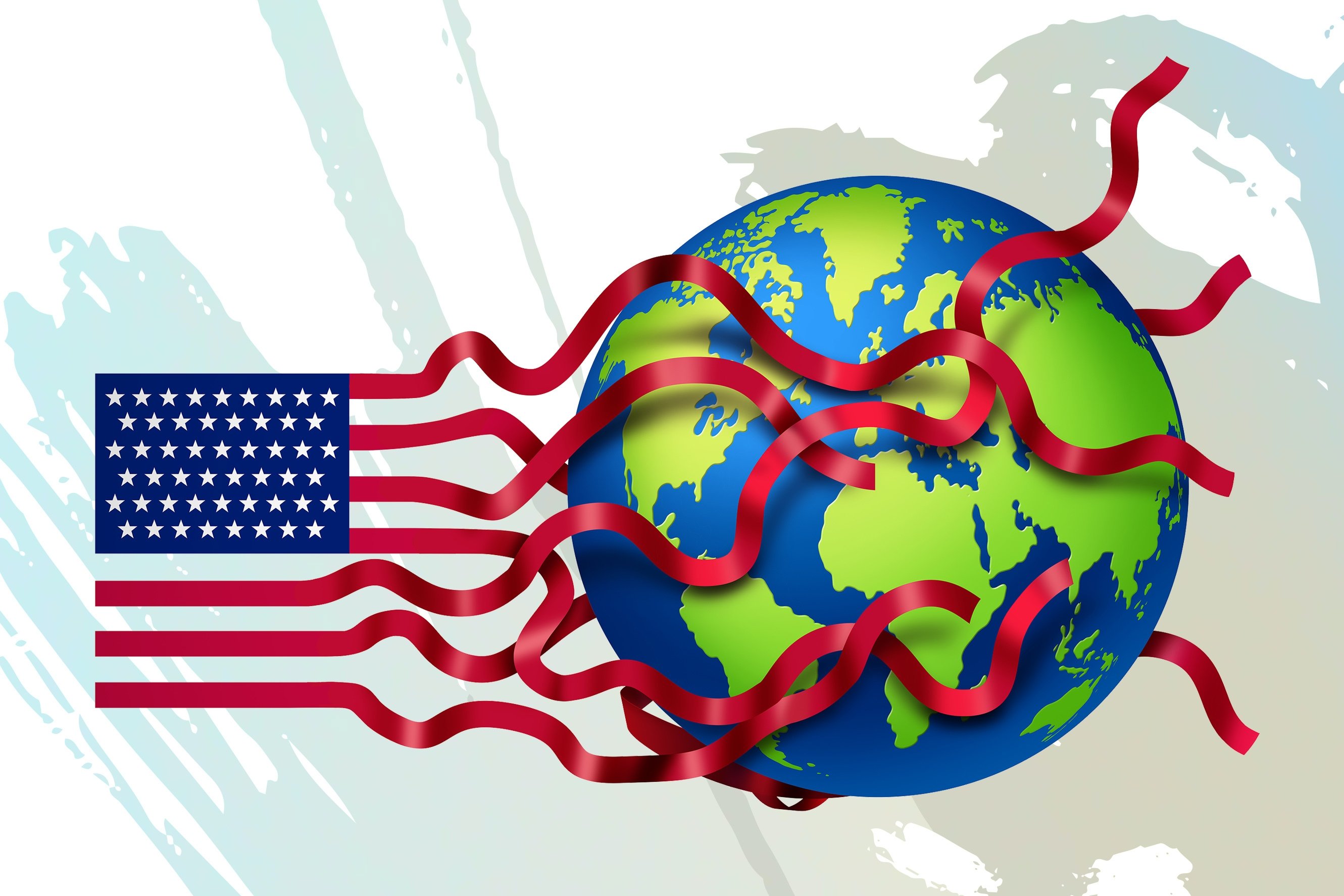
Having failed to establish a unipolar world order, the United States could not determine its course in the post-Cold War era. During her tenure as secretary of state, Hillary Clinton declared that the U.S. would turn its focus from the Middle East toward the Asia-Pacific region. Due to the U.S.' status as the hegemonic power in the international arena, this was certainly a major foreign policy change, one that would have serious repercussions for international politics as a whole.
The change, however, was an inevitability given China’s rise as an economic superpower. After the end of the World War II, both Britain and France, despite being the victors of the war, lost their dominance in international politics. France’s political influence was restricted to its former colonies of North Africa, while Britain had to be content with taxing Commonwealth countries.
Later, European domination in international politics would be replaced with U.S. domination. During the Cold War era, the U.S. intervened in the domestic politics of its allies through NATO, which subjected its member states to U.S. dominance. As the Cold War ended, European powers lost their significance as independent players of global politics. Now, leading European powers have no capacity to intervene, let alone resolve, the crisis in Ukraine that has emerged under their noses.
In the ongoing multipolar international order, three countries have stepped onto the world stage: Iran, Russia and Turkey. However, Iran rapidly burned itself out due to its aggressive and expansionist foreign policy. Certainly, the longstanding international embargo over Iran greatly contributed to this burnout process. As Iran gradually retires into its own shell, Russia and Turkey have already begun to fill the void in the Middle East.
When the Syrian crisis emerged, the U.S. was regarded as the unrivaled hegemon in international politics. When the U.S. oriented its focus toward the Asia-Pacific region, its presence in the Middle East became problematic. During the presidency of Barack Obama, the U.S. opted for Iran instead of Turkey, one of its principal NATO allies in the region. These foreign policy changes not only provoked Iran’s imperialist aspirations but also enabled Russia to return to the world stage. As American hegemony in the Middle East shattered, Russia emerged as one of the dominant powers in the region. During the Syrian crisis, Russia became aware of the ongoing disorder amongst the Western powers. Challenging NATO, Russia successfully forced its terms on Ukraine. Russia’s emergence as a dominant military power in the Middle East and Eastern Europe was an irrevocable development.
Despite being a NATO member, Turkey adopted a multilateral and multidimensional foreign policy attitude during the post-Cold War era. Even though Turkey and Russia's interests clashed on a number of issues, Ankara has succeeded in establishing enduring cooperation with Moscow. Being unable to accept the new dynamics of the post-Cold War era, the U.S. has not acknowledged Turkey’s emergence as a regional power, treating the country like its subordinate, rather than its equal ally.
Turkey’s new status in international politics has been made clear in three regional crises. During the civil war in Libya, Turkey supported the U.N.-recognized Government of National Accord (GNA) against the putschist Gen. Khalifa Haftar. Despite being supported by Russia, France, Egypt and Greece, Haftar's forces failed to overthrow the legitimate government backed by Turkey. If the U.S. took Turkey's side, political stability and peace could be established in Libya.
During the Syrian crisis, Turkey succeeded to hold its ground despite being left alone by its NATO allies. In the Eastern Mediterranean, Turkey put its terms against a number of countries by using its military and diplomatic prowess. The U.S. understood the problems within the Greek solution for transferring the Eastern Mediterranean gas to Europe. If the U.S. would cooperate with Turkey, these crises in Syria and the Eastern Mediterranean could be resolved and Washington could play a part in bringing about enduring peace and stability in the region. However, it appears the U.S. is still far from appreciating the new dynamics of the post-Cold War period, including Turkey’s emergence as a regional power.