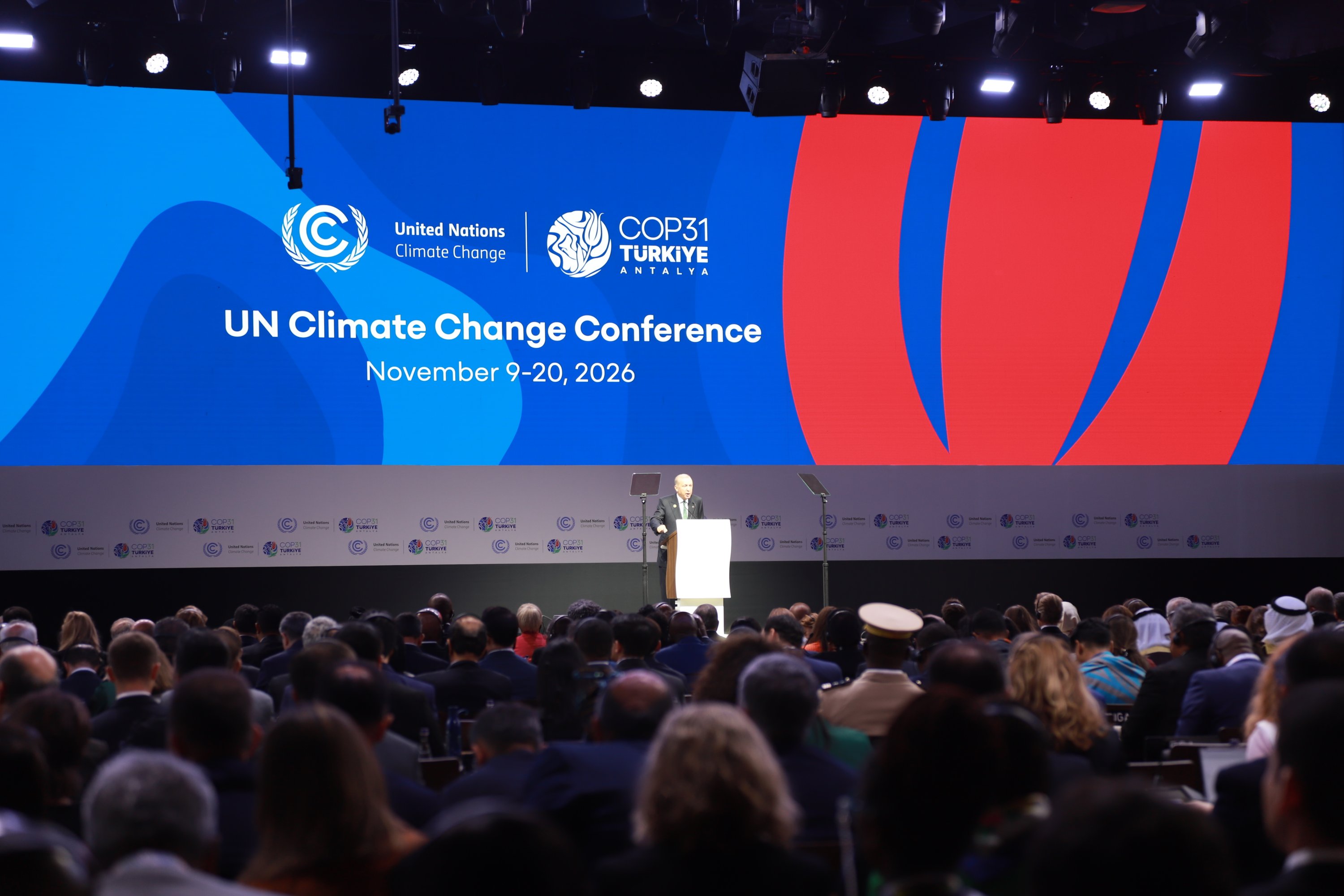
The COP31 climate conference is being held in Antalya, Türkiye, between Nov. 9 and 20. The summit has brought together world leaders, climate experts, academics, business leaders, civil society representatives and representatives of disadvantaged groups from around the world.
All 196 parties to the United Nations Framework Convention on Climate Change, along with the European Union, have come together at the summit. A total of 102 leaders and senior representatives from 95 countries and seven international organizations are attending the summit.
Key agenda items include climate finance, a just transition, climate adaptation, emissions reduction, limiting global temperature rise, building resilient cities, advancing clean energy and sustainable transport, developing new technologies, promoting zero waste and accelerating green industries.
The summit in Antalya stood out from previous COP meetings in many ways. As host, Türkiye sought to give its presidency greater significance by distinguishing itself from previous hosts and promoting collective efforts to turn commitments made at earlier COP meetings into tangible action.
Ankara, which defined its vision as “implementation COP,” aimed to strengthen COP as a platform capable of delivering sustainable and global influence. Türkiye has emphasized that priority should be given to fulfilling established goals, rather than making new decisions and promises.
COP31 has become the largest climate summit both in terms of the level of representation and overall attendance. The summit has attracted more than 102,000 registered participants to its Blue Zone, which hosts high-level delegations and participants and official negotiations, during the first week. More than 212,000 people visited the Green Zone, which brings together representatives of civil society, business and international organizations as well as public institutions. It is clear that the summit will easily set the COP attendance record.
President Recep Tayyip Erdoğan, who served as an excellent host, delivered an impactful speech during the summit and underlined some critical issues to the attention of the international community. President Erdoğan planted a symbolic olive tree together with U.N. Secretary-General Antonio Guterres to draw attention to the environmental genocide (ecocide) in Gaza and to global peace. As reported by the U.N. Special Rapporteur on the Occupied Palestinian territories, the number of olive trees in the Gaza Strip declined from over 2 million in 2023 to about 150,000 in 2026. Erdoğan wants to bring this issue to the world’s agenda.
Besides hosting the summit, Erdoğan also held dozens of bilateral meetings with state leaders who came to his country for the summit to discuss bilateral, regional and global issues. Erdoğan’s meetings with the leaders of the states in the region were particularly noteworthy; he discussed regional issues such as the U.S.-Israel-Iran war, the ongoing massacre in Palestine, the activation of conflicts in the Horn of Africa and regional stability in the Balkans and the Caucasus.
In addition, Türkiye, which initiated the zero-waste movement in 2017 under the leadership of Turkish first lady Emine Erdoğan, has succeeded in making the issue of zero waste one of the most important topics for the U.N. This was a critical indication of Türkiye’s growing effectiveness in setting the agenda in international politics. Furthermore, at the initiative of Ankara, the U.N. General Assembly has declared March 30 as the International Day of Zero Waste. In other words, Türkiye is concerned not only with national and regional issues but also with global matters.
However, although the vast majority of the world’s states attach great importance to the climate change summit, the nations that pollute the environment the most fail to show the expected and necessary level of attention. Neither the United States nor the Western European states, the initiators of the climate change summit, attached the necessary importance to the summit. Unfortunately, climate change is not among the priority issues on the agendas of these global powers. Intensified global rivalry, wars and military conflicts around the world occupy their main agendas. Yet, in the medium and long term, climate change ranks among the most significant security issues for all states. Global powers, which contribute the most to environmental problems, shift the responsibility onto others by asking the Global South to take measures against the changing climate.