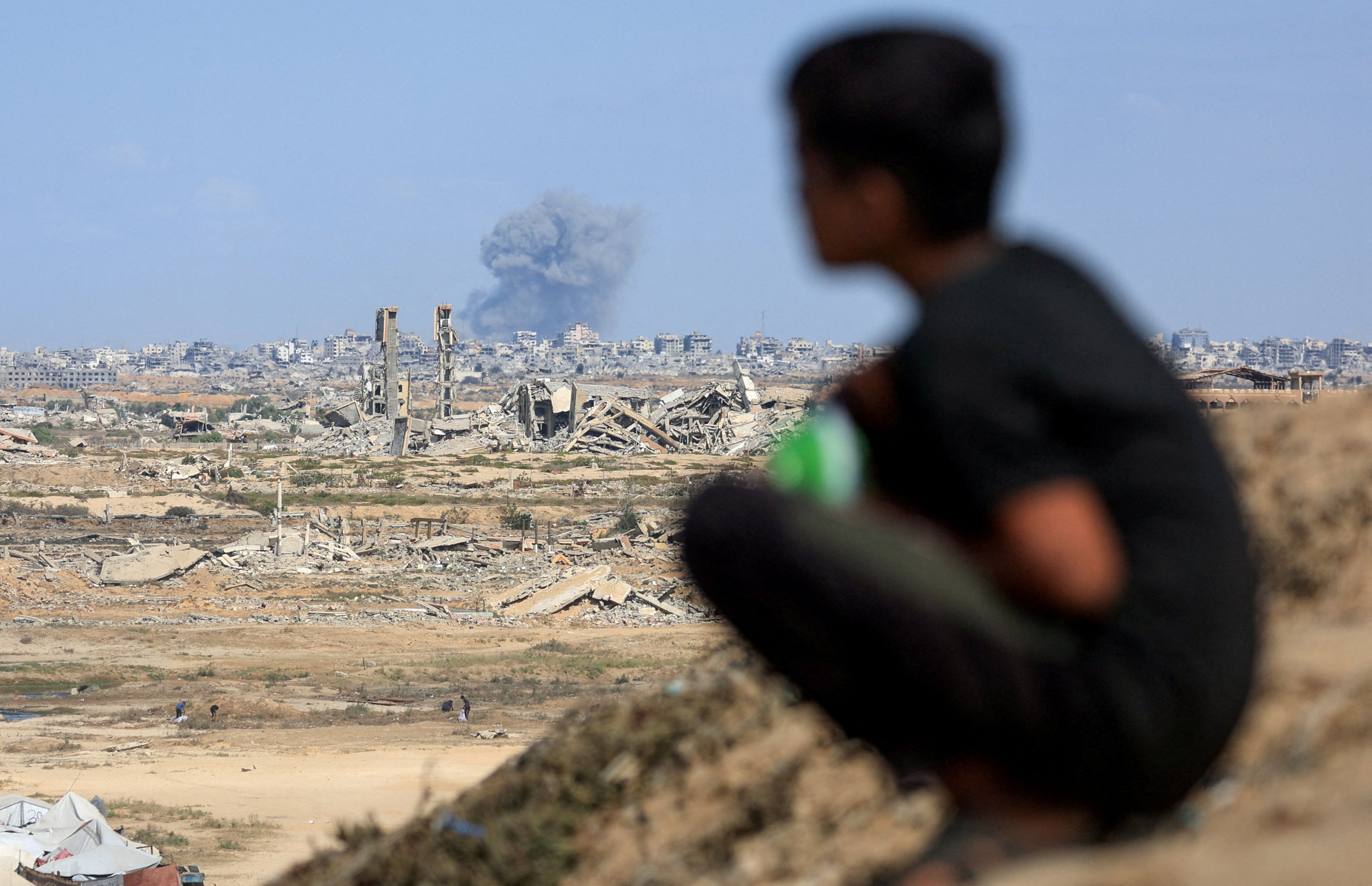
U.S. President Donald Trump unveiled his 20-point Gaza plan on Sept. 29, among others, which calls for a cease-fire and rebuilding of Gaza, the release of Israeli captives and the disarmament of Hamas. Hamas officially declared that it agreed to the plan in principle on Oct. 3. Trump has welcomed the Hamas response and shared the official affirmation document on his social media platform.
Upon reaching an agreement, Israel and Hamas began indirect talks in Egypt. Delegations from Hamas, Israel and mediator states convened in Egypt for negotiations to end the two-year Gaza genocide. Hamas is represented by Khalil al-Hayya, who was targeted in an assassination attempt by Tel Aviv in Qatar last month.
Negotiations focus on the release of 48 Israeli captives, who remain in Gaza, including 20 alive, and the release of at least some of the 11,000 Palestinians, who are held by Israel and face torture and hunger in Israeli prisons.
Many observers, academics and politicians worldwide continue to discuss the content and the potential success of the plan. States have declared their support for the plan. It is clear that this plan is different from the previous American plans, which were unilaterally prepared and imposed on the other side. This latest plan, on the other hand, was discussed with the leaders and representatives of some Muslim countries. This aspect increases the chance of its success.
When we examine the conditions on the ground, we can infer that, compared to the previous ones, this cease-fire can be implemented more easily, because all related parties expect a certain degree of benefit from this plan.
Although it does not meet all its expectations, Hamas has declared that it has accepted the plan, since it will end the ongoing Israeli genocide, the mass killing, and the starvation of the people. The plan does not propose the forced flight of the Gazans from their lands. It accepts that the Gazan people will remain in Gaza under a technocratic government. That is, Hamas is ready to give up the administration of Gaza to another Palestinian authority.
Arab states support the plan, since it will bring social and political relief. They largely remained indifferent to the ongoing Israeli genocide in Gaza, but felt pressure from their people. The more prolonged the genocide and Israeli aggression, the more probable a societal explosion in Arab states and the more radical the Arab reaction to the Israeli atrocities and the silence of their regimes. Therefore, Arab regimes want Israel and the U.S. to end the genocide because it has started to influence their respective domestic politics.
In addition, the continuation of the genocide may end up with the forced immigration of the Gazans, which is not wanted by the Arab regimes. Arab leaders fear that if the politically aware Gazans flee to the neighboring Arab states, they may change their societies and make them more politically aware. In other words, Arab regimes, which want to get rid of the politically motivated groups in their states, do not wish for the "Hamasization" of their respective societies.
For Muslim states, the plan is acceptable, since it will end the ongoing genocide, mass killings and starvation in Gaza. For them, the end of the humanitarian catastrophe and the Israeli occupation will be a great success. For regional countries, the plan may stop the Israeli aggression in the region.
On the other hand, Israel seems to accept the plan for different reasons. First of all, when President Trump met with Muslim leaders in New York, he listened to a different version of the developments on the ground and their implications on the regional politics. Therefore, he put pressure on the Netanyahu government to accept the cease-fire.
Second, Israel was largely isolated in the world, especially in the Western world. By accepting the plan, Israel has been trying to get rid of the global-scale isolation. Everyone is aware that Israel has been losing the war on political, diplomatic and humanitarian fronts. Tel Aviv will attempt to reverse the negative momentum and prevent a political collapse. It has largely lost its legitimacy in the eyes of not only Muslims but also people worldwide.
Lastly, the U.S. and other Western global powers decided to change their positions towards the Gaza genocide. The international community largely accepts that Western global powers are complicit in this genocide, since they have been providing unconditional support to the Israeli government. The growing anti-government and anti-Israel critics of their people forced the Western government to change their strict pro-Israeli position. Many Western governments fear losing the next elections due to their support for Israel.
In other words, the pro-Israel policies and the support for the ongoing genocide will become one of the main parameters in upcoming elections in Western states. The influence of their respective public opinion forces Western governments to reposition themselves to satisfy public demands and to take some concrete measures against the Israeli atrocities. They want to be known as the actors who solved the question and ended the genocide. That is, they want to change their image, from complicit in genocide to problem-solvers.
As a result, all parties to the conflict are relatively more ready to accept the plan and end the genocide in Gaza. Israel’s continuation of genocide is unsustainable, especially given the growing public opposition to the Israeli aggression. Therefore, all related parties will continue to invest in this plan, thereby achieving relative stability in the region. The most serious threat to the plan’s failure will be Israel’s violations of the rules and its aggression against the Palestinians.