Daily Sabah logo

Politics
Diplomacy Legislation War On Terror EU Affairs Elections News Analysis
TÜRKİYE
Istanbul Education Investigations Minorities Expat Corner Diaspora
World
Mid-East Europe Americas Asia Pacific Africa Syrian Crisis Islamophobia
Business
Automotive Economy Energy Finance Tourism Tech Defense Transportation News Analysis
Lifestyle
Health Environment Travel Food Fashion Science Religion History Feature Expat Corner
Arts
Cinema Music Events Portrait Reviews Performing Arts
Sports
Football Basketball Motorsports Tennis
Opinion
Columns Op-Ed Reader's Corner Editorial
PHOTO GALLERY
JOBS ABOUT US RSS PRIVACY CONTACT US
© Turkuvaz Haberleşme ve Yayıncılık 2025

Daily Sabah - Latest & Breaking News from Turkey | Istanbul

  • Politics
    • Diplomacy
    • Legislation
    • War On Terror
    • EU Affairs
    • Elections
    • News Analysis
  • TÜRKİYE
    • Istanbul
    • Education
    • Investigations
    • Minorities
    • Expat Corner
    • Diaspora
  • World
    • Mid-East
    • Europe
    • Americas
    • Asia Pacific
    • Africa
    • Syrian Crisis
    • Islamophobia
  • Business
    • Automotive
    • Economy
    • Energy
    • Finance
    • Tourism
    • Tech
    • Defense
    • Transportation
    • News Analysis
  • Lifestyle
    • Health
    • Environment
    • Travel
    • Food
    • Fashion
    • Science
    • Religion
    • History
    • Feature
    • Expat Corner
  • Arts
    • Cinema
    • Music
    • Events
    • Portrait
    • Reviews
    • Performing Arts
  • Sports
    • Football
    • Basketball
    • Motorsports
    • Tennis
  • Gallery
  • Opinion
    • Columns
    • Op-Ed
    • Reader's Corner
    • Editorial
  • TV
  • Opinion
  • Columns
  • Op-Ed
  • Reader's Corner
  • Editorial

Global trade and strategic quests in the supply chain

by Kerem Alkin

Apr 04, 2023 - 12:05 am GMT+3
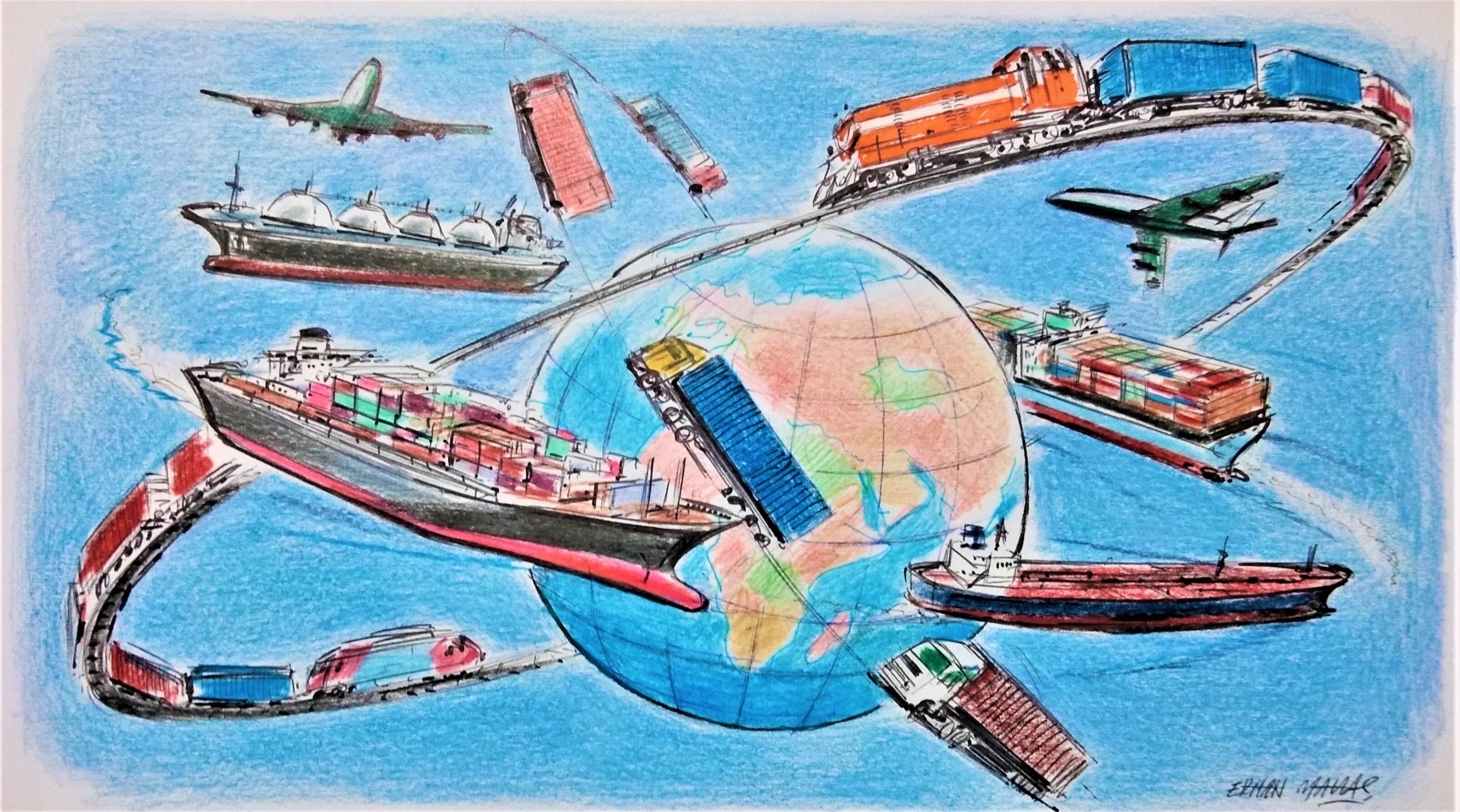
All the challenges and conflicts in global trade during the three years between 2020 and 2022 show that it is no longer possible to return to the world before 2019. (Illustration by Erhan Yalvaç)
by Kerem Alkin Apr 04, 2023 12:05 am

Considering the indicators for global trade and supply chain, it's safe to say that Türkiye's role will increase exponentially

All 40 economies positioned as the most important players in global trade have brought the difficulties, twists, “unquestioned” rules and habits in the worldwide supply chain caused by the two “black swans” – global virus outbreaks and the Russia-Ukraine war. Therefore, all the challenges and conflicts in international trade during the three years between 2020 and 2022 show that it is no longer possible to return to the world before 2019. For this reason, both the U.S., the EU and the significant actors of the African and Asian continents are thinking hard about how to establish a “brand new” supply chain model for all strategic areas, such as energy, technology, digitalization, defense and logistics.

The Organisation for Economic Co-operation and Development’s (OECD) latest assessment of global trade and the supply chain last week shows that the trend toward new markets and suppliers in international trade is not limited to Atlantic countries. For example, Russia’s energy exports have shifted from the West to Asia, with China and India being the most important buyers. Due to the sanctions imposed on Russia, the difference between the barrel prices of Ural and Brent crude oil has recently increased significantly, and imports from Russia are advantageous for Asian economies.

Another point highlighted in the report is the ongoing concerns about food security for the current and future periods. The OECD analysis shows that food and fertilizer prices have recently decreased, especially after the Black Sea grain corridor initiative, and have returned to their prewar level; they are still above the pre-COVID-19 level.

Due to the uncertainties arising from the Russia-Ukraine war, fertilizer prices are still high despite the recent downward trend. Another vital point in the OECD’s report is that until the 2008 global financial crisis, the trade restrictions imposed on each other by leading countries affected between 3% and 4% of global goods trade. Today, the same rate has increased to 9%-10%.

The U.N. report

Taking into account that in the new March global trade report of the United Nations Conference on Trade and Development (UNCTAD), goods trade reached $25 trillion in 2022 with an increase of 10% compared to the previous year, the trade volume affected by the protectionist measures of countries has increased from $800 billion to $2.5 trillion. This situation also explains the 6% contraction in the trade volume of the group of nations referred to as “south-south” in the UNCTAD report in 2022, especially in East Asia.

The report shows that the global services trade, which is continuing its recovery after the two painful years of coronavirus, has reached $7 trillion with an increase of 15%. Moreover, although global goods trade decreased by $250 billion in the last quarter of 2022 compared to the third quarter, the international services trade maintained its position.

However, the UNCTAD expects global goods trade to increase by 1% quarter-on-quarter and international services trade by 3% in the first quarter of 2023. Furthermore, while there was a decrease in goods trade in China compared to the previous quarter and the same period of the last year, there was an annual increase in terms of the U.S. and the EU, but a decrease was observed compared to the previous quarter.

The findings of the EU Commission are clear: The EU is too dependent on China and third countries in the global supply chain. Therefore, to reduce and manage the risks it will face, the EU must closely monitor and restructure the supply chains of strategic and critical materials. The U.S. gives the same message. As a result, we will all witness together that Türkiye’s role will exponentially increase.


About the author
Kerem Alkin is an economist, professor at Istanbul Medipol University.
  • shortlink copied
  • KEYWORDS
    supply chain global trade oecd covid-19 recovery
    The Daily Sabah Newsletter
    Keep up to date with what’s happening in Turkey, it’s region and the world.
    You can unsubscribe at any time. By signing up you are agreeing to our Terms of Use and Privacy Policy. This site is protected by reCAPTCHA and the Google Privacy Policy and Terms of Service apply.
    No Image
    Spice must flow: Turkey's saffron harvest in full swing
    PHOTOGALLERY
    • POLITICS
    • Diplomacy
    • Legislation
    • War On Terror
    • EU Affairs
    • News Analysis
    • TÜRKİYE
    • Istanbul
    • Education
    • Investigations
    • Minorities
    • Diaspora
    • World
    • Mid-East
    • Europe
    • Americas
    • Asia Pacific
    • Africa
    • Syrian Crisis
    • İslamophobia
    • Business
    • Automotive
    • Economy
    • Energy
    • Finance
    • Tourism
    • Tech
    • Defense
    • Transportation
    • News Analysis
    • Lifestyle
    • Health
    • Environment
    • Travel
    • Food
    • Fashion
    • Science
    • Religion
    • History
    • Feature
    • Expat Corner
    • Arts
    • Cinema
    • Music
    • Events
    • Portrait
    • Performing Arts
    • Reviews
    • Sports
    • Football
    • Basketball
    • Motorsports
    • Tennis
    • Opinion
    • Columns
    • Op-Ed
    • Reader's Corner
    • Editorial
    • Photo gallery
    • DS TV
    • Jobs
    • privacy
    • about us
    • contact us
    • RSS
    © Turkuvaz Haberleşme ve Yayıncılık 2021