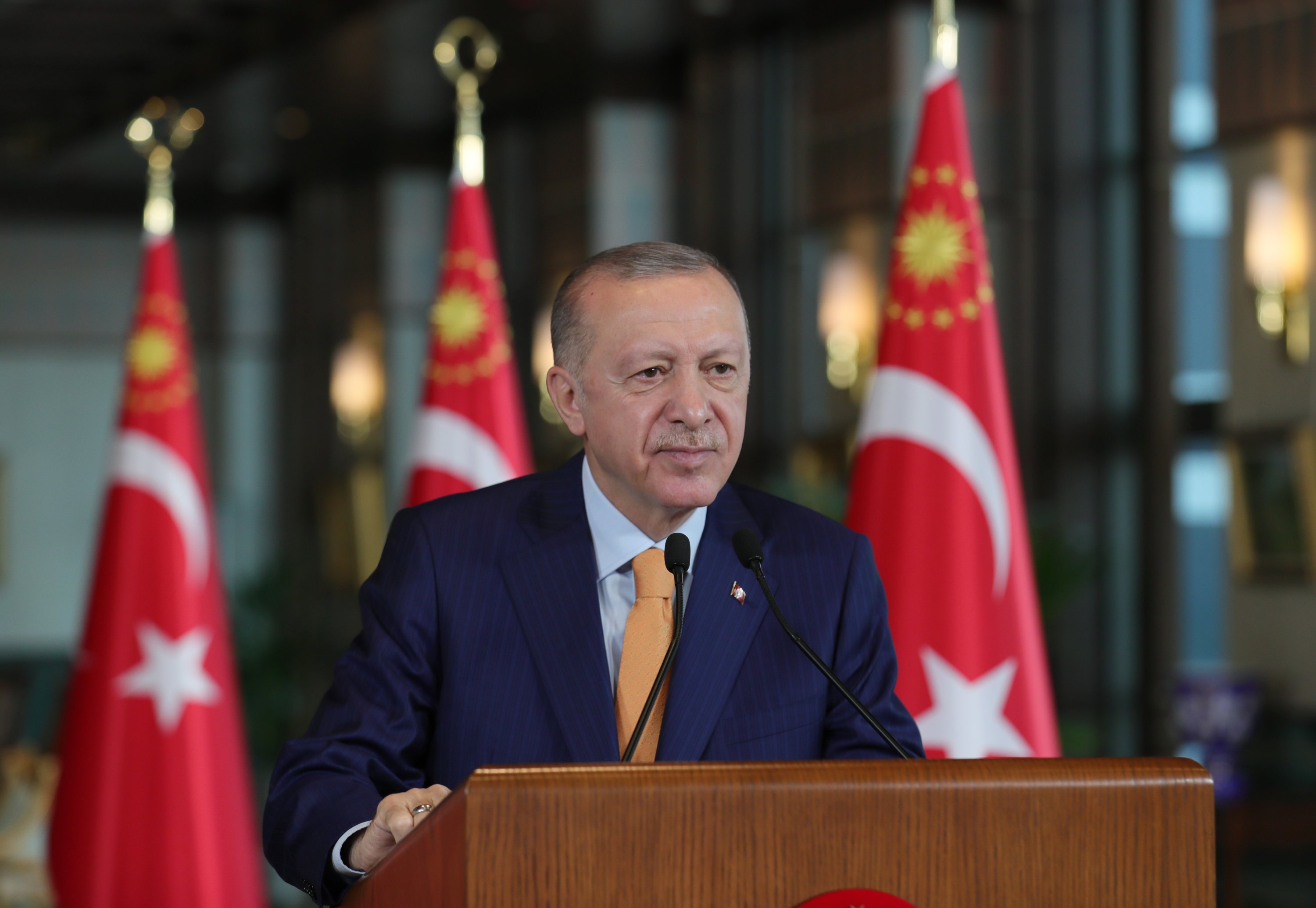
In my previous column, I evaluated the role of charismatic leadership in managing periods of political chaos. Through the case of President Recep Tayyip Erdoğan, I demonstrated how a charismatic leader steers his country through stormy seas. Today, I would like to continue to discuss the significance of charismatic leaders in international relations by focusing on the assets of Erdoğan’s charismatic leadership.
Erdoğan overcame a series of challenges during nearly a quarter of a century in political power. Taking office in a period of political and economic crisis, he succeeded in overcoming these crises by establishing a stable government based on unfaltering support from the electorate. Even after the political and economic stabilization of the country, Erdoğan had to deal with the old establishment. He fought against a long-standing military tutelage, which was supported by an outdated undemocratic mentality of the Republican People’s Party (CHP) prevalent in bureaucracy, media and politics.
In order to eliminate this military and bureaucratic tutelage over civilian politics, Erdoğan launched a series of democratic reforms in line with Turkey’s candidacy for the European Union. Meanwhile, he has restructured and rejuvenated Turkey’s relations with Middle Eastern countries both in political and economic spheres. Emancipating Turkey from the International Monetary Fund's (IMF) economic programs, the Justice and Development Party (AK Party) governments made enormous public investments to resolve Turkey’s infrastructural problems. Turkey’s economic growth was also supported by the AK Party’s municipalities, which resolved the leading problems of cities via public investments. While making judicial reforms to put an end to military tutelage, Erdoğan initiated the reconciliation process, which sincerely aimed at resolving Turkey’s Kurdish issue via democratic means.
At this crucial moment, Turkey under the leadership of Erdoğan came face to face with a series of existential crises. The Gezi Park protests were succeeded by attempted bureaucratic and military coup d’etats by the Gülenist Terror Group (FETÖ), which, after penetrating the depths of the state structure for decades, felt itself strong enough to contend against the government.
Even though these attempted coup d’etats failed thanks to the resilience of Turkish democracy, the Syrian civil war created vulnerabilities for Turkey, which led not only FETÖ, but also the PKK and Daesh terrorist groups to target the country with attacks. Relying on his popular support, Erdoğan led the state to win successive victories in Turkey and Syria, purging all these terrorist organizations from the country.
As Turkey’s parliamentary system has been replaced with a presidential system, Erdoğan won the elections thanks to the ongoing alliance between the AK Party and the Nationalist Movement Party (MHP). Turkey also faced a series of international challenges not only in Syria, but also in Libya, the Nagorno-Karabakh war and the Eastern Mediterranean, which were overcome thanks to the strong leadership of Erdoğan.
Erdoğan played a key role in Turkey’s emergence as a regional power in the international arena by linking Turkey’s identity with its historical roots. Moreover, Turkey’s positions in regional and international issues have fervently been supported by the oppressed peoples of the world. Erdoğan’s motto, “The world is bigger than five!” in the United Nations demonstrated Turkey’s support for the oppressed nations in the Middle East, Latin America and Africa.
While European countries pass through troubled times due to lack of strong political leadership, Turkey enjoys the advantages of being led by a charismatic leader. Thanks to his determination and flexibility in coming up with innovative resolutions to national and international crises, Erdoğan has emerged as a world leader, inspiring oppressed peoples all around the world. As political scientists have appreciated the significance of charismatic leadership in politics since Max Weber’s iconoclastic studies on legitimate authority, it is the time to study the assets of Erdoğan’s strong political leadership.