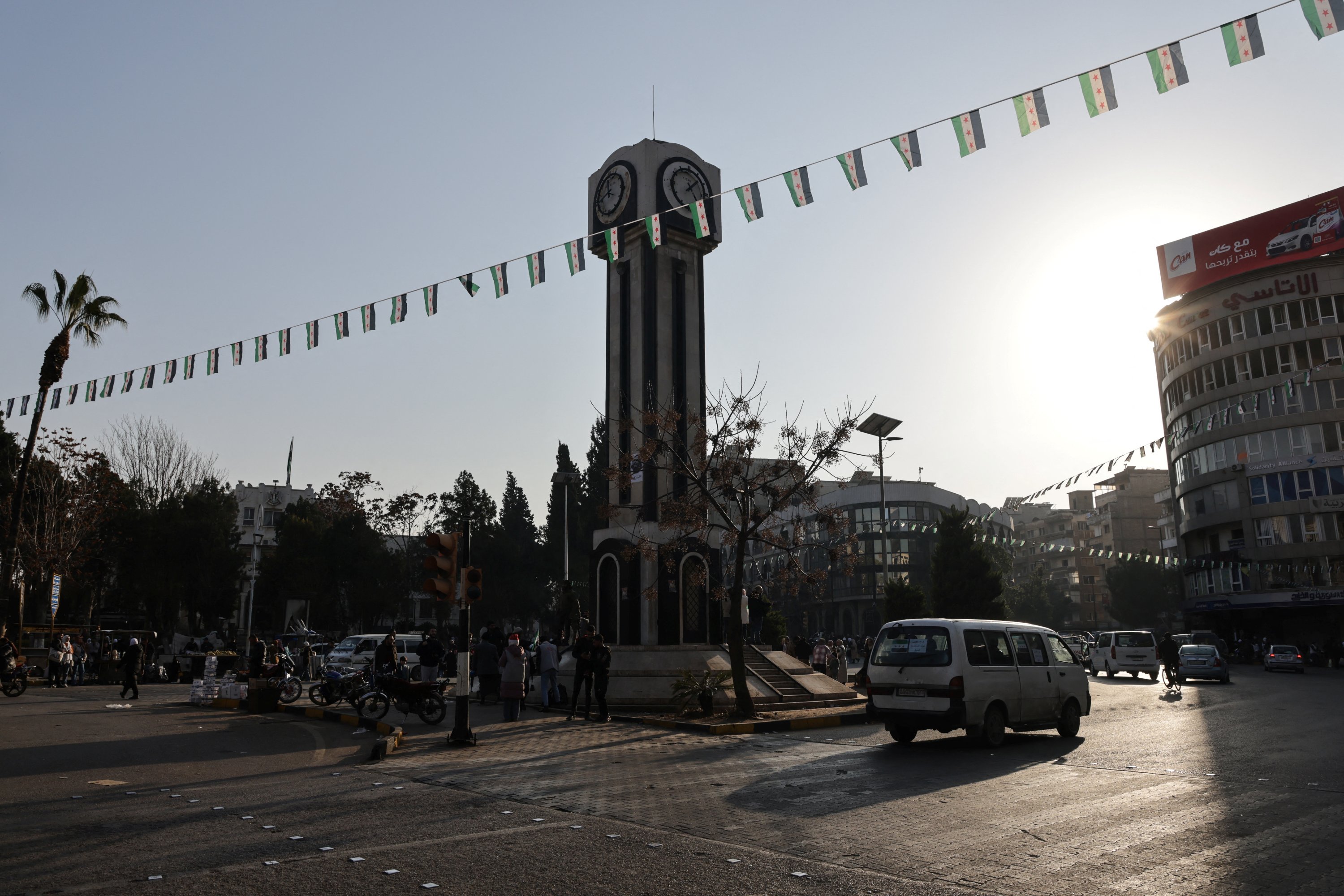
As the Syrian revolution progresses steadily toward its culmination, one pressing question resonates globally: Who laid the groundwork for this transformative movement?
In seeking answers, it becomes evident that countries aspiring to establish ties with the emerging Syrian state turn increasingly to Türkiye, recognizing its pivotal role and seeking to cultivate stronger relationships with Ankara as a gateway to engagement.
In the past two weeks, Türkiye has actively engaged in diplomatic efforts regarding Syria, hosting visits from several countries. High-profile officials, including U.S. Secretary of State Antony Blinken, German Foreign Minister Annalena Baerbock and European Commission President Ursula von der Leyen, have visited Ankara. This highlights a growing global trend: European Union member states, Iran, the United States, the United Kingdom and many Gulf countries are seeking to establish relations with Syria through Türkiye.
This is mainly because the Syrian revolution and the fall of Damascus unfolded so rapidly that no state in the world could have anticipated such swift developments.
Naturally, Türkiye maintains relations with numerous states and is actively negotiating with them on how to manage this dialogue on Syrian soil. A primary focus is the careful adherence to the following principles:
First, Syria should be governed by its own people. The Syrian population must have the full authority to establish, lead and sustain their own state.
Second, the territorial integrity of Syria must be safeguarded at all costs.
Third, to prevent a return to war and civil unrest, Türkiye strongly advocates for Syria to retain a unitary state structure as a foundation for national unity.
In this context, President Recep Tayyip Erdoğan's character, approach to events and principled stance are as focused on the future stability of Syria and the well-being of its people as they are on Türkiye and the peace and prosperity of the Turkish people.
Iran has demonstrated a flawed approach by treating the Syrian people as invaders, thereby forfeiting its legitimacy in Syria. In stark contrast, the Republic of Türkiye, under the leadership of President Erdoğan, has earned recognition as Syria's legitimate neighbor through its just, fair and prudent policies.
While Türkiye’s diplomatic engagements with all nations hold significance, certain key topics stand out in discussions with the United States.
Foremost among these is the issue of Daesh. As is well known, American public opinion has heavily invested in addressing the threat posed by Daesh. In the minds of U.S. leaders and the public, Daesh continues to be viewed as a violent terrorist organization and a persistent danger in the Middle East.
Although Türkiye and the U.S. approach the issue of Daesh from different perspectives, Türkiye can readily assure the U.S. that it is fully capable of suppressing or dismantling Daesh as a terrorist organization.
The second critical issue is the presence of the PKK/YPG terrorist organization in Syria, which is often misconstrued in the West and elsewhere as a Kurdish issue. It is essential to recognize that approximately 80% of the territories currently controlled by the PKK/YPG are predominantly Arab and Turkmen areas, with Kurds forming a majority in only 20% of these regions. Consequently, the Syrian people's aspiration for national integration has already driven out key actors like Russia, Iran and the Assad regime from substantial parts of their territory. This strong desire for unity is unlikely to tolerate the continued occupation of Syrian land by any terrorist organization.
Türkiye can firmly reiterate that it remains committed to maintaining vigilance against Daesh in a unified, terror-free Syria – without any reliance on the PKK/YPG, if this is the elementary role of the PKK/YPG according to the U.S.
The third issue concerns the protection of Kurdish populations. Türkiye already hosts a Kurdish community comprising approximately 20% of its population. In Türkiye's democratic framework, Kurdish citizens enjoy full political rights, demonstrating the country's inclusive approach toward its diverse communities.
In Syria, Türkiye has already taken a proactive role in granting identity cards to Kurds who had been denied such elemental recognition under Assad's regime. President Erdoğan shares a common understanding with the emerging Syrian government on equal rights for all citizens within a democratic framework.
A likely point of discussion between Türkiye and the U.S. will center on the assertion that the PKK is unnecessary for protecting Kurdish rights. Both the new Syrian government and Türkiye can provide assurances that Kurds will enjoy peace and equality within a unified and inclusive Syrian state.
On the other hand, strategic and economic matters, national interests, and the relations of Syria with Israel, Iran and Iraq are all more open to constructive dialogue in the context of the relationship of Türkiye with these states.
If Türkiye and Trump's America can align on the need to control or eliminate terrorist organizations, they will likely encounter little difficulty in reaching agreements on broader issues concerning Syria.
The contrast is striking between the difficulties of the United States in establishing lasting order in Iraq and Afghanistan and the consistent success of Türkiye in stabilizing the regions it has entered. With the foundation of a new government in Syria, Türkiye has emerged as a cornerstone of regional stability, benefiting the interests of both Western powers and regional players, regardless of alliances or rivalries.
Türkiye's steadfast commitment to Syria's security and territorial integrity highlights its role as a guarantor of peace and a pillar for sustainable stability. A mutual agreement between Türkiye and the U.S. to uphold Syria's unity could pave the way for the country's renewal, and reinforce and redefine the strategic partnership between Türkiye and the U.S.