Daily Sabah logo

Politics
Diplomacy Legislation War On Terror EU Affairs Elections News Analysis
TÜRKİYE
Istanbul Education Investigations Minorities Expat Corner Diaspora
World
Mid-East Europe Americas Asia Pacific Africa Syrian Crisis Islamophobia
Business
Automotive Economy Energy Finance Tourism Tech Defense Transportation News Analysis
Lifestyle
Health Environment Travel Food Fashion Science Religion History Feature Expat Corner
Arts
Cinema Music Events Portrait Reviews Performing Arts
Sports
Football Basketball Motorsports Tennis
Opinion
Columns Op-Ed Reader's Corner Editorial
PHOTO GALLERY
JOBS ABOUT US RSS PRIVACY CONTACT US
© Turkuvaz Haberleşme ve Yayıncılık 2025

Daily Sabah - Latest & Breaking News from Turkey | Istanbul

  • Politics
    • Diplomacy
    • Legislation
    • War On Terror
    • EU Affairs
    • Elections
    • News Analysis
  • TÜRKİYE
    • Istanbul
    • Education
    • Investigations
    • Minorities
    • Expat Corner
    • Diaspora
  • World
    • Mid-East
    • Europe
    • Americas
    • Asia Pacific
    • Africa
    • Syrian Crisis
    • Islamophobia
  • Business
    • Automotive
    • Economy
    • Energy
    • Finance
    • Tourism
    • Tech
    • Defense
    • Transportation
    • News Analysis
  • Lifestyle
    • Health
    • Environment
    • Travel
    • Food
    • Fashion
    • Science
    • Religion
    • History
    • Feature
    • Expat Corner
  • Arts
    • Cinema
    • Music
    • Events
    • Portrait
    • Reviews
    • Performing Arts
  • Sports
    • Football
    • Basketball
    • Motorsports
    • Tennis
  • Gallery
  • Opinion
    • Columns
    • Op-Ed
    • Reader's Corner
    • Editorial
  • TV
  • Opinion
  • Columns
  • Op-Ed
  • Reader's Corner
  • Editorial

Israel’s aggressiveness reshaping Middle East geopolitics

by Murat Yeşiltaş

Oct 26, 2023 - 3:01 pm GMT+3
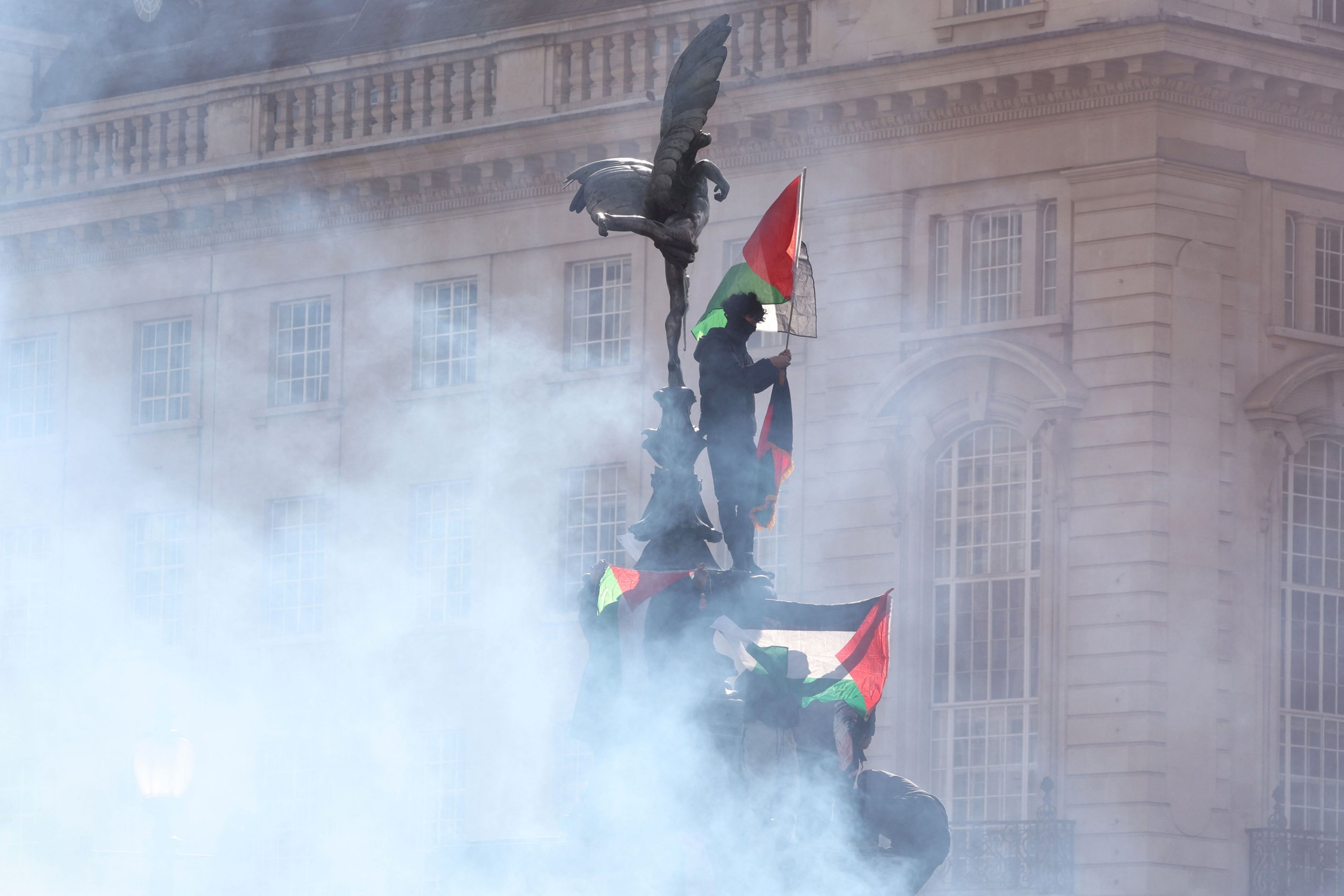
Protesters waving Palestinian flags climb the Eros statue at Piccadilly Circus during a "March For Palestine," part of a pro-Palestinian national demonstration, organized by the Palestine Solidarity Campaign, Friends of Al-Aqsa, Stop the War Coalition, the Muslim Association of Britain, the Palestinian Forum in Britain and CND, London, U.K., Oct. 14, 2023. (AFP Photo)
by Murat Yeşiltaş Oct 26, 2023 3:01 pm

The current situation in Gaza has the potential to become a significant juncture in Middle East geopolitics, as Israel's possible ground invasion implies a wider conflict

The ongoing Israeli offensive in Gaza, resulting in the tragic loss of more than 7,000 lives, has the potential to mark a significant turning point in Middle East geopolitics. Israel’s contemplated ground offensive introduces a range of dynamics that suggest the conflict between Israel and Hamas will extend beyond Gaza. Historically, these conflicts followed a familiar pattern: Hamas attacks against Israel, Israeli airstrikes on Gaza, a cease-fire, and a return to the status quo. However, the events of Oct. 7 strongly indicate a departure from this pattern, with Israel possibly establishing a lasting presence in at least the northern sector of Gaza, thereby altering the status quo.

For Hamas, the method of targeting Israel and the extensive operation’s reach signify a historic shift. The security crisis triggered by the attacks in Israel runs deep, largely due to Hamas’s unpredictability. The Israeli military’s 24-hour delay in gaining control highlights its preparedness shortcomings. Moreover, the Oct. 7 operation has exposed Israel to a profound ontological security crisis that is exceptionally challenging to endure. Consequently, Israel’s ability to deter Palestinian factions and regional players has significantly diminished. This suggests that Israel may undergo a significant shift in its security policies and regional engagements, potentially leading to broader changes across the Middle East.

Peace still distant

As Foreign Minister Hakan Fidan emphasized during his visit to Qatar, this security crisis may either birth a new regional peace through resolving the Palestinian conflict or escalate into a broader regional conflict. While peace seems distant at present, the likelihood of increased regional instability is high.

The direction this process takes hinges on Israel’s success in achieving its goal of neutralizing Hamas. The path to a solution involves an Israeli ground operation against Hamas followed by an occupation of northern Gaza and the establishment of post-occupation governance. However, numerous challenges exist. Because there is no realistic plan on the Israeli side. Increased U.S. pressure on Israel and resistance from Hamas in Gaza may hinder this goal. Israel’s unrestrained use of military force and collective punishment have drawn international criticism, and an extended ground operation would pose severe security and ontological challenges for Israel.

The possibility of the ground operation expanding beyond Israel and Gaza limits both the U.S. and Israel. Lebanese Hezbollah’s potential involvement and the targeting of U.S. military presence by various militia groups in Syria and Iraq may draw the U.S. into the conflict and broaden its scope.

Normalization halted

Israel’s actions in Gaza may lead to heightened tension in Middle East geopolitics, potentially ending or halting the ongoing normalization process. Türkiye’s stance toward Israel has shifted, with President Recep Tayyip Erdoğan strongly criticizing Israel. Simultaneously, Erdoğan emphasized that Türkiye is prepared to take various measures. Despite Türkiye’s active engagement in regional diplomacy aimed at resolving the conflict, it is apparent that Israel will not entertain a cease-fire until it accomplishes its stated objectives. Given these circumstances, it is reasonable to assert that the process of normalizing relations between Israel and Türkiye has come to a halt, at least temporarily.

The prospect of escalating Israeli-Iranian hostility is also significant. While the U.S. has avoided direct confrontations with Iran, attacks on U.S. military presence in Iraq and Syria by Iranian-backed groups could change this stance. Israel might intensify efforts to counter Iranian influence indirectly through Lebanon and Syria. In Gulf countries, the perception of détente with Iran is waning, indicating a freeze in Gulf-Iran rapprochement.

Israel’s actions may have the most significant impact on the Palestinian issue. In Israel’s post-Oct. 7 security and foreign policy approach, the two-state solution might be abandoned, pushing the Palestinian problem to the sidelines. This marginalization could isolate Israel, rendering the Abraham Accords and its regional alliances unworkable and reigniting Arab-Israeli tensions. Neglecting the Palestinian issue and shelving the two-state solution may foster regional radicalization and potentially global consequences.

Considering these risks, it is evident that the Middle East’s regional security landscape will become more competitive post-Oct. 7. Israel’s ground operation in Gaza may transform this competitive environment into a confrontational one, posing challenges to Israel’s security and stability. In such a security landscape, it is impossible for Israel to feel safe and secure.


About the author
Murat Yeşiltaş is a professor of international politics in the Department of International Relations at Social Sciences University of Ankara. He specialized in the study of international security, terrorism, geopolitics and Turkish foreign policy. Yeşiltaş also serves as the director of foreign policy research at SETA.
  • shortlink copied
  • Last Update: Oct 26, 2023 4:07 pm
    KEYWORDS
    israel-palestine conflict middle east normalization geopolitics gaza
    The Daily Sabah Newsletter
    Keep up to date with what’s happening in Turkey, it’s region and the world.
    You can unsubscribe at any time. By signing up you are agreeing to our Terms of Use and Privacy Policy. This site is protected by reCAPTCHA and the Google Privacy Policy and Terms of Service apply.
    No Image
    The world condemns Israel's massacre
    PHOTOGALLERY
    • POLITICS
    • Diplomacy
    • Legislation
    • War On Terror
    • EU Affairs
    • News Analysis
    • TÜRKİYE
    • Istanbul
    • Education
    • Investigations
    • Minorities
    • Diaspora
    • World
    • Mid-East
    • Europe
    • Americas
    • Asia Pacific
    • Africa
    • Syrian Crisis
    • İslamophobia
    • Business
    • Automotive
    • Economy
    • Energy
    • Finance
    • Tourism
    • Tech
    • Defense
    • Transportation
    • News Analysis
    • Lifestyle
    • Health
    • Environment
    • Travel
    • Food
    • Fashion
    • Science
    • Religion
    • History
    • Feature
    • Expat Corner
    • Arts
    • Cinema
    • Music
    • Events
    • Portrait
    • Performing Arts
    • Reviews
    • Sports
    • Football
    • Basketball
    • Motorsports
    • Tennis
    • Opinion
    • Columns
    • Op-Ed
    • Reader's Corner
    • Editorial
    • Photo gallery
    • DS TV
    • Jobs
    • privacy
    • about us
    • contact us
    • RSS
    © Turkuvaz Haberleşme ve Yayıncılık 2021