Daily Sabah logo

Politics
Diplomacy Legislation War On Terror EU Affairs Elections News Analysis
TÜRKİYE
Istanbul Education Investigations Minorities Expat Corner Diaspora
World
Mid-East Europe Americas Asia Pacific Africa Syrian Crisis Islamophobia
Business
Automotive Economy Energy Finance Tourism Tech Defense Transportation News Analysis
Lifestyle
Health Environment Travel Food Fashion Science Religion History Feature Expat Corner
Arts
Cinema Music Events Portrait Reviews Performing Arts
Sports
Football Basketball Motorsports Tennis
Opinion
Columns Op-Ed Reader's Corner Editorial
PHOTO GALLERY
JOBS ABOUT US RSS PRIVACY CONTACT US
© Turkuvaz Haberleşme ve Yayıncılık 2025

Daily Sabah - Latest & Breaking News from Turkey | Istanbul

  • Politics
    • Diplomacy
    • Legislation
    • War On Terror
    • EU Affairs
    • Elections
    • News Analysis
  • TÜRKİYE
    • Istanbul
    • Education
    • Investigations
    • Minorities
    • Expat Corner
    • Diaspora
  • World
    • Mid-East
    • Europe
    • Americas
    • Asia Pacific
    • Africa
    • Syrian Crisis
    • Islamophobia
  • Business
    • Automotive
    • Economy
    • Energy
    • Finance
    • Tourism
    • Tech
    • Defense
    • Transportation
    • News Analysis
  • Lifestyle
    • Health
    • Environment
    • Travel
    • Food
    • Fashion
    • Science
    • Religion
    • History
    • Feature
    • Expat Corner
  • Arts
    • Cinema
    • Music
    • Events
    • Portrait
    • Reviews
    • Performing Arts
  • Sports
    • Football
    • Basketball
    • Motorsports
    • Tennis
  • Gallery
  • Opinion
    • Columns
    • Op-Ed
    • Reader's Corner
    • Editorial
  • TV
  • Opinion
  • Columns
  • Op-Ed
  • Reader's Corner
  • Editorial

Israel’s attack on Qatar shatters Gulf security paradigm

by İhsan Aktaş

Sep 13, 2025 - 12:05 am GMT+3
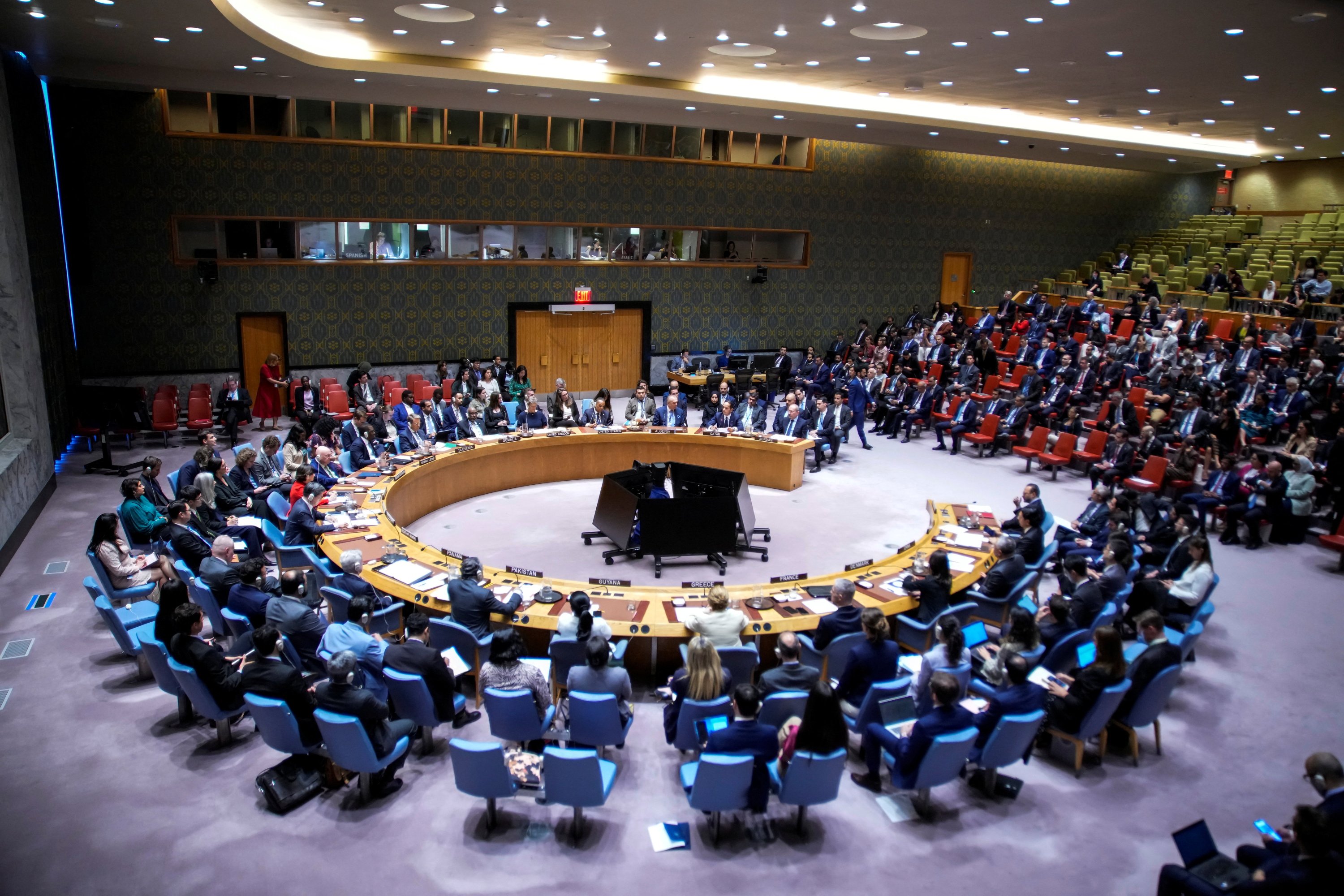
Qatar's Prime Minister and Minister for Foreign Affairs Sheikh Mohammed bin Abdulrahman bin Jassim Al Thani addresses delegates during an emergency meeting of the United Nations Security Council, New York City, U.S., Sept. 11, 2025. (Reuters Photo)
by İhsan Aktaş Sep 13, 2025 12:05 am

The assault on Qatar was more than another episode of violence; it marks a fundamental break in the Middle East security paradigm that has been constructed over the past half-century

For decades, the Middle East operated under a fragile but enduring security arrangement. The United States, inheriting Britain’s role, transferred much of the region’s oil wealth into its own treasury while offering Saudi Arabia and the Gulf monarchies implicit guarantees of protection. This deal, though imperfect, allowed Arab rulers to believe their survival could be bought with petrodollars.

Meanwhile, Israel expanded its occupation of Palestine and carried out periodic strikes on Lebanon, Iran and others. Yet, under the Anglo-American shield, Arab governments felt insulated.

After U.S. President Donald Trump took power, his vision was not limited to merely safeguarding Israel and the Gulf countries. Trump sought to forge the Abraham Accords for a long-lasting peace between the Arabs and Israel, in other words, an Arab submission to Israel under the cover of normalization.

Mass expulsion

Since the eruption of the Gaza massacre, Israeli Prime Minister Benjamin Netanyahu has pursued a chilling goal: the mass expulsion of Palestinians from Gaza, perhaps to Egypt or even Saudi Arabia. What seemed unthinkable is now openly discussed. The Arab states, however, have remained silent in the face of Trump’s and Netanyahu’s deranged, genocidal vision – one that uproots people from their lands, homes and very existence. It was Qatar – a state with strong legitimacy among Arabs and a tradition of noble leadership – that tried to play mediator, seeking to deliver aid and relief to Gaza.

The Gulf states – Saudi Arabia, Qatar, the UAE, Oman and Bahrain – until now considered themselves as secure as London, Paris or New York, their only anxieties being whether Iran might invade or whether the U.S., as in the case of Saddam’s Iraq, could step in to eliminate regional threats. Their calculus was simple: buy stability, outsource defense.

Egypt, with its demographic and military weight, retains the hallmarks of a nation-state capable of resistance.

What would Netanyahu not do?

If one were to ask, "What would Netanyahu not do?" the answer is simple: there is nothing this genocidal killer, heir in spirit to Hitler, would refrain from. And indeed, he has now gone so far as to launch an attack on Qatar itself – mounting a military operation to eliminate the very party negotiating with him under the roof of a sovereign state. Rarely in modern history has a state tried to annihilate the party negotiating with it in wartime. Israel has once again revealed itself as a rogue state, beyond the boundaries of international norms.

The assault on Qatar is not just another episode of violence. It symbolizes the unraveling of the Anglo-American security architecture, which was designed over half a century. If even Qatar, a wealthy ally deeply embedded in Western networks, can be attacked with impunity, then no Arab state can consider itself protected. The old deal – petrodollars in exchange for security guarantees – is broken.

From this point forward, neither Saudi Arabia nor the UAE, nor any other Arab state, can believe money alone will buy safety. If Arab and Muslim nations treat the strike on Qatar as a passing incident, they risk condemning themselves to a future where none can ensure their own security. One by one, they may find themselves on Israel’s target list.

The Gulf countries now face a strategic crossroads. History may look back at the strike on Qatar not just as another act of Israeli aggression, but as the moment the old Middle Eastern security doctrine collapsed. Inevitably, the Gulf nations will now be compelled to seek new alliances and security arrangements in a rapidly shifting regional order.


About the author
İhsan Aktaş is Chairman of the Board of GENAR Research Company. He is an academic at the Department of Communication at Istanbul Medipol University.
  • shortlink copied
  • KEYWORDS
    israeli violence gaza war qatar gulf region arab world
    The Daily Sabah Newsletter
    Keep up to date with what’s happening in Turkey, it’s region and the world.
    You can unsubscribe at any time. By signing up you are agreeing to our Terms of Use and Privacy Policy. This site is protected by reCAPTCHA and the Google Privacy Policy and Terms of Service apply.
    No Image
    Gorgeous 1975 Pontiac Obwandiyag of former Turkish politician
    PHOTOGALLERY
    • POLITICS
    • Diplomacy
    • Legislation
    • War On Terror
    • EU Affairs
    • News Analysis
    • TÜRKİYE
    • Istanbul
    • Education
    • Investigations
    • Minorities
    • Diaspora
    • World
    • Mid-East
    • Europe
    • Americas
    • Asia Pacific
    • Africa
    • Syrian Crisis
    • İslamophobia
    • Business
    • Automotive
    • Economy
    • Energy
    • Finance
    • Tourism
    • Tech
    • Defense
    • Transportation
    • News Analysis
    • Lifestyle
    • Health
    • Environment
    • Travel
    • Food
    • Fashion
    • Science
    • Religion
    • History
    • Feature
    • Expat Corner
    • Arts
    • Cinema
    • Music
    • Events
    • Portrait
    • Performing Arts
    • Reviews
    • Sports
    • Football
    • Basketball
    • Motorsports
    • Tennis
    • Opinion
    • Columns
    • Op-Ed
    • Reader's Corner
    • Editorial
    • Photo gallery
    • DS TV
    • Jobs
    • privacy
    • about us
    • contact us
    • RSS
    © Turkuvaz Haberleşme ve Yayıncılık 2021