President Recep Tayyip Erdoğan held a lengthy meeting with Russian President Putin in Turkmenistan recently. In response to a question from journalists regarding the meeting, Erdoğan said, “Peace is not far away; we can see it.” It is possible to read this statement not merely as an expression of hope, but as an assessment indicating that negotiating grounds have begun to mature and that an end is approaching.
This interpretation is reinforced by the Presidency's Directorate of Communications’ statement that “comprehensive peace efforts in the Ukraine-Russia War were discussed,” which suggests that the two leaders addressed the issue in-depth.
Another factor strengthening this reading is Erdoğan’s remark that he would also hold a phone call with U.S. President Donald Trump following his meeting with Putin. As is well known, negotiations are continuing in a multiactor, multitrack manner. They have now entered a critical diplomatic phase in which the extent to which the parties are willing to show flexibility on their red lines is being tested.
While the peace framework led by the United States aims to bring the war to a rapid halt, it expects Ukraine to make serious territorial and sovereignty concessions. It remains unclear to what extent the revisions submitted to Washington by Europe and Ukraine regarding the Trump plan will be accepted by Putin.
In his meeting with Erdoğan, Putin may have conveyed Moscow’s final framework to be brought to the table regarding the proposed revisions, including its room for maneuver and red lines. In this context, it is within the realm of possibility that Russia’s new position will also be communicated through Türkiye.
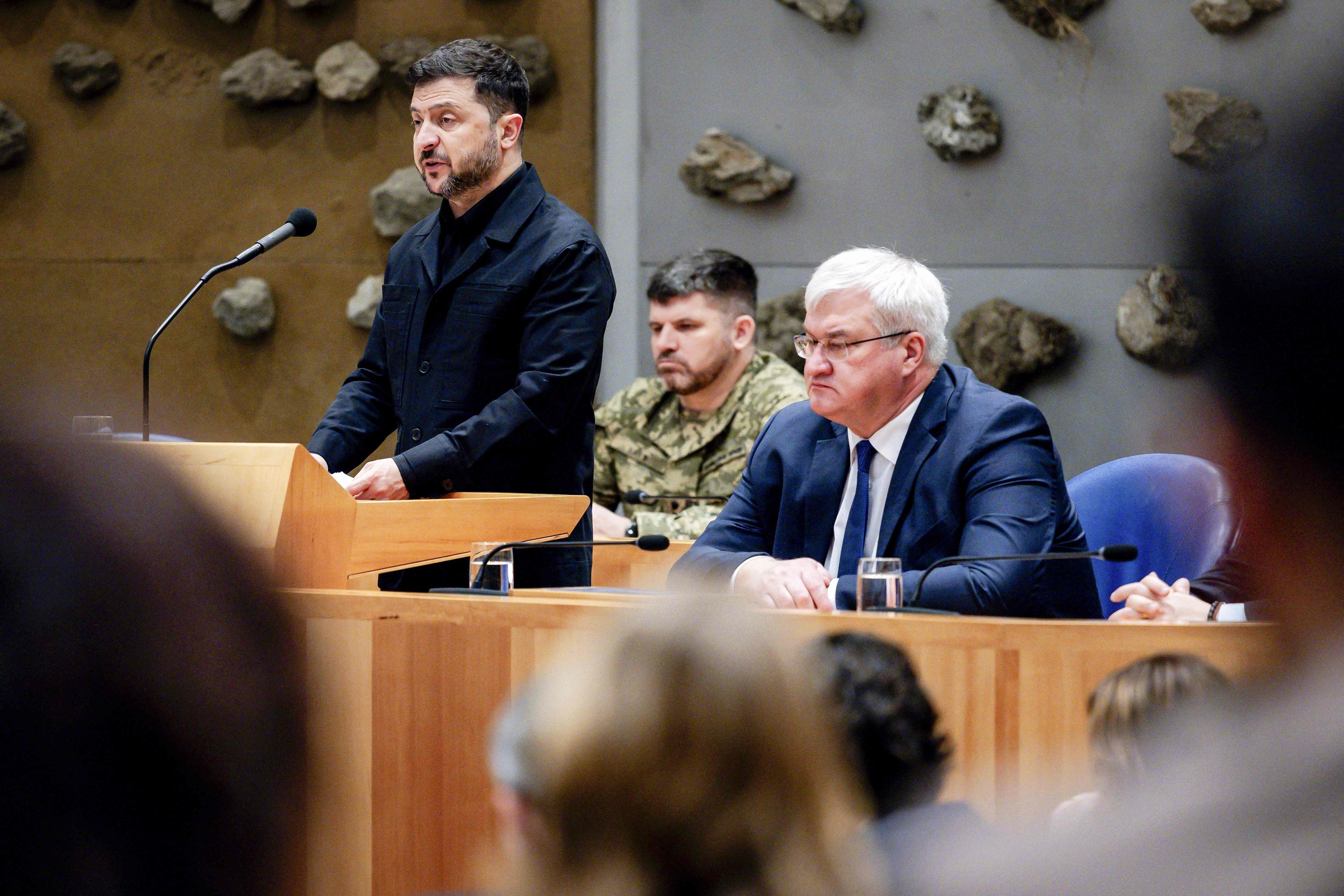
Ukrainian President Volodymyr Zelenskyy traveled to Berlin to negotiate his country’s position with U.S. special envoys Steve Witkoff and Jared Kushner, and European leaders. Ahead of the talks, Zelenskyy stated that “in exchange for security guarantees from the West, Ukraine has abandoned its goal of joining the NATO military alliance.”
This step amounts to an acknowledgment of one of Russia’s justifications for launching the war. It also represents a difficult turning point for Ukraine, as NATO membership had been an objective enshrined in the Ukrainian Constitution. During the negotiations, the United States and several European countries had openly stated that Kyiv would need to relinquish its NATO membership goal.
In this new position, Ukraine is demanding that security guarantees be legally binding and supported by the U.S. Congress. Germany, France, the United Kingdom and some Eastern European countries are likely to be willing to provide such guarantees. German Chancellor Merz, who is leading Europe’s efforts, believes that Putin would not stop if Ukraine were to fall.
It will not be easy for Europe to reach an internal consensus on what these security guarantees would entail or how they would be financed. The fact that the European Union has failed for years to reach concrete outcomes on a common defense and security policy provides sufficient indication of this difficulty. During the Trump era, disagreements between the U.S. and Europe deepened, and the West’s weakened ability to act collectively in the Ukraine-Russia war has become clearly evident. Therefore, the demand for security guarantees backed by the U.S. Congress will not be easy to fulfill. Ultimately, however, in order to bring the peace negotiations to a swift conclusion, security guarantees are likely to be agreed upon in a general framework and left deliberately ambiguous through forward-looking commitments.
A critical threshold toward ending the war may soon be crossed. Trump has expressed discomfort with prolonged and repeated meetings. Russia continues to maintain its advantageous position at the negotiating table by increasing military pressure on the ground. Ukraine’s military and financial capacity remains dependent on Western support. With its energy infrastructure damaged, the Ukrainian population is struggling to get through the winter.
Even if the Zelenskyy administration agrees to a deal, it is likely to seek public approval through a referendum. In fact, both Trump and Putin want elections to be held in Ukraine. As a result, a referendum and elections could be conducted simultaneously. Should a new administration come to power as a result of the elections, new realities would emerge. In a country weakened by war, elections could even result in chaos and fragmentation.