Daily Sabah logo

Politics
Diplomacy Legislation War On Terror EU Affairs Elections News Analysis
TÜRKİYE
Istanbul Education Investigations Minorities Expat Corner Diaspora
World
Mid-East Europe Americas Asia Pacific Africa Syrian Crisis Islamophobia
Business
Automotive Economy Energy Finance Tourism Tech Defense Transportation News Analysis
Lifestyle
Health Environment Travel Food Fashion Science Religion History Feature Expat Corner
Arts
Cinema Music Events Portrait Reviews Performing Arts
Sports
Football Basketball Motorsports Tennis
Opinion
Columns Op-Ed Reader's Corner Editorial
PHOTO GALLERY
JOBS ABOUT US RSS PRIVACY CONTACT US
© Turkuvaz Haberleşme ve Yayıncılık 2025

Daily Sabah - Latest & Breaking News from Turkey | Istanbul

  • Politics
    • Diplomacy
    • Legislation
    • War On Terror
    • EU Affairs
    • Elections
    • News Analysis
  • TÜRKİYE
    • Istanbul
    • Education
    • Investigations
    • Minorities
    • Expat Corner
    • Diaspora
  • World
    • Mid-East
    • Europe
    • Americas
    • Asia Pacific
    • Africa
    • Syrian Crisis
    • Islamophobia
  • Business
    • Automotive
    • Economy
    • Energy
    • Finance
    • Tourism
    • Tech
    • Defense
    • Transportation
    • News Analysis
  • Lifestyle
    • Health
    • Environment
    • Travel
    • Food
    • Fashion
    • Science
    • Religion
    • History
    • Feature
    • Expat Corner
  • Arts
    • Cinema
    • Music
    • Events
    • Portrait
    • Reviews
    • Performing Arts
  • Sports
    • Football
    • Basketball
    • Motorsports
    • Tennis
  • Gallery
  • Opinion
    • Columns
    • Op-Ed
    • Reader's Corner
    • Editorial
  • TV
  • Opinion
  • Columns
  • Op-Ed
  • Reader's Corner
  • Editorial

Political and social cooperation among Turkic countries

by İhsan Aktaş

Jan 08, 2022 - 12:05 am GMT+3
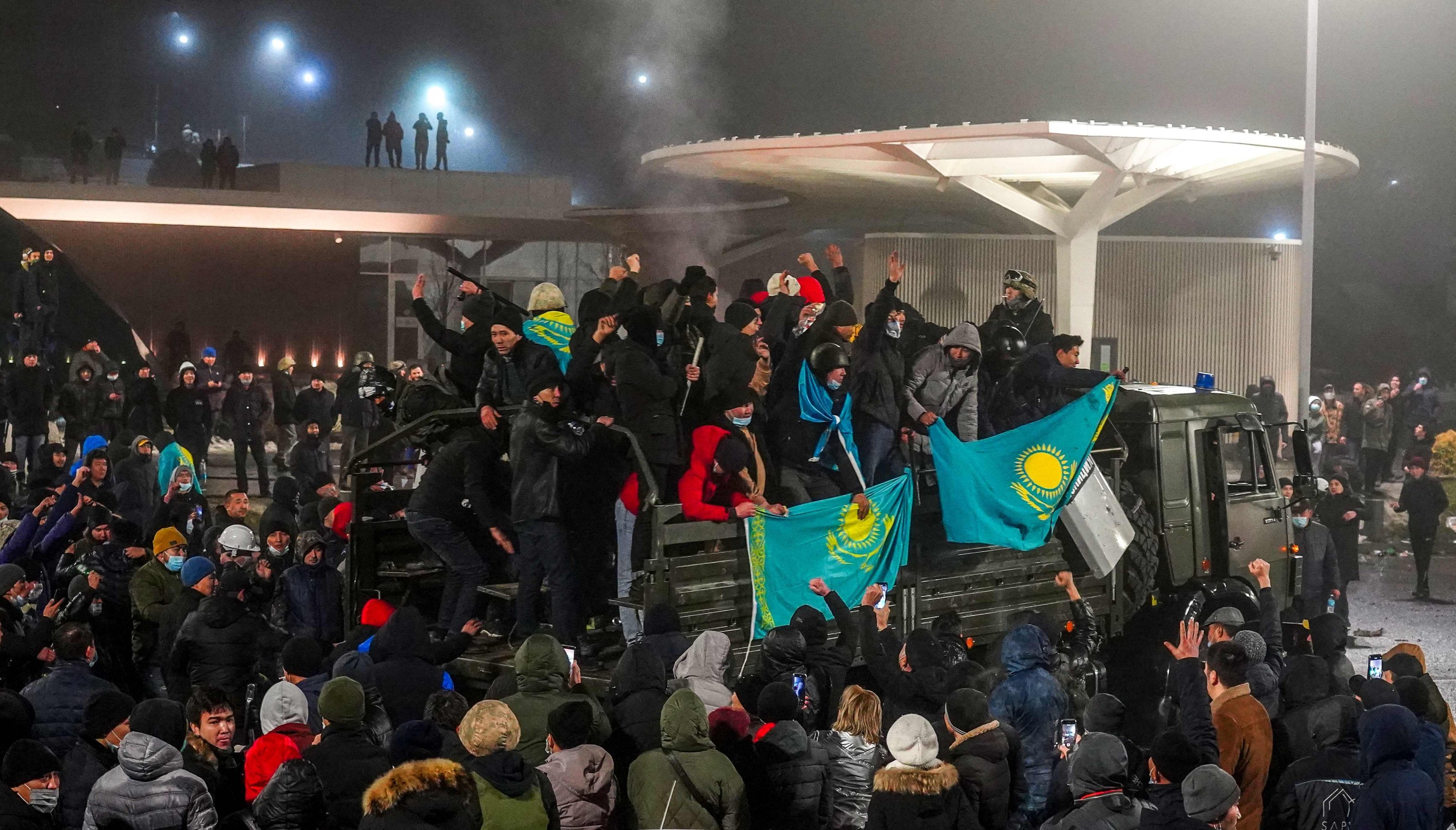
Protesters take part in a rally over a hike in energy prices in Almaty, Kazakhstan, Jan. 5, 2022. (AFP Photo)
by İhsan Aktaş Jan 08, 2022 12:05 am

Since the end of the Cold War, international politics have experienced heavy turbulence as individual states come face to face with unprecedented challenges. One of these regional challenges was the eruption of revolts in Arab countries. The so-called Arab Spring, which began as a movement of democracy, soon turned into regional chaos, dragging countries such Syria, Yemen and Egypt into political upheaval through civil wars and coup d’etats.

Even though the bipolar balance of power of the Cold War was replaced with the unipolar world order of the U.S., the U.S.' international hegemony was challenged by not only Russian military power but also Chinese economic power. In Syria, Georgia and Ukraine, Russia has reemerged as a military superpower, imposing its terms on other global actors. Apart from the rivalry between the U.S. and Russia, new players have come to the world stage. In addition to the dominance of China in the world economy, India, Indonesia, Turkey, Iran and Pakistan have become regional powers, while leading European countries have lost their significance in international politics. This proliferation of key players in the international arena created a multipolar balance of power, which in turn created a chaotic international system.

The Kazakhstan story

Being a large Turkic country, Kazakhstan is seeing unexpected political turmoil. Until the eruption of these protests, Kazakhstan appeared to be a successful state with a strong state tradition, a working social welfare system and vast economic resources. Kazakhstan also had a democratic goal of uniting different faiths and ethnicities under one banner. This political turmoil demonstrated once again that the Turkic states should establish regional solidarity and cooperation among themselves.

In the post-Cold War era, Turkey faces the disintegration of traditional alliances. In pursuit of Ankara’s regional interests, President Recep Tayyip Erdoğan did not abstain from using Turkey’s hard power in the Middle East, the Eastern Mediterranean and the Caucasus. Adopting a multidimensional and multilateral foreign policy, Turkey has emerged as a regional power.

Following its hard-won victories in the international arena, Ankara has begun to reorganize its relations with global and regional powers. The country succeeded in passing through this chaotic period thanks to its strong state structure, army and economy. Under the strong leadership of Erdoğan, Turkey is currently revitalizing its relations with the U.S., the EU, Saudi Arabia, the United Arab Emirates (UAE), Egypt and Armenia.

Turkic world and Turkey

In 2009, the Organization of Turkic States was founded as a regional alliance among Turkic countries. Inspired by the success of Turkey and Azerbaijan in the Nagorno-Karabakh war, this organization is vital in terms of forming international solidarity and cooperation among Turkic countries.

In order to achieve this goal, the Turkic states should establish a social network among themselves through the bonds of civil society. Despite its success in resolving the individual challenges that it faces in international politics, Turkey should revitalize its regional cooperation with other Turkic states.

To pass through the chaotic post-Cold War era, the states should strengthen the political, social and economic bonds among themselves. Having emerged as a regional player, Turkey should take the lead in establishing enduring and sustainable cooperation among the Turkic countries. As principal European powers continue to withdraw from the international arena, Turkey should fill the void by addressing the regional challenges in not only the Middle East and the Eastern Mediterranean, but also the Caucasus and Central Asia.


About the author
İhsan Aktaş is Chairman of the Board of GENAR Research Company. He is an academic at the Department of Communication at Istanbul Medipol University.
  • shortlink copied
  • KEYWORDS
    turkic world kazakhstan protest turkish foreign policy recep tayyip erdoğan world politics organization of turkic states
    The Daily Sabah Newsletter
    Keep up to date with what’s happening in Turkey, it’s region and the world.
    You can unsubscribe at any time. By signing up you are agreeing to our Terms of Use and Privacy Policy. This site is protected by reCAPTCHA and the Google Privacy Policy and Terms of Service apply.
    No Image
    New York City to stop homeless people staying on subways
    PHOTOGALLERY
    • POLITICS
    • Diplomacy
    • Legislation
    • War On Terror
    • EU Affairs
    • News Analysis
    • TÜRKİYE
    • Istanbul
    • Education
    • Investigations
    • Minorities
    • Diaspora
    • World
    • Mid-East
    • Europe
    • Americas
    • Asia Pacific
    • Africa
    • Syrian Crisis
    • İslamophobia
    • Business
    • Automotive
    • Economy
    • Energy
    • Finance
    • Tourism
    • Tech
    • Defense
    • Transportation
    • News Analysis
    • Lifestyle
    • Health
    • Environment
    • Travel
    • Food
    • Fashion
    • Science
    • Religion
    • History
    • Feature
    • Expat Corner
    • Arts
    • Cinema
    • Music
    • Events
    • Portrait
    • Performing Arts
    • Reviews
    • Sports
    • Football
    • Basketball
    • Motorsports
    • Tennis
    • Opinion
    • Columns
    • Op-Ed
    • Reader's Corner
    • Editorial
    • Photo gallery
    • DS TV
    • Jobs
    • privacy
    • about us
    • contact us
    • RSS
    © Turkuvaz Haberleşme ve Yayıncılık 2021