The use of power has been at the core of international politics for several millennia. Stronger states invaded the weaker states without hesitation or any legal restrictions. Throughout the pre-modern era, many weaker states were subordinated to the stronger ones. Hierarchy was one of the fundamental norms of international politics.
However, with the beginning of the modern era, sovereignty emerged as one of the basic institutions determining the main characteristics of states. It has been the essential feature of the anarchical structure of the modern world system, namely, the nation-state system.
It is overall claimed that the declining world system was established by the two important developments in the Western world, namely the Westphalian Peace Treaty signed in 1648 and the French Revolution of 1789. For centuries, the Westphalian Temple, which had been representing the spirit of international anarchy, established an inviolable and unbreakable rule. This principle was later consolidated and formalized by the United Nations.
The collapse of the Soviet Union and the declining American hegemony forced the great powers to initiate a new global rivalry, which brought back the use of force and undermined the basic norms and principles of the international system. When the rules of the international system were violated by the founders of the system, namely the Western states, other states, including non-Western states, began to violate them as well.
The United States began taking unilateral steps in its foreign policy, and this weakened not only the role of its rivals but also the influence of its allies. Thus, it lost the trust of even his allies. The most significant developments demonstrating the weakening and irrelevance of the norms and rules of the international system have taken place in the Middle East. Then, the Israeli regional policies occupy the center of this understanding. When the Western global powers gave an open check to Israel to commit the Gaza genocide, they disregarded all the rules of the modern system. There is not a single rule left unbroken by Israel and its Western supporters.
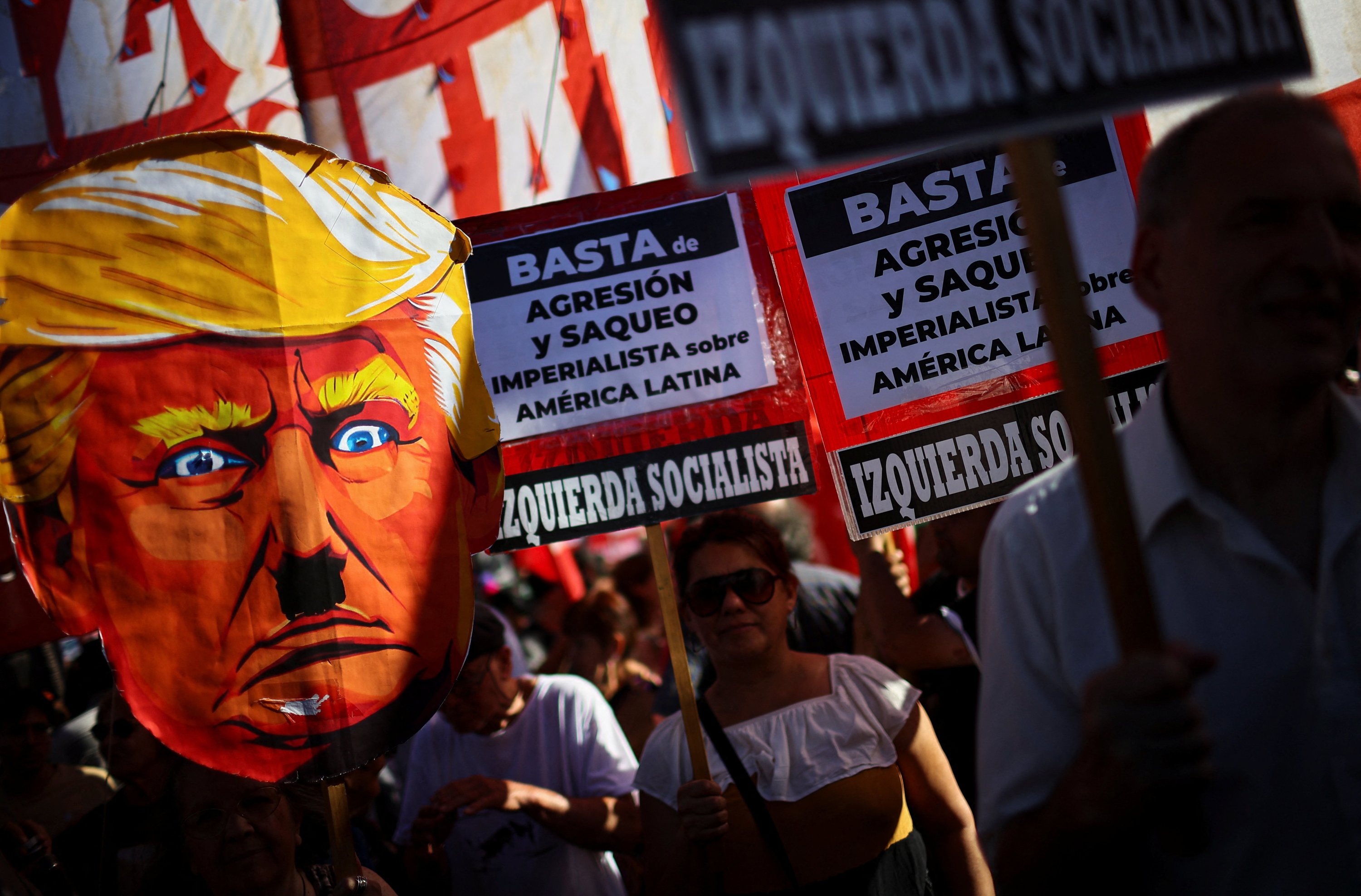
Most observers have been considering the Palestinian and Israeli events to be exceptions. However, the most recent developments in Venezuela have shown us that the Palestinian and Israeli events are not exceptions. Any state in the world can be targeted by a powerful state. No state is immune to military intervention by a global power, especially that of the most powerful one, the U.S.
The reactions of the international community to the U.S. intervention in Venezuela can be classified into three groups. The first group, some small states, has criticized the U.S. intervention in Venezuela. The second group largely remained silent. The third group of states, mainly Western European states and Ukraine, directly or indirectly welcomed it.
It seems to me that a well-known Anatolian story explains the interventionist and unilateral policies of the U.S. and some other regional and global powers and the reactions of those who remain indifferent to these policies, the best.
Once upon a time, there lived a lion pride and a herd of cows in the same region. The lion pride had its eyes on the cow herd, but the cow herd was large and strong enough to defend itself. The lions were exhausted from hunger. They thought and pondered; the herd was large and strong, and if they attacked, they were sure to face resistance. They were looking for ways to satisfy their hunger without any effort or energy.
Then one day, they talked and agreed among themselves and sent an envoy to the herd of cows. The envoy said: “You know what will happen if we attack you. We will surely take one of you and eat it; you cannot prevent this. Come, don’t bother yourselves or us. One of you has a very yellow color, different from the rest of you, and it catches our eye. If you give it to us, we will take it and leave without attacking you, and we will never return. After that, we will live together peacefully.”
The cows thought and pondered, and asked the wise cow, “No,” said the wise cow, “don’t give any of us away.” But the lions insisted. Finally, the cows agreed, thinking that if they attacked, one of them would be lost anyway, and they would all get tired. So, they said, “Okay, what harm can one cow do? We are a large herd; nothing will happen to us.” They gave away the yellow cow, and the lions happily ate it, satisfying their hunger and feeling refreshed.
A few days later, the lions were hungry again, and their messenger came to the cows once more with a similar excuse, demanding another sacrifice: “There’s a cow with a broken horn among you, it’s getting on our nerves, give it to us, don’t cause trouble for yourselves or us,” it said. The peace-loving cows gave a second concession, and that cow was given away. Now that they had learned the ropes, the lions took the cows one by one from the herd: the spotted cow, the cow with the short tail, this cow, that cow.
The practice of sacrificing in the name of “best interests” reached such a point that the herd shrank and eventually became completely prey to the lions. Then, the lions began to attack openly, taking whichever cow they wanted from the herd and eating it.
At that last moment, the herd leaders, who thought they could escape by constantly sacrificing to the lions, ran back to the wise cow, and she asked, “What is happening? What have we done wrong? At this rate, our herd will be destroyed!” they cried. The wise cow replied, “You made the mistake when you gave away the yellow cow.”
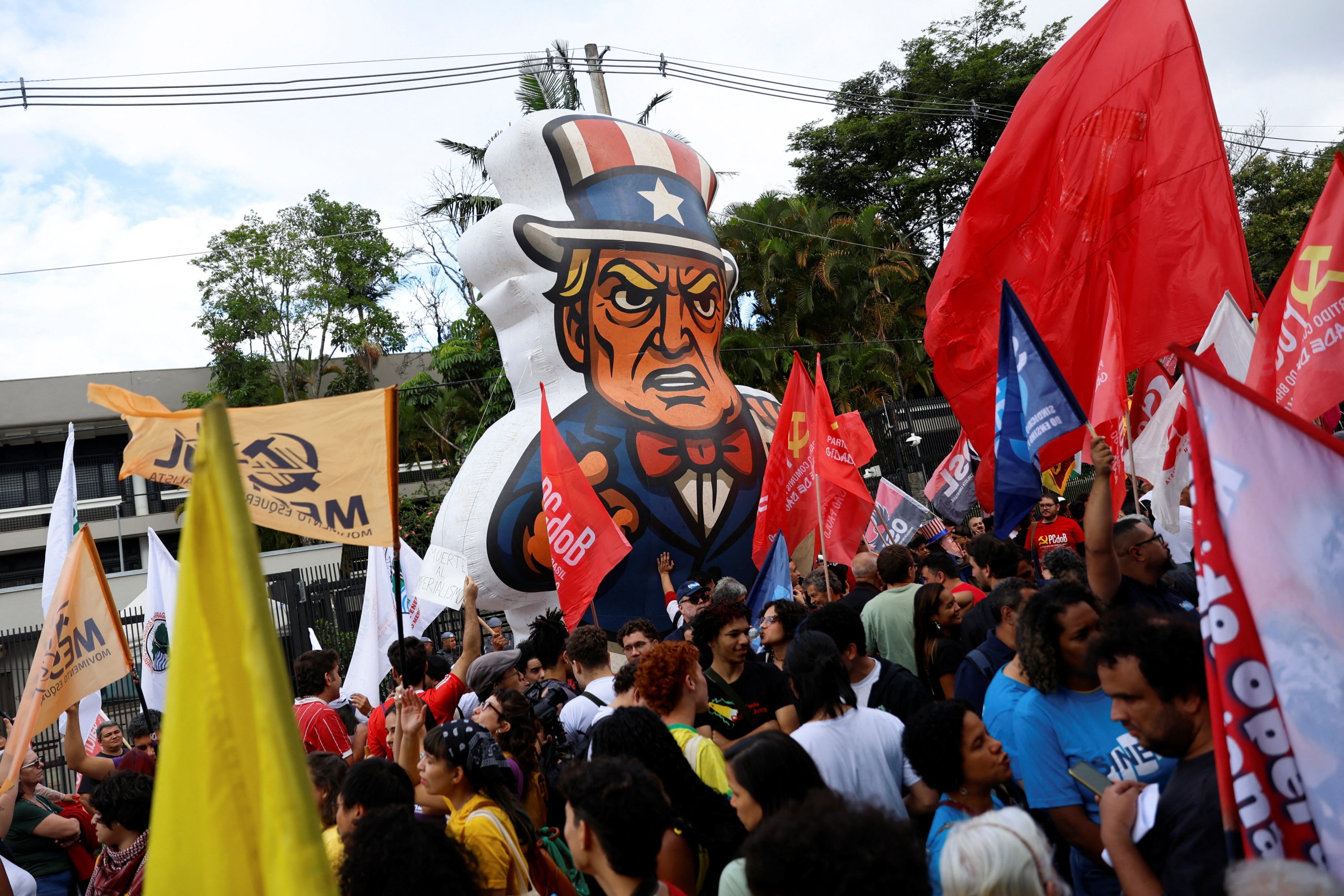
The “yellow cow” is Palestine. Most countries either support or remain indifferent to Israel’s aggressive policies towards the Palestinians. Western countries have been justifying all violations of human rights. Officials of Western countries have repeatedly declared that any building, including schools and hospitals, can be targeted for the security of Israel. No Western state criticized the U.S. government when it declared that “it recognized the annexation of the Golan Heights” as belonging to Syria. When the international community remained silent to the occupation of Palestine, Lebanon and Syria by Israel, they directly and indirectly abandoned the basic rules of the international system, which would prevent them from aggression as well.
But let us not forget that when the international community and other states remain indifferent to the occupation of a state by another one and violations of the basic rules and norms of the international system, sooner or later, other states will also suffer the same fate. For example, the Western European countries that did not react to the U.S. intervention into Venezuela will get no support from the international community when the same U.S. attempted to claim that the Greenland island belongs to Denmark. Similarly, the U.S. may see it necessary to take control of the natural resources of Canada.
Similarly, China might want to repeat the same to control Taiwan or Russia to control Ukraine, Georgia or any other former Soviet republic. Small states and middle powers must come together and form regional alliances against similar moves by some other global power. It is weird seeing weak states supporting this old rule implemented by the global powers. Especially, the reaction of Ukrainian President Volodymyr Zelenskyy, who supported Israel’s occupation of Palestine and the U.S. intervention in Venezuela, was interesting. In other words, this rule applies to every country, and each weak state will wait for its turn to come. Let us not forget that law is the greatest weapon of the weak. Therefore, irrespective of their foreign policy orientation, all small and weak states must unite against the violations of basic rules and norms of the international system.