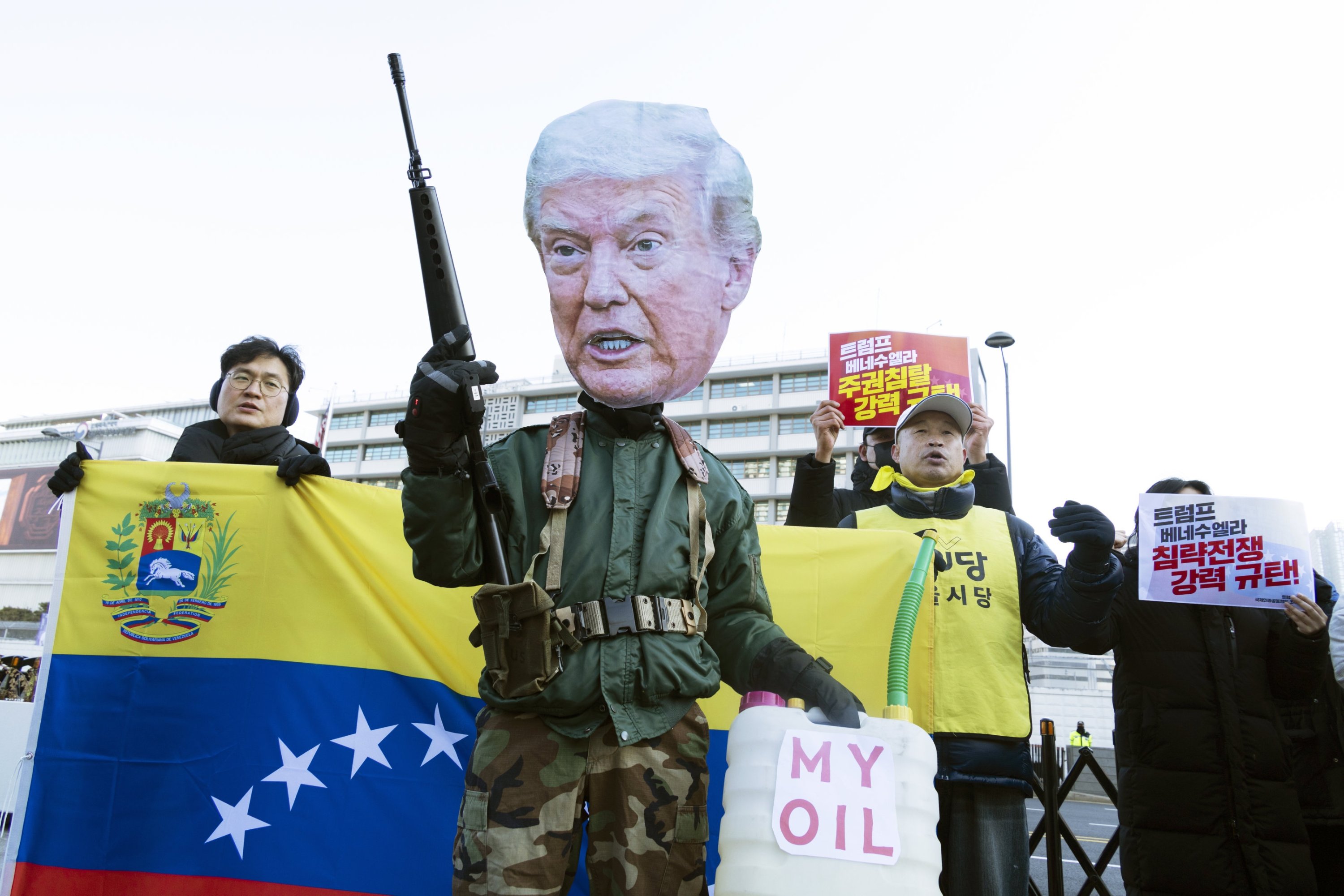
When the Trump administration ordered strikes against Venezuela, it reignited a century-old debate: Is the United States still willing to use military power to protect its energy dominance? Once again, the pattern feels familiar. The official narrative speaks of “narcotics” and “organized crime,” yet history from Iraq to Iran tells us the real motive is almost always oil.
According to the U.S. Energy Information Administration, Venezuela holds over 303 billion barrels of proven crude reserves, more than Iraq and roughly one-fifth of the world’s total. It’s the largest single oil deposit on Earth: a geological gift that has become a political curse. As U.S. President Donald Trump declared after Venezuelan President Nicholas Maduro’s capture on Jan. 3, 2026, “American oil companies will operate in Venezuela and restart the refining process.” That single line revealed the truth. This was about pulling Venezuela’s oil back into the U.S.-led energy orbit.
In the 1920s, Venezuela was still a predominantly rural nation, with a strong focus on farming. Then came oil. Within a decade, petroleum did not just fuel the economy; it built the state itself. Oil reshaped everything: politics, class structures, even Venezuela’s national identity.
During the 1973 Arab oil embargo and the 1979 Iranian Revolution, prices skyrocketed. As a member of OPEC, Venezuela cut production to benefit from high prices. The country became rich, but dangerously dependent. By the 1980s, nearly 90% of export earnings came from oil. Agriculture, manufacturing and education were left behind. Oil was no longer just an asset; it was the lifeline and the trap.
In this picture, the U.S. has a complicated, often dark impact on Latin America, a region it has long treated as its strategic backyard. From the 1954 coup in Guatemala to the 1973 overthrow of Chile’s Salvador Allende, Washington’s interventions followed a familiar playbook: political destabilization wrapped in the language of democracy or anti-communism, followed by privileged access to resources.
Venezuela fits that template. The rhetoric has changed, but the method has not. Officially, the 2026 strikes were about “criminal networks.” In reality, the U.S. sought to reclaim influence over the hemisphere’s largest oil reserves, just as global energy markets enter a historic period of transition.
The post-pandemic decade has been defined by energy competition. Renewable power is growing fast, yet oil remains the backbone of the world economy, especially in aviation, heavy industry and petrochemicals. In 2026, with global demand back near 104 million barrels per day, securing a stable and politically compliant supply is still a U.S. priority.
Meanwhile, Russia and China deepened their footholds in Venezuela. Beijing financed Caracas through oil-for-loan deals, while Iran provided technology to refine Venezuela’s heavy tar-like crude. Together, these partnerships helped Venezuela bypass sanctions. Until now.
Washington’s intervention sends a clear signal: it’s a pushback against the Beijing-Moscow-Tehran energy axis, which threatens America’s control over global hydrocarbon flows. The Orinoco Belt, which is Venezuela’s vast heavy-oil basin, is not just a resource; it’s a lever in the geopolitics of OPEC and oil pricing.
When oil prices crashed in the mid-2010s, Venezuela’s economy imploded. Instead of diversifying, the government printed money to fund social programs. The result was one of the world’s worst hyperinflation crises. Production collapsed from 3 million barrels per day in 1998 to barely 700,000 in 2023.
Maduro’s government turned to China, Russia and Iran for financial and technical lifelines, trading sovereignty for survival. For Washington, this dependency became the perfect justification: another intervention framed as “regional stabilization,” but driven by familiar energy logic.
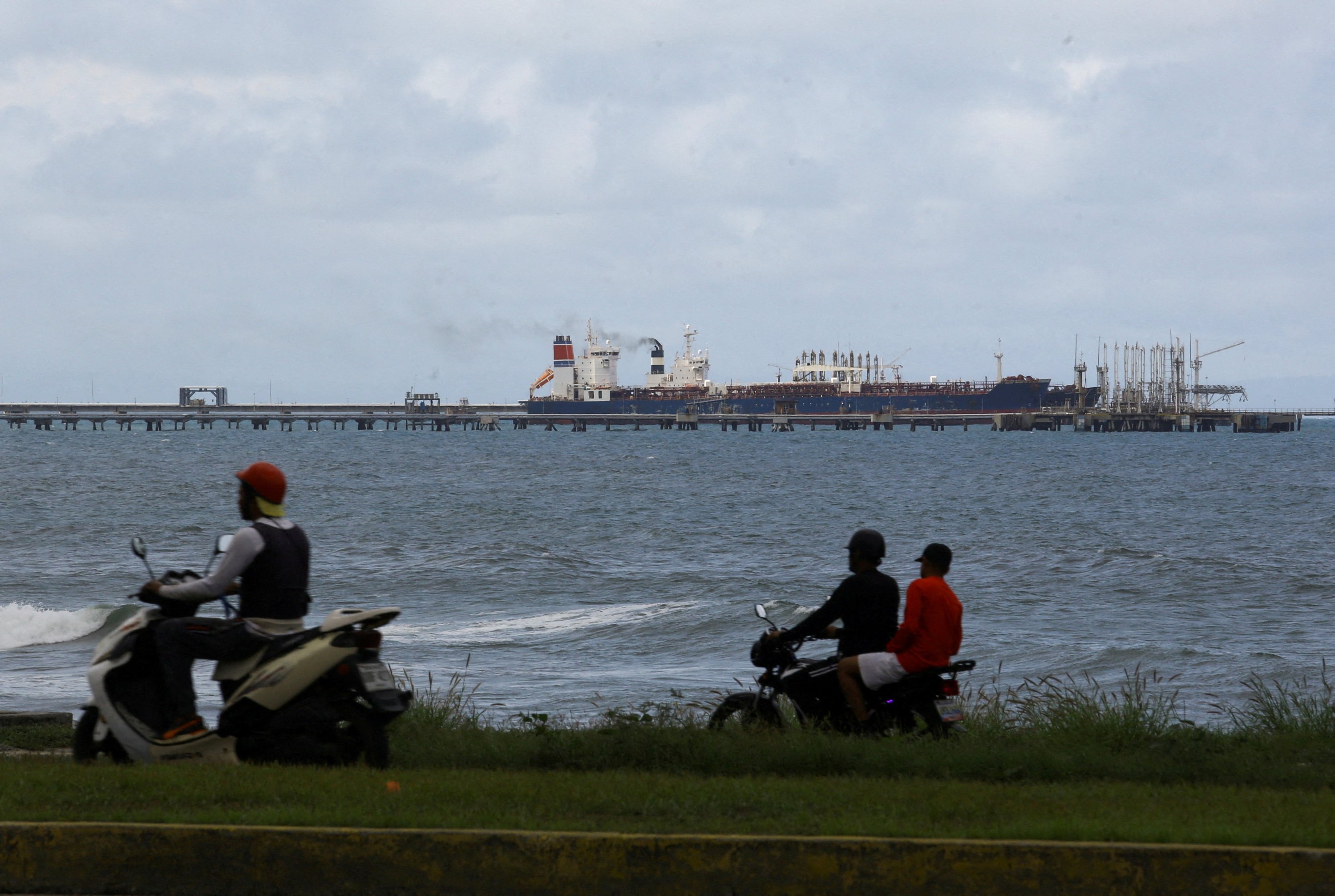
The parallels are hard to miss. In Iraq (2003), the U.S. justified the invasion through “weapons of mass destruction.” In Iran, “terrorist sponsorship” has long been the pretext for sanctions and covert action. Now in Venezuela, the vocabulary has shifted to “narcotics and corruption.” The narrative changes, but the strategy does not.
Each campaign follows the same pattern: delegitimize the target, moralize the motive and ensure American firms regain access to energy assets once the dust settles.
What’s unfolding in 2026 is not just a military maneuver; it is the reassertion of energy colonialism under a new label. The world may talk about “green transitions” and “net-zero goals,” but fossil fuel geopolitics remain alive and ruthless. The scramble for control over remaining reserves is intensifying, not fading.
Trump’s statement, “U.S. oil firms will head into Venezuela,” stripped away any remaining pretense. It exposed the underlying truth: as long as oil powers the global economy, energy will continue to define the boundaries of sovereignty.
For Venezuela, the road forward looks bleak. Integrating into the American energy sphere may bring short-term relief, but it risks repeating the same dependency that has haunted the nation for a century. Unless future leaders diversify the economy and build transparent institutions, Venezuela may once again become a story of resource wealth without prosperity.
The larger lesson is universal. From Iraq to Iran to Venezuela, the same logic repeats: energy security dressed up as moral intervention. In today’s multipolar world, oil remains both an economic necessity and a geopolitical weapon.
Until renewables truly displace fossil fuels, oil will keep shaping wars, breaking governments and redrawing alliances.
And for now, in 2026, the age of oil imperialism is far from over.