Twenty-four days into the United States-Israeli military campaign against Iran, the most consequential strategic shift is not happening in Tehran. It is happening across the Arabian Gulf, in Riyadh, Abu Dhabi, Dubai and Doha. What began as a war of choice, designed in Washington and Tel Aviv to neutralize Iran’s nuclear and military capabilities, is generating a consequence neither power appears to have seriously calculated: the progressive transformation of Gulf states from bystanders into battlefields. This is the Gulfization of war. It is not a finished condition. It is an accelerating trajectory heading toward a tipping point, and it is unfolding across four mutually reinforcing levels.
The primary driver of Gulf insecurity is not Iran alone. The aggression that set this dynamic in motion was a U.S.-Israeli military campaign launched without a coherent exit strategy, without a political roadmap for what would follow, and without meaningful consultation with the very states now bearing its consequences. Washington has conducted military action without strategic planning. The Gulf states, while its strategic partners, are being treated as collateral.
The geographic scope of Iranian retaliation is, by any historical measure, without precedent. For the first time, all six Gulf Cooperation Council (GCC) member states were targeted by the same actor within a single 24-hour period. That opening barrage established a new baseline that has not relented since.
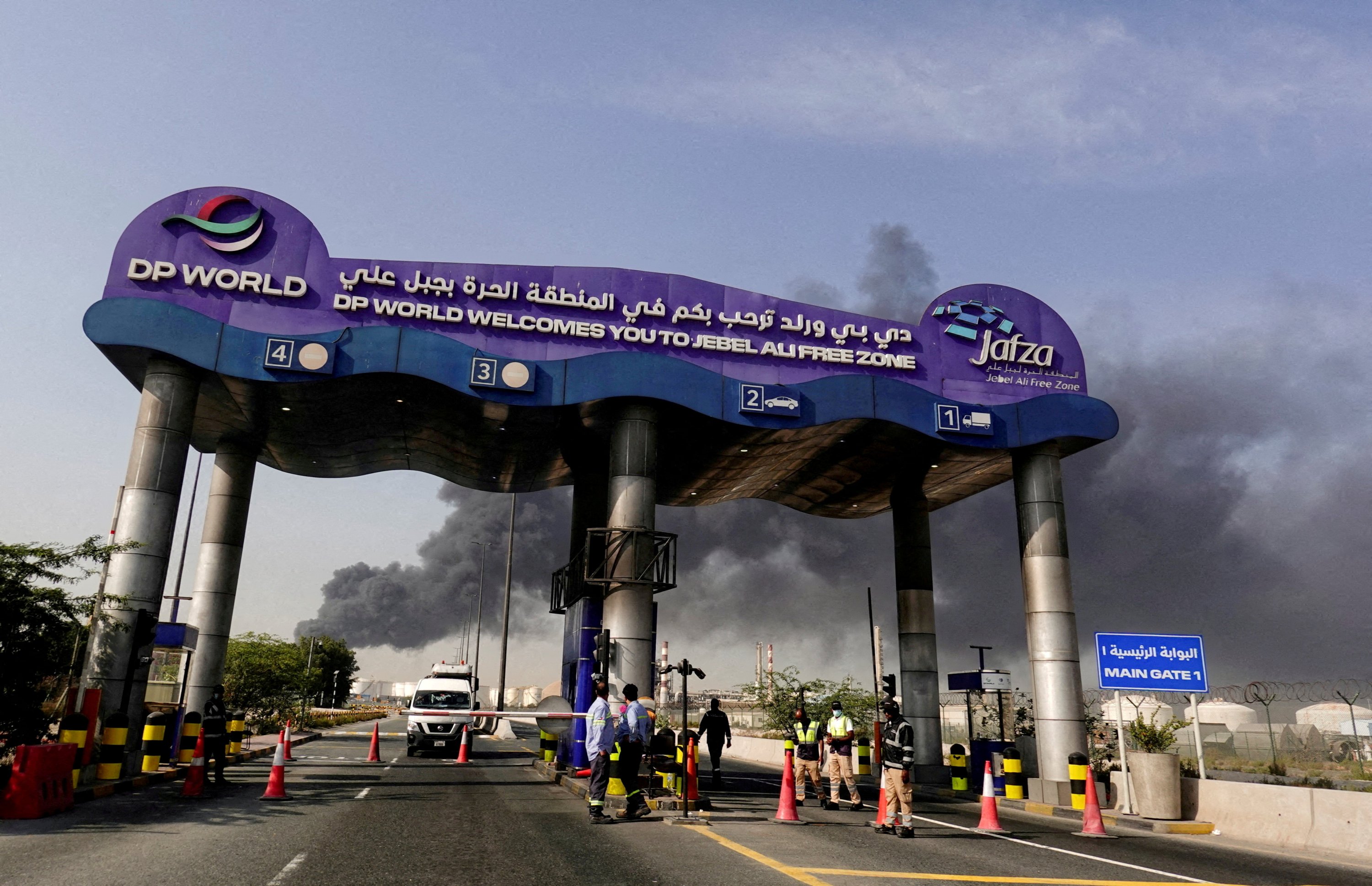
The United Arab Emirates has borne the heaviest burden. Since Feb. 28, Iran has fired several hundred ballistic missiles, more than a thousand drones, and a significant number of cruise missiles at Emirati territory. The overwhelming majority were intercepted, but the volume and persistence of the campaign have inflicted real damage. Dubai International Airport has been struck and temporarily closed multiple times. The Ruwais refinery in Abu Dhabi was shut down after a drone strike caused a fire. Jebel Ali Port, the commercial artery of the emirate, has been repeatedly disrupted.
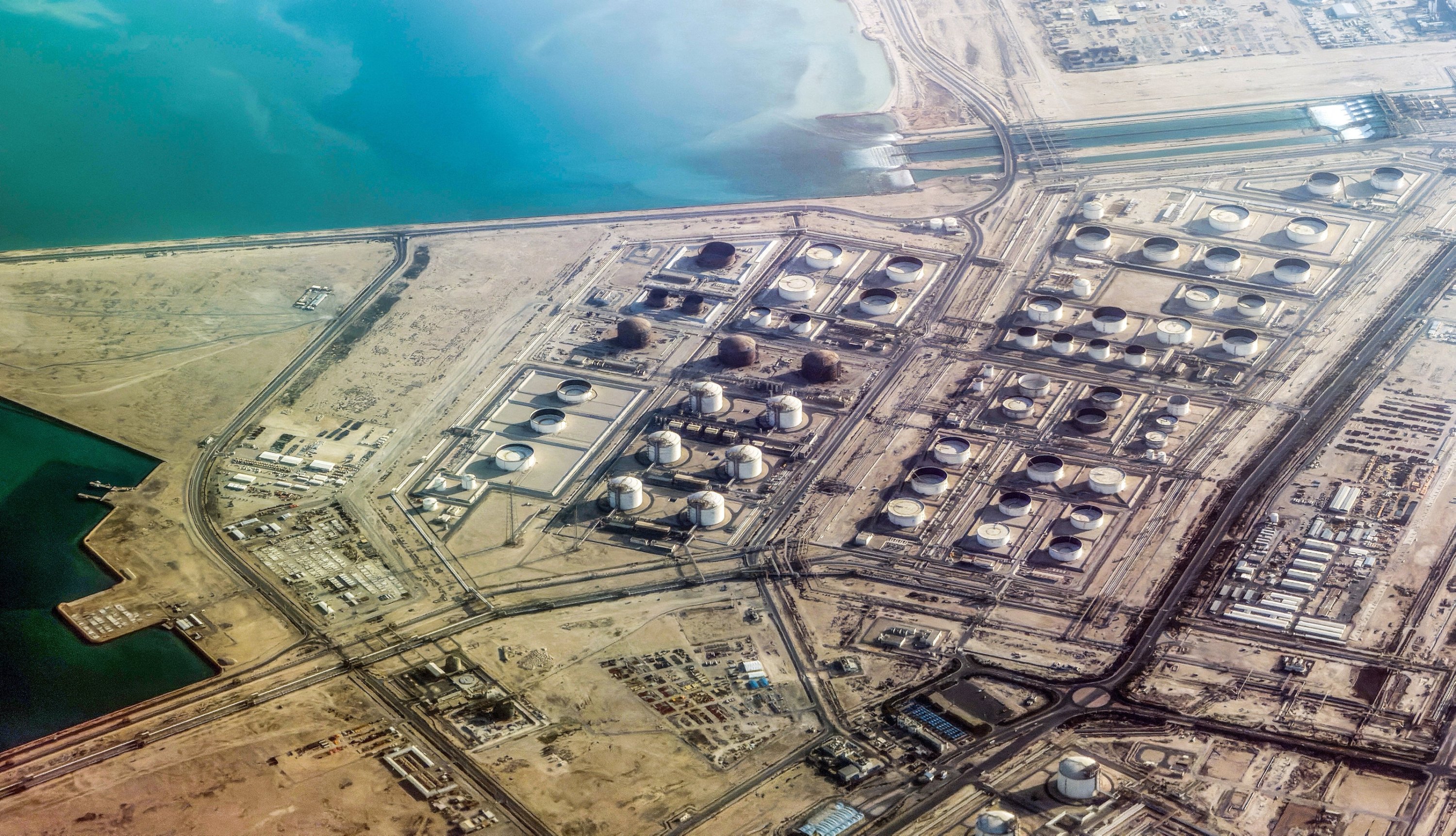
Qatar has experienced a qualitatively different shock. Doha had maintained one of the most carefully managed relationships with Tehran in the Gulf, built on decades of back-channel engagement and shared gas field management. That relationship has now collapsed. Iran has fired scores of ballistic missiles, cruise missiles and drones at Qatari territory. The Ras Laffan industrial city and Mesaieed complex, which together produce the vast majority of Qatar’s liquified natural gas (LNG), were struck. QatarEnergy declared force majeure on its supply contracts. Qatar’s prime minister described the attacks as a deep betrayal.
Saudi Arabia has faced a sustained campaign targeting its most critical energy and military infrastructure. Iranian drones and missiles have repeatedly struck the Shaybah oil field, the Ras Tanura refinery, and Prince Sultan Air Base. Riyadh’s airspace has been breached multiple times. Saudi Arabia has activated emergency interceptor agreements and warned that continued aggression will carry the heaviest strategic consequences. Bahrain, Kuwait and Oman have also absorbed strikes across military installations, refineries, and port infrastructure. The Strait of Hormuz remains functionally closed, with roughly one hundred and 50 freight vessels paralyzed. The geographic cost is intensifying not because of Gulf decisions but because of escalation dynamics driven entirely by a war the Gulf neither declared nor designed.
The Gulf’s great strategic achievement of the past two decades has been economic. Dubai is a global logistics, tourism and finance hub. Qatar is the world’s dominant LNG supplier. Saudi Arabia is a destination for foreign investment under Vision 2030. This architecture is not merely a source of wealth. It is the primary instrument through which Gulf states project influence and maintain domestic legitimacy. The war is dismantling it systematically.
For Qatar, the shutdown of Ras Laffan directly assaults its economic foundation. Supplying roughly 40% of the world’s helium and leading global LNG exports, the halt of production sent European natural gas futures surging more than 40%. The Qatari model of using energy revenues to fund sovereign wealth, regional diplomacy and development has been placed in acute jeopardy. For Saudi Arabia, Vision 2030 depends on investment stability and a predictable revenue base. Sustained targeting of energy infrastructure injects fiscal uncertainty that paradoxically damages even an oil producer, spooking foreign capital and disrupting the non-oil sectors Riyadh has spent years cultivating.
The UAE’s case is most revealing. Dubai’s entire model depends on a single intangible: the perception of safety. Tourism bookings collapsed dramatically in the opening weeks of the war. The airport has suspended commercial operations multiple times. Real estate corrections are already being projected by major ratings agencies. The World Travel and Tourism Council estimated the conflict was costing the Gulf hundreds of millions of dollars per day in lost visitor spending, with tens of thousands of flights canceled and projected visitor losses running into tens of billions of dollars.
The military dimension of Gulfization of the war is structural. The foundational premise of Gulf security for decades was that hosting U.S. military bases purchased immunity. The presence of the Fifth Fleet in Bahrain, U.S. Central Command assets at Al Udeid, and major installations across Saudi Arabia and Kuwait was assumed to deter Iran from ever striking GCC territory directly. That premise has been demolished.
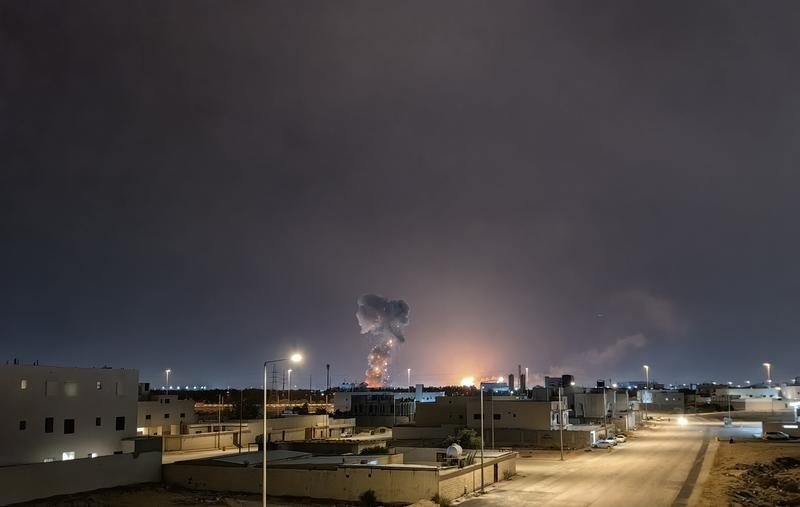
Iranian strikes have reached Bahrain, Al Udeid, Prince Sultan Air Base, Camp Buehring and Al Dhafra. The bases have not protected host states. They have made them targets. Gulf air defense networks have intercepted the large majority of incoming projectiles through layered Patriot, Terminal High Altitude Area Defense (THAAD), and short-range systems, but saturation attack doctrine exploits a critical structural vulnerability: interceptor stockpiles are finite. Iran’s strategy is not to defeat Gulf air defenses in a single engagement but to exhaust them through persistent, high-volume launches across multiple vectors simultaneously.
Within this military picture, one distinction is crucial. Among the GCC states, only Saudi Arabia possesses a genuinely credible and deterrent military capacity in the event this conflict escalates into a direct mutual confrontation between Iran and the Gulf. The Royal Saudi Air Force operates advanced strike aircraft with long-range capability and pilot experience drawn from the Yemen campaign. Saudi ballistic missile defense is the deepest in the region. Its ground forces are structured for conventional combined-arms operations at a scale no other Gulf military can match.
If the Gulfization of war accelerates toward direct interstate confrontation, Saudi Arabia is the only GCC state whose military posture could constitute a meaningful deterrent. For Bahrain, Kuwait, Qatar and the UAE, the military reality is one of dependence: on American systems, American interceptors, and ultimately American political will, the same political will that produced this crisis in the first place.
It is precisely this military asymmetry that gives the current moment its most dangerous potential. Turkish Foreign Minister Hakan Fidan has warned that any direct military retaliation by Gulf states against Iran would certainly transform this conflict into a full Gulf war. That warning deserves to be read not as commentary but as strategic diagnosis. A Gulf war, in that full sense, would not be a contained exchange between two state militaries. It would be a regional conflagration drawing in the world’s most critical energy arteries, the global LNG supply chain, and the military assets of every external power with stakes in the outcome. The road to that outcome is being paved, day by day, by a U.S.-Israeli campaign that has given the Gulf states every reason to retaliate and no institutional framework within which to exercise restraint.
The fourth level is the most difficult to measure and the most historically significant. It concerns the collective Gulf security identity, the shared understanding built across the GCC states over two generations that this region occupied a protected position in an otherwise turbulent Middle East.
That collective identity rested on a coherent and largely validated premise: that Gulf geography, Gulf wealth, and Gulf alignment with American power constituted a form of structural immunity from regional war. Wars happened in Syria, Iraq, Yemen, and Lebanon. They did not happen here. This was not naivety. It was a political condition that the Gulf states actively maintained through diplomacy, expenditure, and strategic positioning.
That condition is now under its most serious stress test since the Iraqi invasion of Kuwait in 1990, and in some respects, the current challenge is more destabilizing because it implicates the Gulf’s primary security guarantor as a source of the problem.
The Gulfization of war is accelerating across all four levels simultaneously. Whether it reaches a full tipping point depends on how long Washington and Tel Aviv press the campaign and on how far Iran calibrates its retaliation.
The Gulf states are structurally trapped between three simultaneous pressures. They cannot side openly with Iran because Iran is attacking them. They cannot break with the U.S. because their security architecture depends entirely on American systems and political will. And they cannot stay neutral because the war has already arrived on their territory.