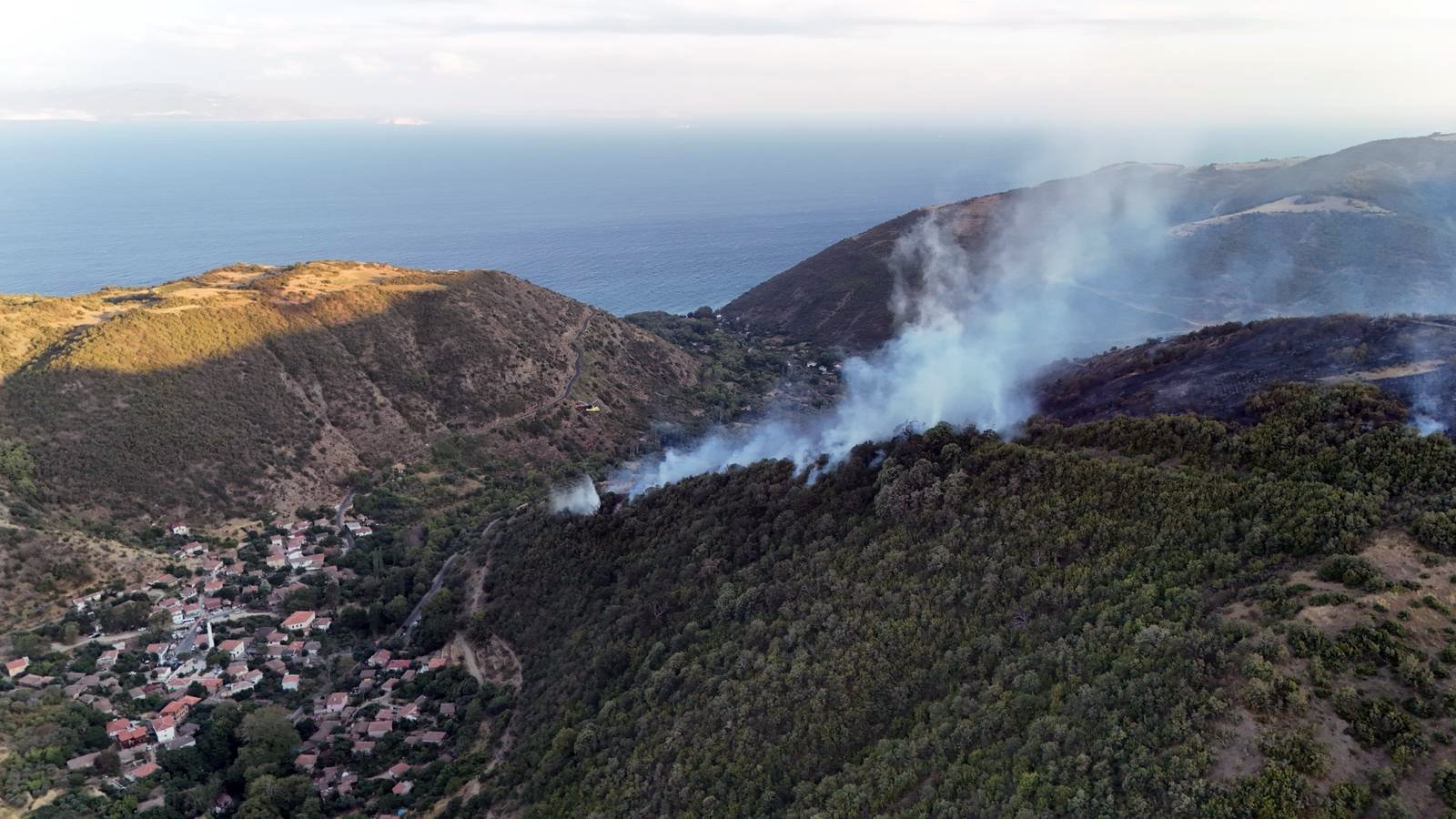
Wildfires recently broke out in 84 different locations across Türkiye, prompting a swift and determined response from both authorities and ordinary citizens. As firefighters battled the blazes, several responders tragically lost their lives. Minister of Agriculture and Forestry Ibrahim Yumaklı has been providing multiple public briefings each day, while other government officials continue working alongside teams on the ground.
In recent years, Türkiye has significantly expanded its wildfire response capacity. The country now ranks second globally in terms of unmanned aerial vehicles and early detection systems, and fourth in terms of aerial firefighting fleets. Where aerial firefighting capacity stood at just 73 tons in 2002, today Türkiye can drop up to 438 tons of water from the air using 27 planes and 105 helicopters.
Climate change has made wildfires a global issue. Even developed nations like the United States, Canada and Australia struggle to contain them, sometimes for months. All of this is publicly available information, easily verifiable by anyone.
Yet, despite knowing this, "armchair firefighters," often political figures or supporters from Türkiye’s opposition, take to social media, often from beach resorts, to ask why this or that wildfire is not being extinguished from the air. These posts ignore fundamental realities, such as weather conditions and flight regulations, particularly those that restrict nighttime aerial operations. Some users make such accusations knowing the truth, simply to score political points. Others, experienced in digital mobilization, deliberately spread misinformation as part of the opposition’s coordinated online activism.
This tactic, known as political digital mobbing, is executed in a calculated manner: to provoke, bully and silence dissenting voices. Every day, social media users are subjected to this digital harassment across all platforms.
Even those who attempt, with good intentions, to share facts and clarify misinformation are targeted with accusations like “Don’t talk like the government.” The most refined examples of this mobbing in recent months have emerged after opposition party mayors and municipal officials, especially from the Republican People's Party (CHP), were arrested on allegations of bribery, embezzlement and corruption.
Ironically, the very circles that once dominated social media with calls for “meritocracy,” “justice” and “accountability” when criticizing the government, now conveniently forget those same principles when similar accusations are directed at their own party officials.
When news surfaces of alleged corruption, nepotism and incompetence in CHP municipalities, the first response from these groups is: “Is now the right time to talk about this?” or “Criticism only helps the government.” These reflexive reactions aim to suppress legitimate inquiry, not to expose wrongdoing, but to recast it as a government attack on the opposition. In doing so, they attempt to construct zones of untouchability for the opposition and craft a carefully controlled public narrative.
One of the primary targets of this digital bullying is the country’s youth, a group already grappling with digital fatigue. When political mobbing becomes part of their daily online experience, it fuels disillusionment and disengagement from politics altogether.
Although the opposition tries to monopolize dissent by tightly controlling the narrative, digital mobbing has created widespread fatigue – not just among the youth, but across society at large. The backlash has already begun. The public is growing weary of these aggressive tactics, and in time, the costs of this digital overreach will become more apparent.
I will analyze this shift and its broader implications in a future article.