Daily Sabah logo

Politics
Diplomacy Legislation War On Terror EU Affairs Elections News Analysis
TÜRKİYE
Istanbul Education Investigations Minorities Expat Corner Diaspora
World
Mid-East Europe Americas Asia Pacific Africa Syrian Crisis Islamophobia
Business
Automotive Economy Energy Finance Tourism Tech Defense Transportation News Analysis
Lifestyle
Health Environment Travel Food Fashion Science Religion History Feature Expat Corner
Arts
Cinema Music Events Portrait Reviews Performing Arts
Sports
Football Basketball Motorsports Tennis
Opinion
Columns Op-Ed Reader's Corner Editorial
PHOTO GALLERY
JOBS ABOUT US RSS PRIVACY CONTACT US
© Turkuvaz Haberleşme ve Yayıncılık 2025

Daily Sabah - Latest & Breaking News from Turkey | Istanbul

  • Politics
    • Diplomacy
    • Legislation
    • War On Terror
    • EU Affairs
    • Elections
    • News Analysis
  • TÜRKİYE
    • Istanbul
    • Education
    • Investigations
    • Minorities
    • Expat Corner
    • Diaspora
  • World
    • Mid-East
    • Europe
    • Americas
    • Asia Pacific
    • Africa
    • Syrian Crisis
    • Islamophobia
  • Business
    • Automotive
    • Economy
    • Energy
    • Finance
    • Tourism
    • Tech
    • Defense
    • Transportation
    • News Analysis
  • Lifestyle
    • Health
    • Environment
    • Travel
    • Food
    • Fashion
    • Science
    • Religion
    • History
    • Feature
    • Expat Corner
  • Arts
    • Cinema
    • Music
    • Events
    • Portrait
    • Reviews
    • Performing Arts
  • Sports
    • Football
    • Basketball
    • Motorsports
    • Tennis
  • Gallery
  • Opinion
    • Columns
    • Op-Ed
    • Reader's Corner
    • Editorial
  • TV
  • Opinion
  • Columns
  • Op-Ed
  • Reader's Corner
  • Editorial

We must be prepared for the era of 'megathreats'

by Kerem Alkin

May 20, 2023 - 12:05 am GMT+3
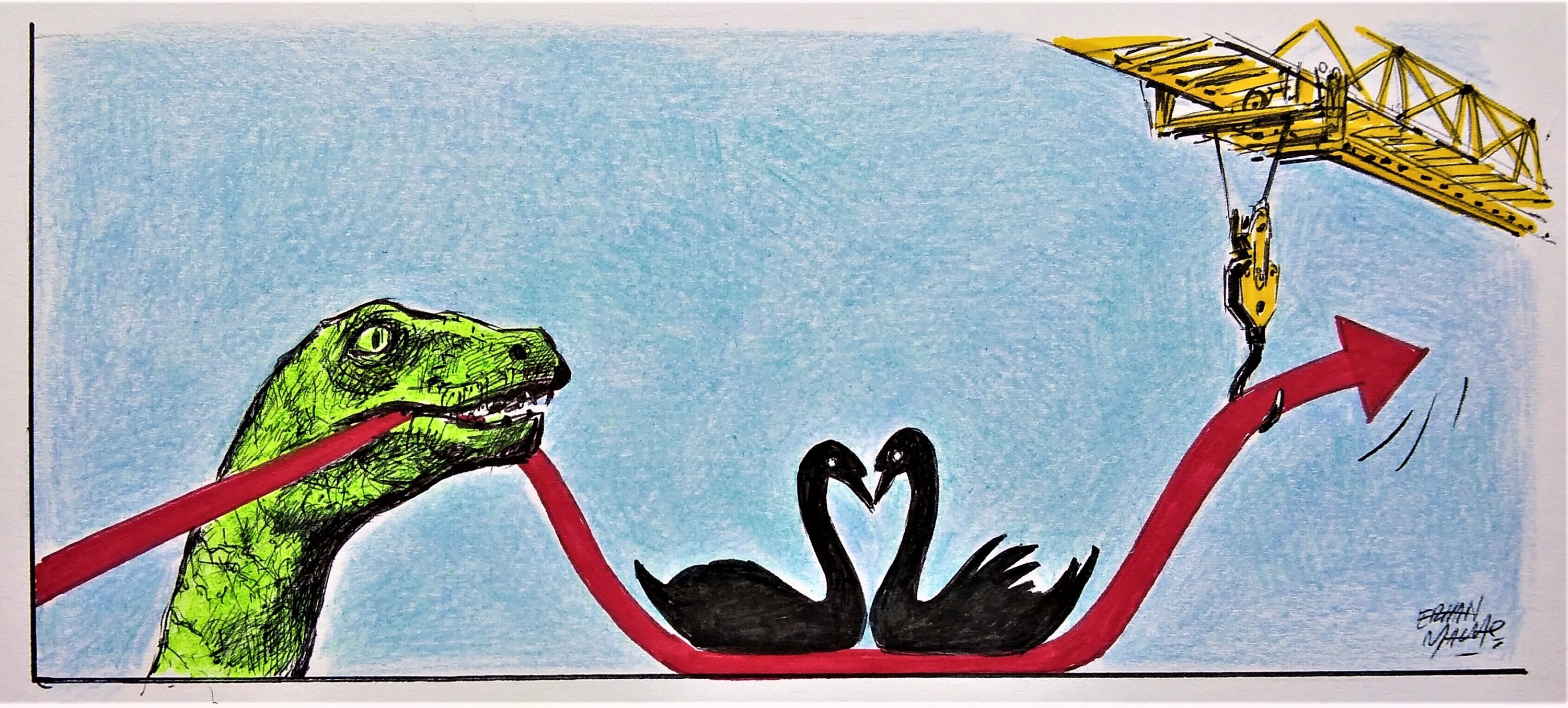
In 2020-2023, when the two "black swans," namely the COVID-19 pandemic and the blows from the ongoing Russia-Ukraine war, were added, the hyper-globalization era was also left in shambles. (Illustration by Erhan Yalvaç)
by Kerem Alkin May 20, 2023 12:05 am

In the dawn of the 21st century, amid the apparent progress, the focus was on 'megatrends,' but now the discourse revolves around the era of 'megathreats,' demanding our utmost attention and discussion

In the early 21st century, amid a sense of overall progress, the world's focus revolved around "megatrends" such as sustainability, hyper-digitalization, mobility and green development, underscored by an environmentally conscious, net-zero carbon approach, driving the agendas of international organizations.

These topics dominated discussions at global summits and occupied the forefront of attention in world media, shaping conversations about the future.

However, when the 2008 global financial crisis caused the first significant blow to the Washington Consensus and the hyper-globalization period fueled by it, the positive agenda suddenly changed. The world began to talk about new challenges and the "new normal." In 2020-2023, when the two "black swans," namely the COVID-19 pandemic and the blows from the ongoing Russia-Ukraine war, were added and when the heavy shock waves following one after another deeply shook the global economic-political system, the hyper-globalization era was also left in shambles.

Hence, we are talking and discussing the period of "megathreats" as much as "megatrends" or even more today. So what are these "megathreats"?

'Megathreats' instead of megatrends

Hence, today we find ourselves engaged in discussions about "megathreats" with as much intensity, if not more, as those surrounding "megatrends." These megathreats encompass various significant challenges, including the global debt spiral and the sticky stagflation threat as the first, followed by the geopolitical spiral of tension and the threat of regional wars as the second. The third megathreat pertains to the supply chain spiral and the global trade war, while the fourth encompasses the digital transformation spiral and the global cyber war threat.

Last, the fifth and final megathreat is the energy transformation spiral and the global climate crisis threat. These five megathreats have been on an upward trajectory since 2008 and have deepened during the 2020-2023 period, resulting in the end of the hyper-globalization era and a shift toward prioritizing national interests among leading countries.

The rise of the concept of "strategic autonomy" and the conclusion of the hyper-globalization era have been strongly influenced by the dimensions and gravity of these megathreats.

The world's top 40 countries have come to the realization that they must take decisive measures to confront the aforementioned five megathreats, fully understanding that the key to withstanding their profound impact lies in enhancing their technological capabilities, fortifying resources and fostering self-sufficiency in strategically significant sectors of their economies.

Becoming a self-sufficient economy

Accordingly, they are focused on continuing infrastructure and superstructure investments in strategic sectors such as energy, defense, digitalization, health and transportation logistics, and taking steps that will minimize the risk of foreign dependency in strategic sectors with "domestic-national" resources.

This is exactly why Türkiye's strategy of becoming a self-sufficient economy that it has accelerated since the 2008 global financial crisis, its investment move toward domestic-national opportunities and capabilities carried out to become a self-sufficient economy in critical sectors, needs to be read well regarding the global megathreats.

The Inflation Reduction Act, which U.S. President Joe Biden's administration succeeded in passing through Congress in August 2022, essentially prioritizes reducing the American economy's foreign dependence on many strategic raw materials, intermediates and products. The European Union’s criticism of the U.S. on the regulation in question is that it is a covert "protectionist" move. It should be noted that Biden administration states these moves should be considered tactical steps toward meeting the supply for the domestic market from within the country.

Thus, we will witness that the steps toward nearshoring, reshoring and friendshoring on the EU side will not be delayed and that Türkiye will see new opportunities from these steps.


About the author
Kerem Alkin is an economist, professor at Istanbul Medipol University.
  • shortlink copied
  • KEYWORDS
    megatrends megathreats strategic autonomy washington consensus
    The Daily Sabah Newsletter
    Keep up to date with what’s happening in Turkey, it’s region and the world.
    You can unsubscribe at any time. By signing up you are agreeing to our Terms of Use and Privacy Policy. This site is protected by reCAPTCHA and the Google Privacy Policy and Terms of Service apply.
    No Image
    Turkish Health Ministry helicopter comes to rescue in central Anatolia
    PHOTOGALLERY
    • POLITICS
    • Diplomacy
    • Legislation
    • War On Terror
    • EU Affairs
    • News Analysis
    • TÜRKİYE
    • Istanbul
    • Education
    • Investigations
    • Minorities
    • Diaspora
    • World
    • Mid-East
    • Europe
    • Americas
    • Asia Pacific
    • Africa
    • Syrian Crisis
    • İslamophobia
    • Business
    • Automotive
    • Economy
    • Energy
    • Finance
    • Tourism
    • Tech
    • Defense
    • Transportation
    • News Analysis
    • Lifestyle
    • Health
    • Environment
    • Travel
    • Food
    • Fashion
    • Science
    • Religion
    • History
    • Feature
    • Expat Corner
    • Arts
    • Cinema
    • Music
    • Events
    • Portrait
    • Performing Arts
    • Reviews
    • Sports
    • Football
    • Basketball
    • Motorsports
    • Tennis
    • Opinion
    • Columns
    • Op-Ed
    • Reader's Corner
    • Editorial
    • Photo gallery
    • DS TV
    • Jobs
    • privacy
    • about us
    • contact us
    • RSS
    © Turkuvaz Haberleşme ve Yayıncılık 2021