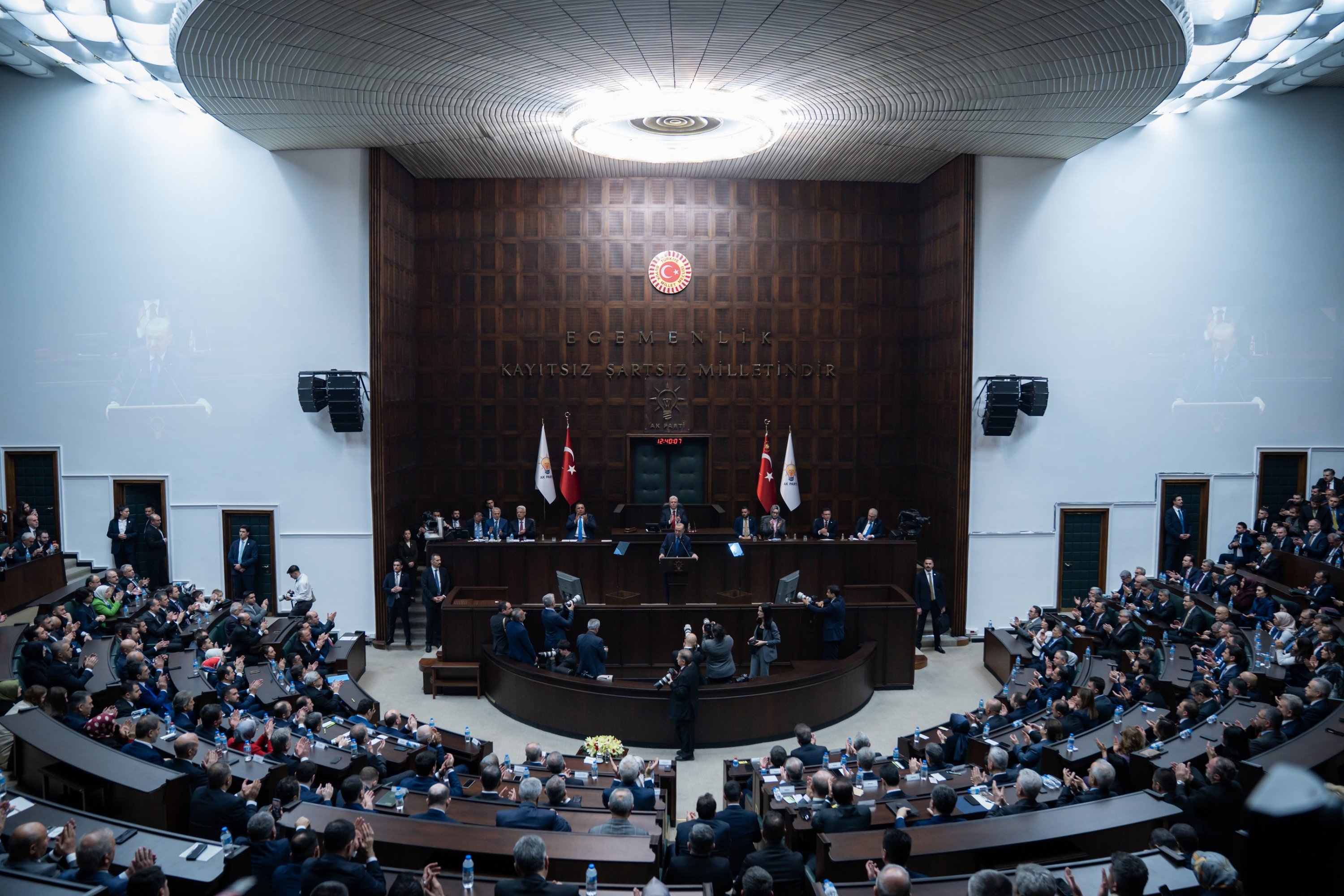
In a democratic political system, a political party must remain in power for 20 consecutive years to be called a "dominant party." In this regard, the Justice and Development Party (AK Party), which has been in power for 24 years, constitutes a dominant party according to political science. To be clear, not many political parties have ever become dominant parties in democratic countries. As I have mentioned before, political scientists point to various factors that contribute to this status. A charismatic leader and winning back-to-back elections are among them.
Dominant parties have to present better policy options to the electorate than the opposition parties. By forming a coalition between different social groups and classes, they have to reconcile otherwise competing interests and always connect with a broader mass than other parties. Moreover, intraparty rivalry must remain at a minimum among the dominant party's top elites. In this sense, coordination and harmony are indispensable parts of political elite management.
Likewise, the dominant party must have enough power to withstand efforts by organized interest groups to meddle in its affairs through antidemocratic and extrapolitical means. Another point I would like to make today is the importance of not becoming insensitive to grassroots preferences: being aware of them at all times and addressing the base's expectations.
One of the main factors that account for the AK Party's extended tenure is its ability to correctly interpret the expectations of its base and to update its platform capably and skillfully. The academic literature calls this "political sensitivity" and "dynamic representation."
Political sensitivity is not limited to a political party knowing what voters think. It is also about its decisions reflecting those opinions.
This requires identifying the changes, grievances and priorities in the daily lives of the base, seeing which demands have become lasting, and then updating policies, personnel and practices accordingly. This does not happen overnight; it unfolds over a period of time.
This mechanism is key to understanding the long-term rule of dominant parties. When a party meets society's expectations and its demand for change from within its own ranks, it effectively answers the call for "renewal and change." The voter's sense that "something must change" can then be met within their existing political loyalty and their own party. In this way, political renewal takes place as well.
The AK Party's bond with society rests on a very broad foundation: identity, public services, development, security, foreign policy and leadership. This bond has not been sustained by offering the same promises every time. In one period, security comes to the fore; in another, democratization; and in yet another, themes such as political renewal shape it.
One of the key findings from public opinion research and elections to date is this: Because AK Party voters see no future in any other party, they are harsh in their criticism of their own. In this context, their distancing or anger stems from a high level of trust and loyalty.
Another key finding is that the AK Party base never compares its party with another party, but always with its own earlier periods. At times, this has been expressed as a call to return to the party's founding principles; at other times, through references to specific periods.
The initial findings of research on the fund issue show that the harshness of the base's criticism reflects a similar outlook. There is no meaningful rise in support for the opposition parties. Voters who have distanced themselves are sitting among the undecided for now, following developments and waiting to see the outcome of the steps to be taken.
The statements by President Recep Tayyip Erdoğan and the AK Party leadership on the fund issue show that institutional, legal and judicial mechanisms have been set in motion. Alongside them, the process is being managed in line with the base's criticism and expectations. How far this will persuade the base remains to be seen.
In conclusion, Erdoğan and the AK Party's 25-year political track record shows that their success owes much to closely following the sensitivities of their grassroots. In this context, the AK Party is highly likely to turn the fund issue into a turning point that strengthens both its credibility and its capacity.