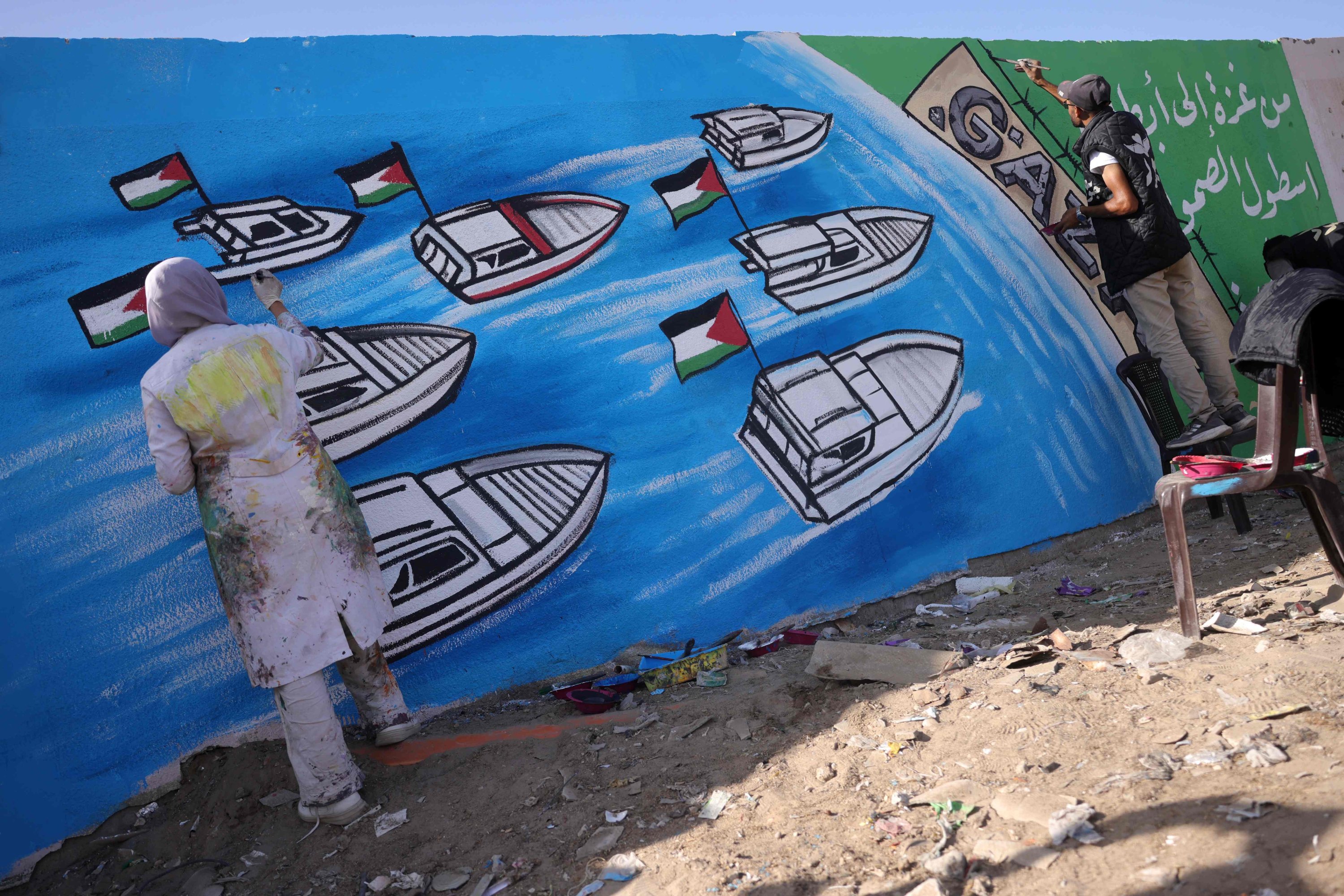
The illegitimate capture of the Gaza-bound humanitarian flotilla consisting of over 40 aid vessels, recognized as the Global Sumud Flotilla (GSF), by Israeli naval forces in international waters has once again lit a severe debate over the legality of Israel’s actions and the enforcement of international maritime and humanitarian law. The incident, which saw the compelling seizure of many civilian vessels carrying humanitarian aid and activists, including Greta Thunberg, has caused widespread global criticism, denunciation and demands for accountability.
The Sumud Flotilla, a large-scale civil society initiative, set out to breach the long-standing Israeli blockade of the Gaza Strip – a blockade that humanitarian organizations and U.N. bodies have consistently condemned as a form of collective punishment and a violation of international law. The flotilla's mission was strictly nonviolent and humanitarian, aiming to deliver essential supplies such as food and medical aid to a besieged population facing one of the worst humanitarian crises in recent history.
The core of the legal controversy lies in the location of the interception – international waters, reportedly 40 to 70 nautical miles off the coast of Gaza. The seizure of the GSF vessels in these high seas appeared to constitute a direct violation of the fundamental principle of freedom of navigation, as enshrined in Article 87 of the United Nations Convention on the Law of the Sea (UNCLOS).
On the high seas, ships are subject to the exclusive jurisdiction of their flag state. A state generally does not have the right to seize, board or capture a foreign civilian vessel unless exceptional circumstances apply, such as piracy, slave trade, unauthorized broadcasting, or in the context of self-defense during an armed conflict. Moreover, even if a naval embargo is considered lawful, its enforcement must respect the principle of proportionality and should not unjustifiably hinder neutral navigation. Interfering with a non-military, non-piratical vessel in international waters, particularly one carrying humanitarian aid, is generally regarded as a breach of this fundamental tenet of international law.
The Fourth Geneva Convention, specifically Article 59, places an obligation on the occupying power – in this case, Israel – to agree to relief schemes if the population is insufficiently provided for. Furthermore, international humanitarian law (IHL) forbids measures of collective punishment, a characterization often applied to the prolonged blockade of Gaza. By forcibly preventing the delivery of humanitarian aid to a population facing starvation and disease, Israel's actions violated its obligation to ensure the welfare and survival of the civilian population under its control. The detention of human rights defenders and journalists aboard the vessels also raised profound concerns about the protection of civilians and humanitarian workers.
The forcible detention and subsequent deportation of the activists without a clear and immediate legal basis, and in some cases the denial of prompt access to legal counsel, constitute grave violations of international human rights law.
The International Covenant on Civil and Political Rights (ICCPR), to which Israel is a party, guarantees the right of liberty and security of a person, as well as protection against arbitrary arrest or detention (Article 9). The detention of civilians seized on the high seas and transferred to Israeli territory – often without immediate clarity on charges or access to legal representation – raised serious concerns about the legality of the detention and adherence to due process standards.
In a system governed by international law, the appropriate response from countries and international organizations to such a serious, multi-faceted intervention would normally involve several coordinated and progressive steps.
U.N. Secretary-General Antonio Guterres and the EU issued strong and unequivocal statements slating the unjustified use of force against civilian vessels in international waters and demanding the immediate and unconditional release of all detained persons and seized vessels. Major powers like the U.S. and European nations like the U.K., France, Italy and Germany issued deep apprehensions and demanded consular access for their citizens.
They put this forward to the U.N. Security Council (UNSC), the U.N. Human Rights Council (UNHRC) and other relevant bodies. Meanwhile, in a meeting, the UNSC adopted a resolution accusing Israel of illegitimate actions, demanding compliance with international law and possibly mandating an international investigation.
However, a "normal" response requires more than rhetoric. These powers should have jointly demanded the lifting of the blockade, frozen nonessential bilateral engagements with Israel and publicly supported an independent investigation. Countries whose citizens were detained should have summoned Israeli ambassadors, issued formal diplomatic protests and pressed for the immediate provision of consular access and the safe return of their nationals.
Moreover, the international community should renew and intensify diplomatic pressure on Israel to fully lift the illegal blockade on Gaza, ensuring the unfettered flow of humanitarian aid and compliance with the International Court of Justice's (ICJ) provisional measures orders, which include enabling the provision of urgently required basic services and humanitarian assistance.
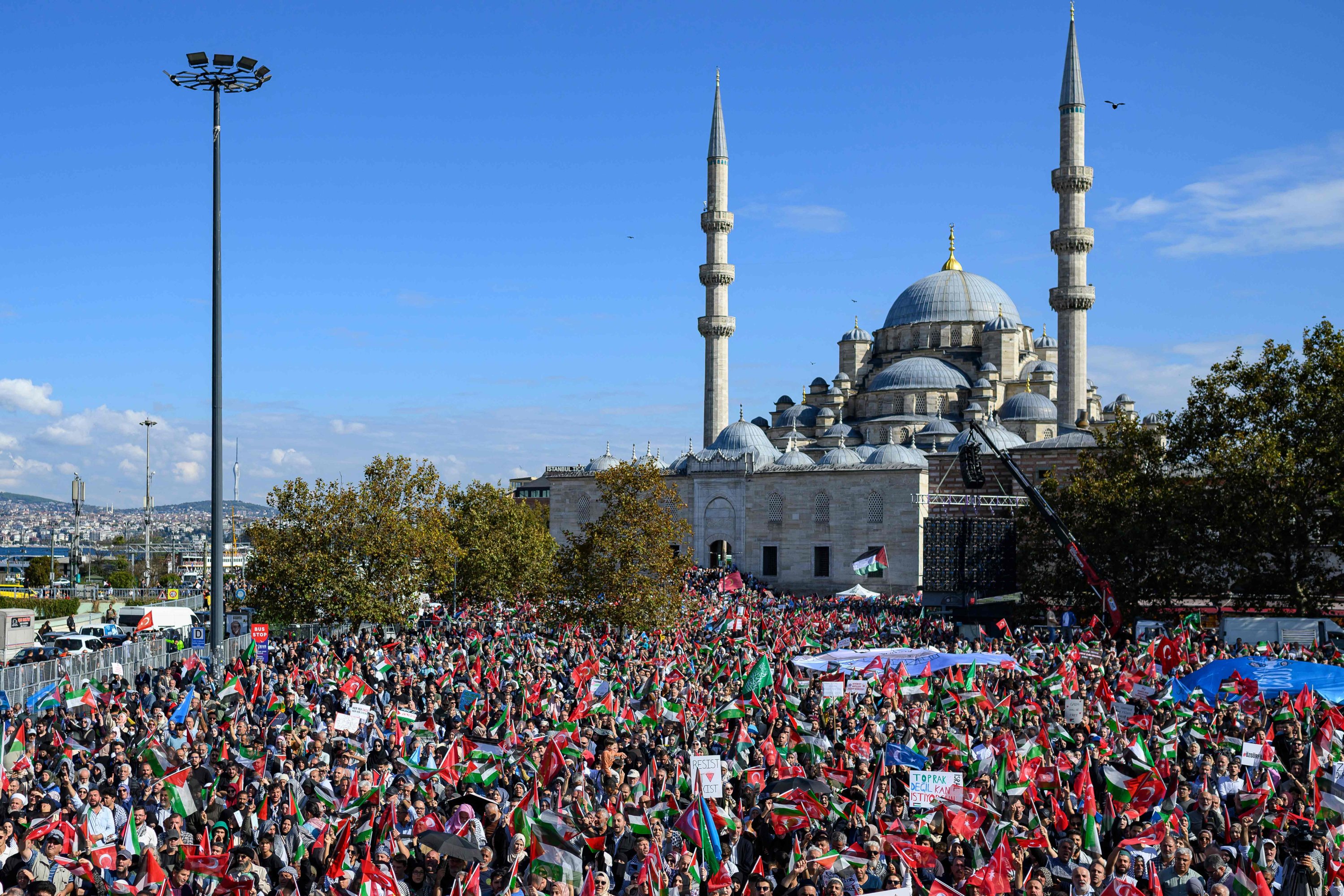
Türkiye has played a paramount role in multiple humanitarian aid flotillas aiming to break Israel’s illicit naval embargo of the Gaza Strip. President Recep Tayyip Erdoğan has vehemently condemned Israel for its inhumane interceptions and blatant violations of international law. Two notable flotilla incidents involving Türkiye are the 2010 Mavi Marmara incident and the more recent Sumud Flotilla. Turkish nationals actively participated in both global aid efforts. The Turkish Embassy in Tel Aviv took steps to provide consular protection for its detained citizens, along with those of other countries, and worked to secure their return to Türkiye.
Israel’s illicit interception grossly breached the legally binding provisional measures ordered by the ICJ, which require Israel to "take immediate and effective measures to enable the provision of urgently needed basic services and humanitarian assistance." Actively blocking the largest maritime aid mission to date directly contradicts this judicial mandate. The International Criminal Court (ICC) prosecutor should have officially incorporated the flotilla incident into its ongoing investigation, assessing whether the forcible interception and detention constitute crimes under the Rome Statute.
The seizure of the Global Sumud Flotilla epitomizes a direct challenge to the rule-based international maritime and humanitarian order. The broad consensus among international law experts and organizations is that this action constitutes a violation of the freedom of the high seas and an unacceptable obstruction of humanitarian aid. The global community, as well as bodies like the U.N., the UNHRC and the ICJ, must immediately undertake effective steps to compel Israel to comply with international law and ensure the provision of humanitarian aid for Palestinians facing acute famine in Gaza.