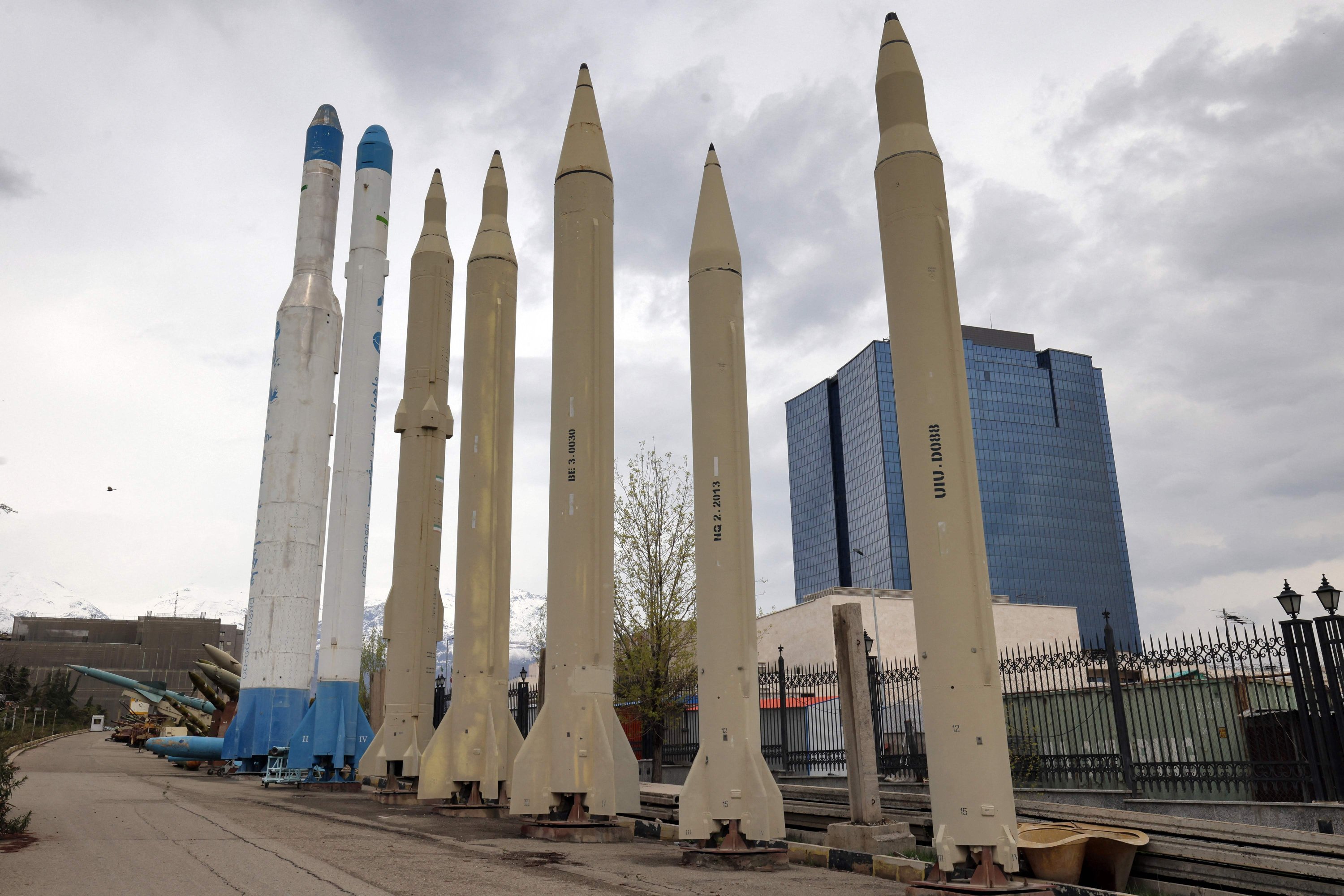
Regional and global developments have recently presented Iran with various challenges. The war, which began with a coordinated attack on Iran by the U.S. and Israel, is now sending a message to the world’s modern armies about both defensive and offensive capabilities. In maintaining its defense and deterrence against two major military powers, Iran’s missile systems, which have also drawn public attention, play a significant role. Their destructive impact on targets, effects on societal psychology and methods of use have contributed to the prolonged nature of the conflict. The continuation of the U.S.-Israel-led war, along with the costs already incurred and those that may arise globally, is driving economic uncertainty.
In the ongoing conflict between the U.S.-Israel axis and Iran, just as in the 12-day war of June 2025, Iran’s dominance in its airspace was significantly shattered by sudden, large-scale air operations. It was believed that the assassination of Iranian Supreme Leader Ayatollah Ali Khamenei and senior commanders would disrupt Iran’s military doctrine and break its resistance. However, despite the losses in its command structure, Iran appears determined to compensate for the shortcomings of its modern air force with its massive arsenal of ballistic/cruise missiles and unmanned aerial vehicles (UAVs). From the very beginning, Iran has positioned its arsenal not as an offensive weapon but as a strategic deterrent and a guarantee of the regime’s survival. For this reason, it responds to different scenarios with different preparations. Iran’s inventory includes weapon systems with various capabilities and operational concepts.
According to 2022 data, with over 3,000 ballistic missiles, excluding cruise missiles, Iran possesses the largest and most diverse missile inventory in the Middle East. Over the past decade, it has made significant advancements in the precision and accuracy of its missiles. Iran’s primary objective is to build the most extensive and effective arsenal of missile systems in the Middle East, encompassing various operational principles such as ground-to-ground, air-to-ground and anti-ship missiles. The key highlights in warfare can be briefly summarized as follows:
While ballistic missiles serve as a significant force multiplier, they possess varying ranges and warhead capabilities. Medium-range ballistic missiles (MRBMs) can be highly destructive due to their 2,000-kilometer (1,245-mile) range and high warhead-carrying capacity. Missiles such as the Khorramshahr, Ghadr (developed from the Shabab), Emad (a modified version of the Ghadr), and Sajjil fall into this category and, with ranges of 1,500-2,000 kilometers, possess the capability to directly strike Israel and U.S. bases in the Gulf.
The strategic importance of solid-fuel systems, particularly the Sajjil, is significant; they can be operated without the lengthy pre-launch preparations required by liquid-fueled missiles. This significantly reduces the risk of missile launchers being detected and struck on the ground by U.S.-Israeli sensors prior to launch (pre-emptive strike). Additionally, there is the Fattah hypersonic missile family, which is frequently featured in the public eye. It has been reported that the Fattah has a range of 1,400 kilometers and can travel at speeds of up to 15 Mach (15 times the speed of sound). Its high speed and maneuverability make it more difficult for air defense systems to intercept.
Another key component of Iran’s missile inventory consists of tactical and short-range ballistic missiles (TBM/SRBM). Iran’s other missile systems, Zolfaghar (700 kilometers), Dezful (1,000 kilometers), Haj Qasem Soleimani (1,400 kilometers) and Kheibar Shekan (1,450 kilometers), utilize the fundamental design principles of the Fateh family of missiles but have different ranges. Field data indicates that hit rates have improved significantly. It was observed that missiles of this class were extensively used in attacks targeting U.S. assets in the Gulf. The greatest operational advantage of these systems is their ability to utilize commercial-grade carrier vehicles, such as 6x6 and 8x8 tactical wheeled launchers (TELs). Since the launchers for these missiles are mobile, deployment for firing and withdrawal after firing are rapid. This makes it possible for them to evade preemptive strikes.
Additionally, it is known that Iran uses not only military-based vehicles but also civilian-looking trucks and trailers as missile launchers (TELs). This situation complicates detection, tracking, and engagement processes for the U.S. and Israel amid tens of thousands of civilian vehicles spread across a vast geography. For this reason, statements have emerged from the U.S. and Israel regarding the accidental striking of civilian trucks.
Another significant strength of Iran lies in its diverse range of kamikaze UAV systems. Contrary to public perception, not all UAVs in the Shahed series are identical. While some systems are equipped with jet engines, others use piston engines. The payload capacities of their warheads also vary. However, the strategic importance of these systems generally lies in their “cost and quantity” advantage. Despite their relatively low cruising speeds and self-defense limitations, their low production and operational costs make them significant. They are notably used to engage and even destroy U.S. radars in the region. Additionally, they create a saturation effect against air defense missile systems, thereby creating space for the primary strike elements, the missiles.
Considering the locations targeted by Iran, Gulf countries (200-500 kilometers) can be engaged using kamikaze UAVs alongside tactical and short-range ballistic missiles. Targets in Israel, however, are observed to be struck by medium-range and even hypersonic ballistic missiles. Additionally, kamikaze UAV systems are used to tie down air defense missile systems. The warheads of the missiles vary depending on the intended effect and the type of target.
For example, the Khorramshar-4 medium-range ballistic missile can carry three different warheads. One of these warheads can fragment in the terminal phase, causing widespread destruction over a large area with numerous relatively small bombs. Some missiles, rockets and UAVs are operated as decoys to saturate air defense systems and allow the main missiles to reach their targets.
It appears that Iran is prepared for the aforementioned protracted war. Even as missile launch pads and other targets continue to be struck from day one, Iran is still able to operate its missile and kamikaze UAV inventory at a level capable of inflicting damage. The decline in missile and UAV usage during the first week of the war was interpreted as a sign that Iran’s capabilities were nearing depletion. At this stage, as the first month of the war ended, Iran continues to carry out destructive attacks.
In Iran, despite the assassination of its leaders, the approach throughout the process has been one of "strategic attrition" from the very beginning, a rigid strategy followed within the command structure rather than an emotional reaction.
The solutions used to intercept ballistic missiles, rockets or UAVs targeting Israel by Iran or Hezbollah come at a high cost. Among these, ballistic missile defense systems such as Terminal High Altitude Area Defense (THAAD), the Arrow series, Patriot (PAC-3), ship-based SM missiles, and other air defense missile systems like David’s Sling and Iron Dome are expensive both to procure and operate. To counter a threat worth thousands of dollars, they use missiles costing millions of dollars. This creates a serious economic imbalance.
Additionally, the ability of the parties to sustain this is crucial. The hundreds of interceptor missiles used against Iran’s attacks in March 2026 exceeded the annual production capacity of the manufacturers (such as Lockheed Martin). Even if production is increased due to the Russia-Ukraine war, manufacturing certain systems remains both costly and time-consuming.
As an example, the U.S. AN/FPS-132 Block 5 early warning radar stationed in Qatar, which is one of the most advanced air defense radars (estimated cost: $1 billion), was rendered inoperable by an Iranian kamikaze UAV attack. While the U.S. suffered a loss of $1 billion, from Iran’s perspective, it was merely a UAV costing $30,000-$40,000. It is reported that reproducing the radar in question will take five to 10 years. Furthermore, the loss of the radar’s functionality has caused serious damage to the U.S.’ dominance in the regional airspace and the air defense umbrella it has established. As sustainability becomes a risk for both sides, more intensive diplomatic efforts will be observed.